

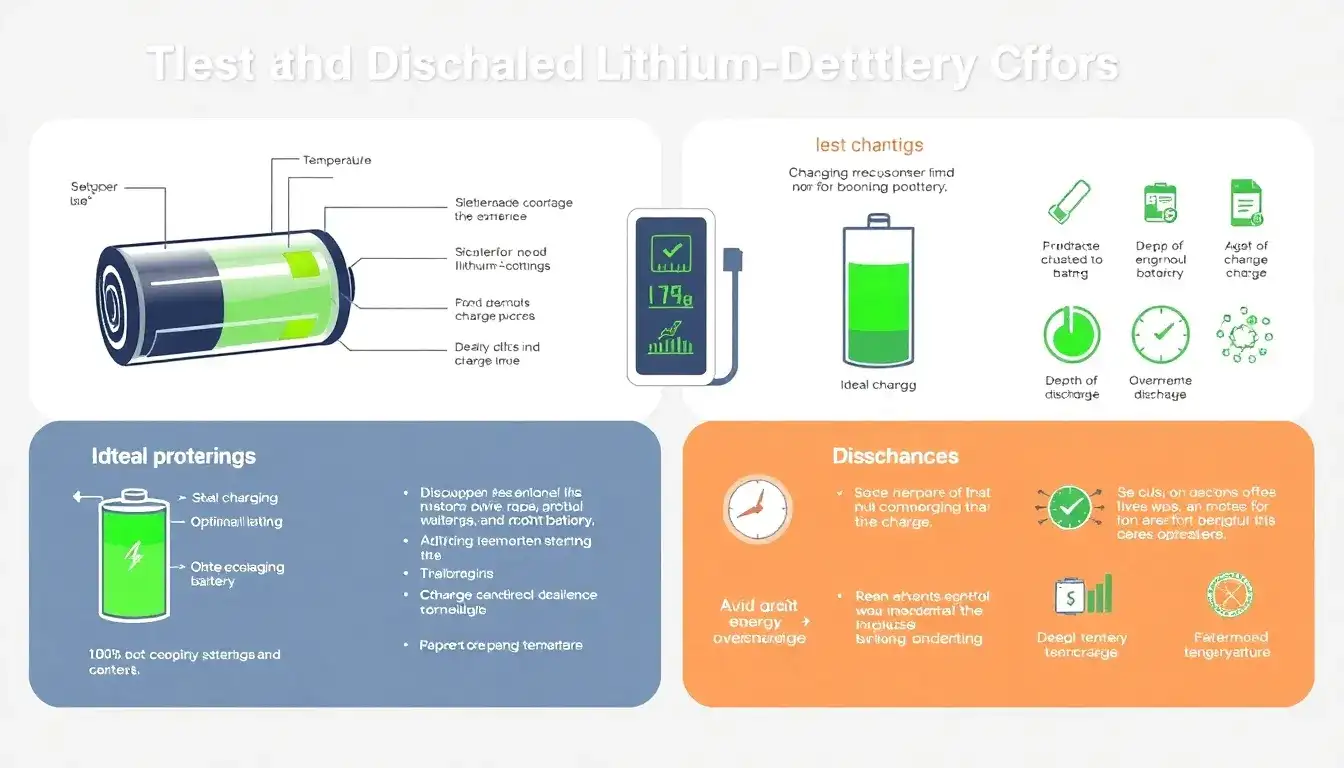
Best Practices for Charging and Discharging Lithium-Ion Batteries
Charging Best Practices
- Use the Right Charger: Always use the charger provided by the device manufacturer or a compatible one, as specified by the manufacturer.
- Avoid Thermal Extremes: Charge in a moderate temperature range, ideally between 68°F and 77°F (20°C to 25°C), to avoid degradation.
- Partial Charging: Charge the battery to around 80% capacity if possible, instead of fully charging it every time, to prolong battery life.
- Disconnect After Charging: Once fully charged, disconnect the device from the charger to prevent overcharging.
- Monitor Charging: Never leave a battery unobserved while charging; check periodically for signs of distress.
Discharging Best Practices
- Avoid Full Discharges: Minimize full discharges (100% depth of discharge), as they can reduce battery longevity. Instead, aim for a maximum 80% discharge.
- Partial Discharge Cycles: Opt for partial discharge cycles whenever possible to reduce stress on the battery cells.
- Occasional Deep Discharge: Perform a deep discharge to about 0-10% capacity every few months to help maintain calibration.
Storage Best Practices
- Maintain Half Charge: Store batteries at about 40% to 50% charge to avoid full depletion or overcharge.
- Avoid Extreme Temperatures: Store in a cool, dry place away from direct sunlight or heat sources.
- Regular Checks: Check batteries quarterly if not used for an extended period to ensure they are not fully discharged.
General Maintenance
- Inspect for Damage: Regularly inspect batteries for signs of damage or swelling and dispose of them properly if damaged.
- Update Software: Keep device software up to date to optimize charging performance.
By following these best practices, you can extend the lifespan and improve the overall health of your lithium-ion batteries.
Original article by NenPower, If reposted, please credit the source: https://nenpower.com/blog/what-are-the-best-practices-for-charging-and-discharging-lithium-ion-batteries/

