

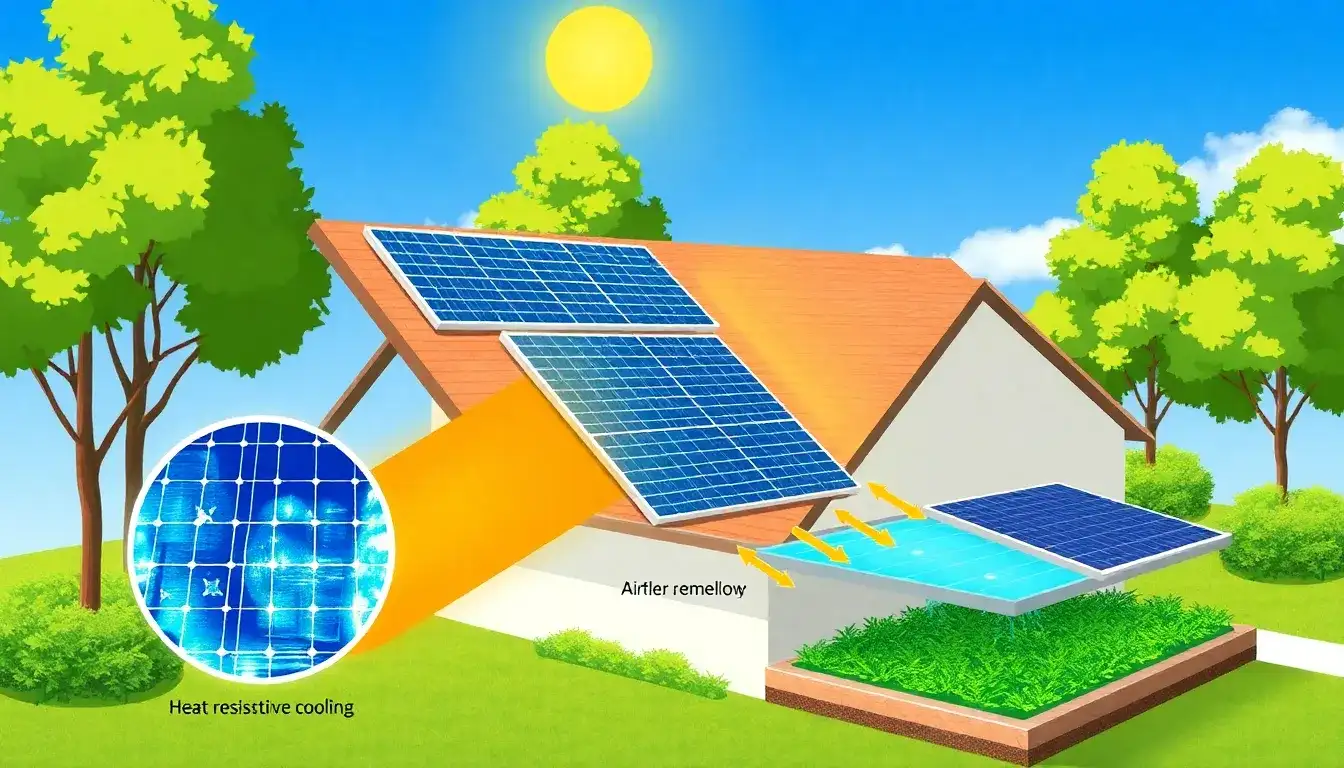
Passive cooling techniques for solar panels are cost-effective methods that enhance the efficiency of photovoltaic systems by maintaining optimal operating temperatures without the need for external power sources. Here are some of the best passive cooling techniques:
Passive Cooling Techniques for Solar Panels
1. Natural Ventilation
Description: This method involves designing solar panels to allow natural air circulation on and behind them. Proper spacing between panels and the mounting structure enhances convective heat transfer with the surrounding air.
Advantages: Simple, cost-effective, low maintenance.
Disadvantages: Limited effectiveness in very hot climates.
2. Reflective Coatings
Description: Applying reflective coatings to the back or sides of solar panels reduces heat absorption by reflecting solar radiation away from the panel surface.
Advantages: Reduces heat absorption, cost-effective.
Disadvantages: Less effective than active cooling methods.
3. Heat Sinks with Fins
Description: Using heat sinks, typically made of materials like aluminum, with fins attached to the back of the panels. These fins enhance airflow and heat dissipation.
Advantages: Increases convective and radiative heat transfer, improves efficiency.
Example: Studies have shown that using aluminum heat sinks can significantly reduce panel temperatures, leading to increased electrical efficiency.
4. Phase Change Materials (PCMs)
Description: PCMs, such as paraffin wax, absorb heat and release it as they change phase, thus cooling the panels.
Advantages: Can reduce panel temperature by up to 10°C, improving efficiency.
Example: Paraffin wax has been shown to reduce operating temperatures by up to 10.26°C, resulting in a 3.73% increase in electrical efficiency.
5. Wind-Driven Ventilation Systems
Description: Utilize wind energy to drive turbines that enhance airflow around the solar panels for cooling.
Advantages: Provides cooling, ventilation, and additional power generation.
Example: Systems like wind-driven rooftop turbine ventilators can enhance PV system efficiency by facilitating airflow.
These methods are particularly effective when combined with other passive techniques or integrated into larger systems for enhanced cooling and efficiency.
Original article by NenPower, If reposted, please credit the source: https://nenpower.com/blog/what-are-the-best-passive-cooling-techniques-for-solar-panels/

