

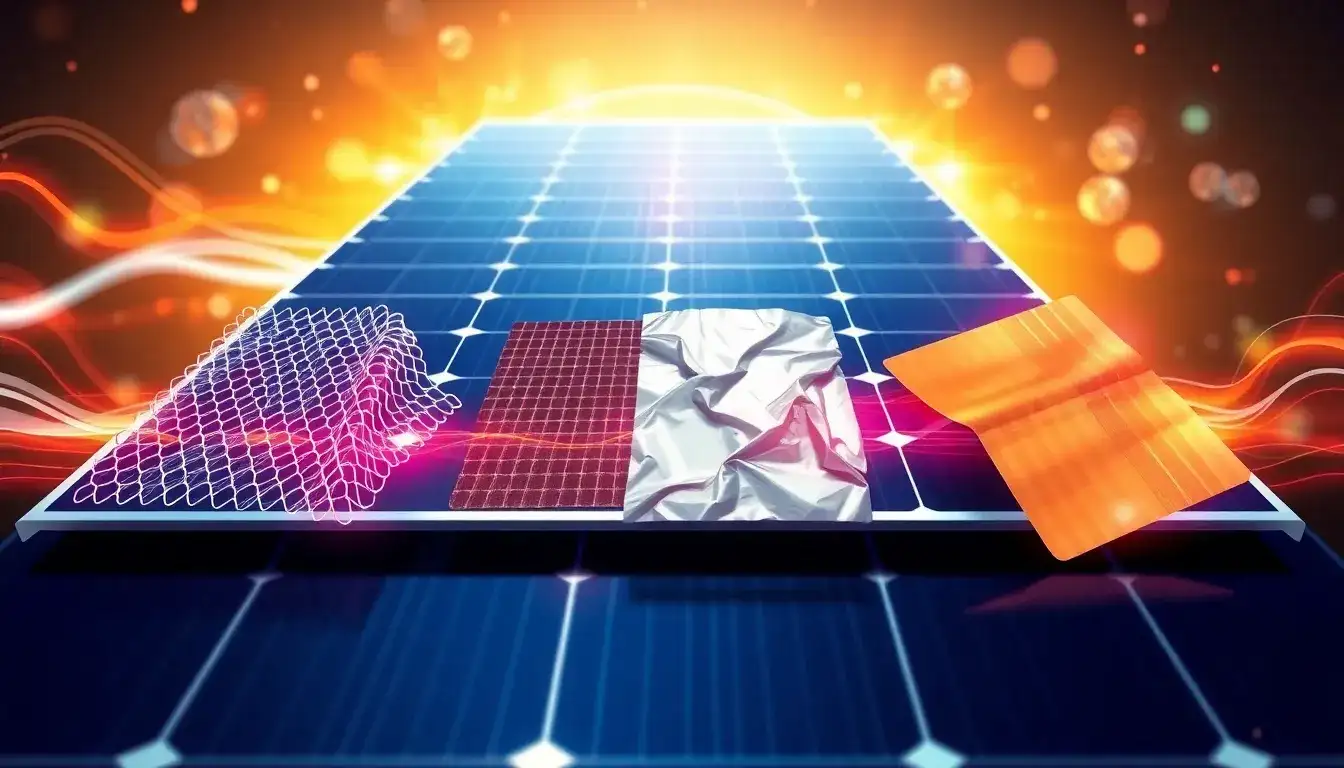
When designing flexible solar panels, it is crucial to use materials that are both thermally conductive and flexible, ensuring efficient heat management without compromising the panel’s flexibility. Here are some of the best materials for a thermally conductive layer in flexible solar panels:
Materials for Thermally Conductive Layers
-
Silver:
- Thermal Conductivity: Silver has a high thermal conductivity of about 429 W/mK, making it suitable for heat transfer in solar panels.
- Use: It can be used in thin films or foils within the solar panel structure to enhance thermal conductivity without significantly affecting flexibility.
-
Thermally Conductive Silicones:
- Description: These materials combine silicone rubber with thermally conductive fillers like graphite, carbon fibers, or metal powders.
- Application: They are flexible and can be used in sheets or coatings, providing both thermal conductivity and electrical insulation. Sur-Cool’s SFR sheets, which combine thermally conductive silicone with fiberglass, are a good example.
-
Graphene and Carbon Nanotubes:
- Properties: While not as commonly used due to cost and production complexity, graphene and carbon nanotubes offer extremely high thermal conductivity and are flexible.
- Application: They can be integrated into polymer matrices to enhance thermal conductivity in flexible solar panels.
-
Aluminum Nitride (AlN):
- Properties: AlN provides high thermal conductivity and electric insulation but is typically rigid. It might need to be formulated into a flexible composite to be used in flexible solar panels.
- Application: It could be used in hybrid materials with flexible polymers.
Considerations for Flexible Solar Panels
- Flexibility: The material should maintain its thermal conductivity under bending stress.
- Cost-Effectiveness: Choose materials that balance cost with performance.
- Electrical Insulation: If required, materials should provide electrical insulation to prevent short circuits.
By selecting the right thermally conductive material, flexible solar panels can efficiently manage heat, improving their overall efficiency and lifespan.
Original article by NenPower, If reposted, please credit the source: https://nenpower.com/blog/what-are-the-best-materials-to-use-for-a-thermally-conductive-layer-in-flexible-solar-panels/

