

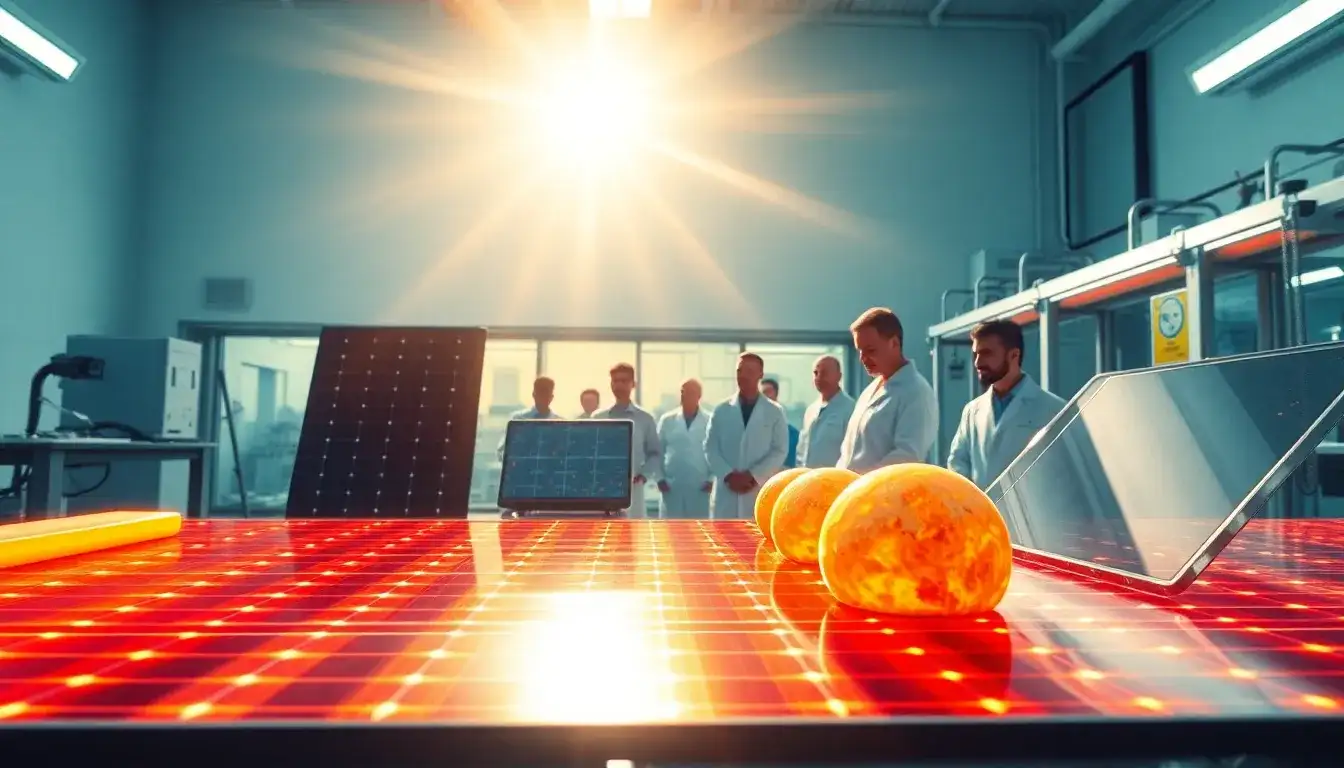
The best materials and solar panel technologies to withstand high temperatures focus on minimizing efficiency loss and maintaining durability under heat stress. Here’s a detailed overview:
Key Materials and Technologies for High Temperature Resilience
1. Monocrystalline Silicon Solar Panels
- Superior temperature coefficient: Monocrystalline panels have a better temperature coefficient (approx. -0.35%/°C), meaning they lose less efficiency as temperatures rise compared to polycrystalline panels, which have a slightly higher coefficient (-0.4%/°C). For example, at 40°C, monocrystalline panels lose about 5.25% efficiency versus 6% for polycrystalline.
- High efficiency: Generally more efficient than other types in normal and hot conditions, making them a top choice in hot climates.
2. N-Type Silicon and Advanced Cell Designs (IBC, TOPcon, HJT)
- IBC (Interdigitated Back Contact) solar panels feature a back-contact design that reduces thermal stress by eliminating front-side metal ribbons, thus minimizing expansion/contraction. They have a very low temperature coefficient (~0.29%/°C), outperforming other types in heat retention of efficiency.
- N-Type cells (including TOPcon and heterojunction (HJT)) offer even lower temperature coefficients (as low as -0.25 to -0.30%/°C), making them significantly more heat tolerant and stable than traditional P-type cells.
- These advanced designs reduce power degradation in high heat more effectively than conventional PERC or polycrystalline panels.
3. Thin-Film Solar Panels
- Thin-film cells have intrinsically better temperature coefficients (~-0.25%/°C), so their efficiency decreases less with heat. However, their baseline efficiency is lower than crystalline panels, meaning overall output might still be less despite better heat tolerance.
- Selected for applications requiring high-temperature tolerance despite lower efficiency.
4. Heat-Resistant Encapsulation Materials
- Traditional encapsulants like EVA degrade under prolonged heat exposure.
- New materials such as thermoplastic polyolefin (TPO) and thermoplastic elastomers (TPE) provide better protection against heat-induced degradation and moisture penetration, enhancing panel longevity and performance stability.
- Use of high thermal stability backsheets (e.g., PVF/Tedlar films) also contributes to durability in hot climates.
5. Module Design Innovations
- Bifacial panels can absorb sunlight from both sides and dissipate heat more effectively, reducing overheating risks.
- Cooling systems (air or water-based) and solar trackers help maintain optimal panel temperatures and improve overall heat tolerance as active temperature management methods.
Summary Table of Temperature Coefficients (% power loss/°C):
| Technology/Material | Temperature Coefficient (%/°C) | Notes |
|---|---|---|
| Monocrystalline P-type silicon | -0.35 to -0.40 | Standard high-efficiency panels |
| Polycrystalline P-type silicon | -0.39 to -0.43 | More efficiency loss in heat |
| Thin-film | ~-0.25 | Lower efficiency overall but better heat tolerance |
| Monocrystalline N-type TOPcon | -0.29 to -0.32 | Advanced heat-tolerant technology |
| Monocrystalline N-type IBC | -0.26 to -0.30 | Best thermal stress resistance & efficiency retention |
| Monocrystalline N-type HJT | -0.25 to -0.27 | Very low heat degradation |
Practical Recommendations
- For hot climates, monocrystalline N-type IBC panels are currently the best for minimizing performance loss due to heat while maintaining high efficiency and durability.
- Use panels with advanced encapsulation and backsheets (TPO, TPE, PVF films) to enhance lifespan and resistance against heat-induced degradation.
- Consider bifacial panels or panels integrated with active cooling or tracking technologies for extreme conditions.
- Proper installation that allows airflow can additionally mitigate overheating effects and improve heat dissipation.
In conclusion, combining advanced cell technologies like N-type IBC or TOPcon with heat-resistant encapsulation materials and smart module designs yields solar panels best suited for high-temperature environments. These materials and technologies reduce efficiency loss and enhance durability, ensuring reliable solar power generation in hot climates.
This synthesis is based on recent comparative data and advances in solar cell materials and designs.
Original article by NenPower, If reposted, please credit the source: https://nenpower.com/blog/what-are-the-best-materials-for-solar-panels-to-withstand-high-temperatures/

