

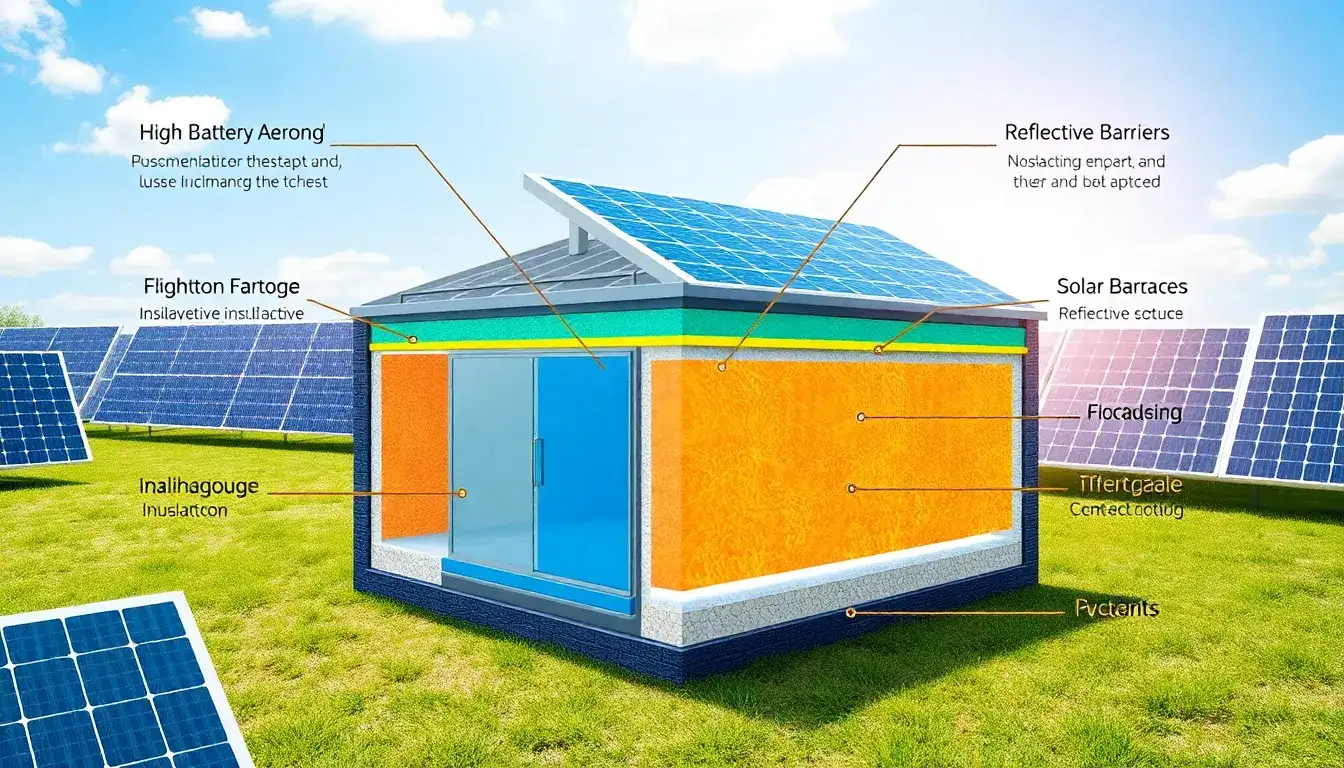
Choosing the right insulation material for storing solar batteries is crucial to maintain their efficiency and longevity, especially in extreme temperatures. Here are some of the best materials for insulating solar batteries:
Insulation Materials
- Vacuum Insulation Panels (VIPs) and Aerogel Insulation
- R-Value: VIPs typically have an R-value around 45, while some products like Panasonic U-vacua can reach up to R60.
- Advantages: These materials offer superior thermal insulation with a high R-value, making them ideal for keeping batteries warm in cold conditions.
- Limitations: They are expensive and may not be practical for large-scale applications.
- Expanded Polystyrene (EPS) and Extruded Polystyrene (XPS)
- R-Value: EPS generally has a lower R-value compared to XPS, with XPS being more commonly used as foam board insulation.
- Advantages: Both EPS and XPS are cost-effective and easy to use for creating insulated boxes. EPS is particularly suitable for constructing boxes around batteries.
- Limitations: Over time, XPS can experience thermal drift, reducing its R-value.
- Reflective Foil and Bubble Wrap
- Advantages: These are lightweight and inexpensive materials that can be used to line the inside of insulation boxes or as a bottom layer to prevent cold transfer.
- Limitations: They have lower R-values compared to other materials like VIPs or foam boards.
- Polyisocyanurate and Polyurethane Insulation
- Advantages: These rigid foam boards are more durable and can offer better insulation performance than EPS and XPS over time, especially with reflective facings.
- Limitations: They may be more expensive and heavier than EPS and XPS.
- Thermal Runaway Barriers
- These are specialized materials like Go-Therm, designed to protect against thermal runaway rather than general insulation.
Additional Tips
- Air Circulation: Ensure there is adequate air circulation within the insulated box to prevent overheating during warmer months.
- Structural Integrity: Use materials that provide structural support to the insulation, like wooden frames, to maintain the enclosure’s integrity over time.
- Thickness and Placement: The thickness and placement of insulation can significantly impact performance. A thickness of 50mm (2 inches) is often recommended for effective insulation.
Original article by NenPower, If reposted, please credit the source: https://nenpower.com/blog/what-are-the-best-insulation-materials-for-storing-solar-batteries/

