

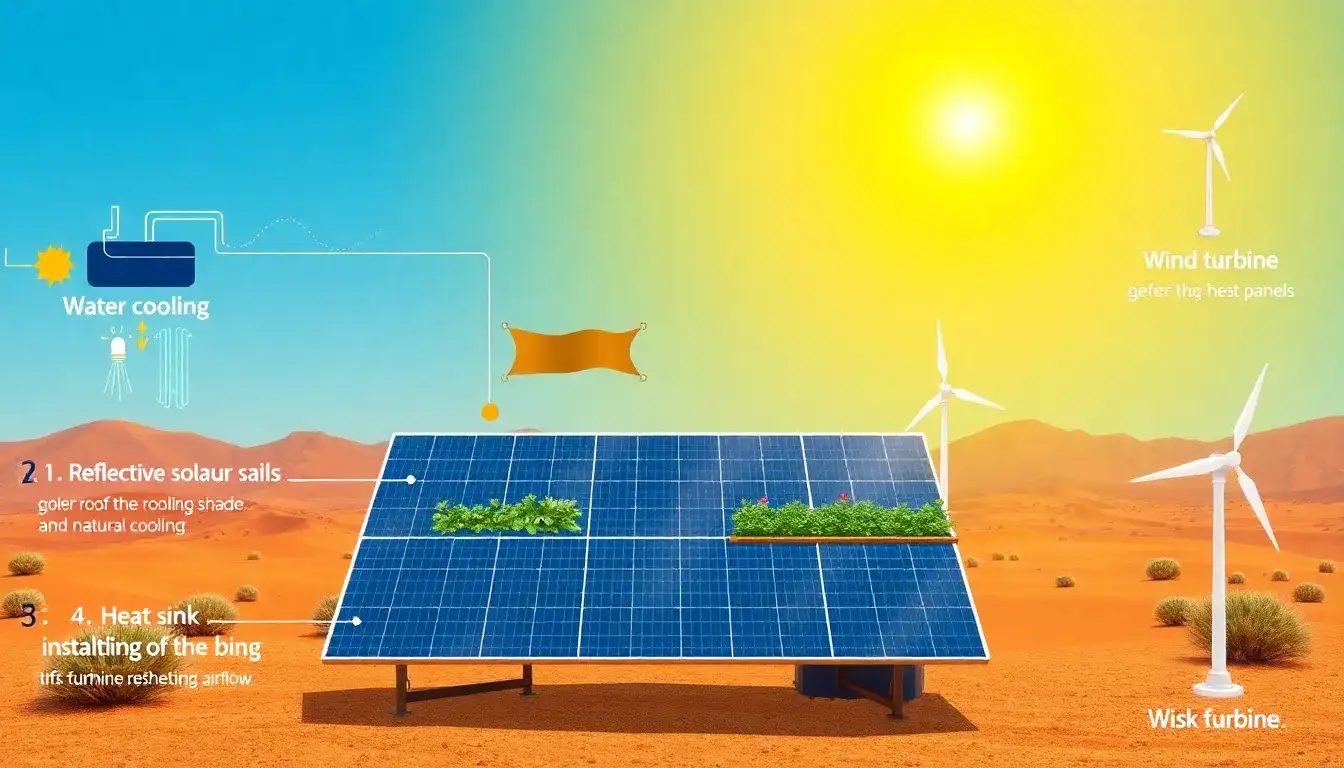
Best Cooling Methods for Solar Panels
1. Water Cooling Systems
- Description: Water cooling systems are highly effective in dissipating heat from solar panels. Methods include water spray systems, heat pipes, or immersion techniques.
- Benefits: Can lower panel temperatures by 10-20°C, significantly improving efficiency and energy output.
- Use Cases: Large solar farms often use automatic water spraying systems during peak heat hours to boost energy production.
2. Air Cooling Systems
- Description: Air cooling uses natural or forced ventilation to remove heat. Fans can be used to blow air over the panels, enhancing convective heat loss.
- Benefits: Economical and low maintenance, suitable for residential installations.
- Use Cases: Ideal for locations with moderate temperatures and airflow, often used with passive cooling techniques.
3. Reflective Coatings
- Description: Applying reflective coatings on the back of solar panels helps reduce heat absorption by reflecting sunlight.
- Benefits: Can decrease panel temperatures by up to 5°C, increasing efficiency by around 8%.
- Use Cases: Effective in sunny climates to maintain optimal operating temperatures.
4. Natural Ventilation
- Description: Properly spacing panels or using elevated mounting systems allows natural airflow to dissipate heat.
- Benefits: Cost-effective and suitable for small to medium-scale installations.
- Use Cases: Effective in coastal areas where crosswinds are prevalent.
5. Phase Change Materials (PCMs)
- Description: PCMs like paraffin wax absorb heat during the day and release it at night, acting as passive cooling systems.
- Benefits: Can reduce panel temperatures by up to 10°C, improving efficiency.
- Use Cases: Useful in regions with significant day-night temperature variations.
Each cooling method has its advantages and can be selected based on the specific needs and environmental conditions of the solar panel installation.
Original article by NenPower, If reposted, please credit the source: https://nenpower.com/blog/what-are-the-best-cooling-methods-for-solar-panels-in-hot-climates/

