

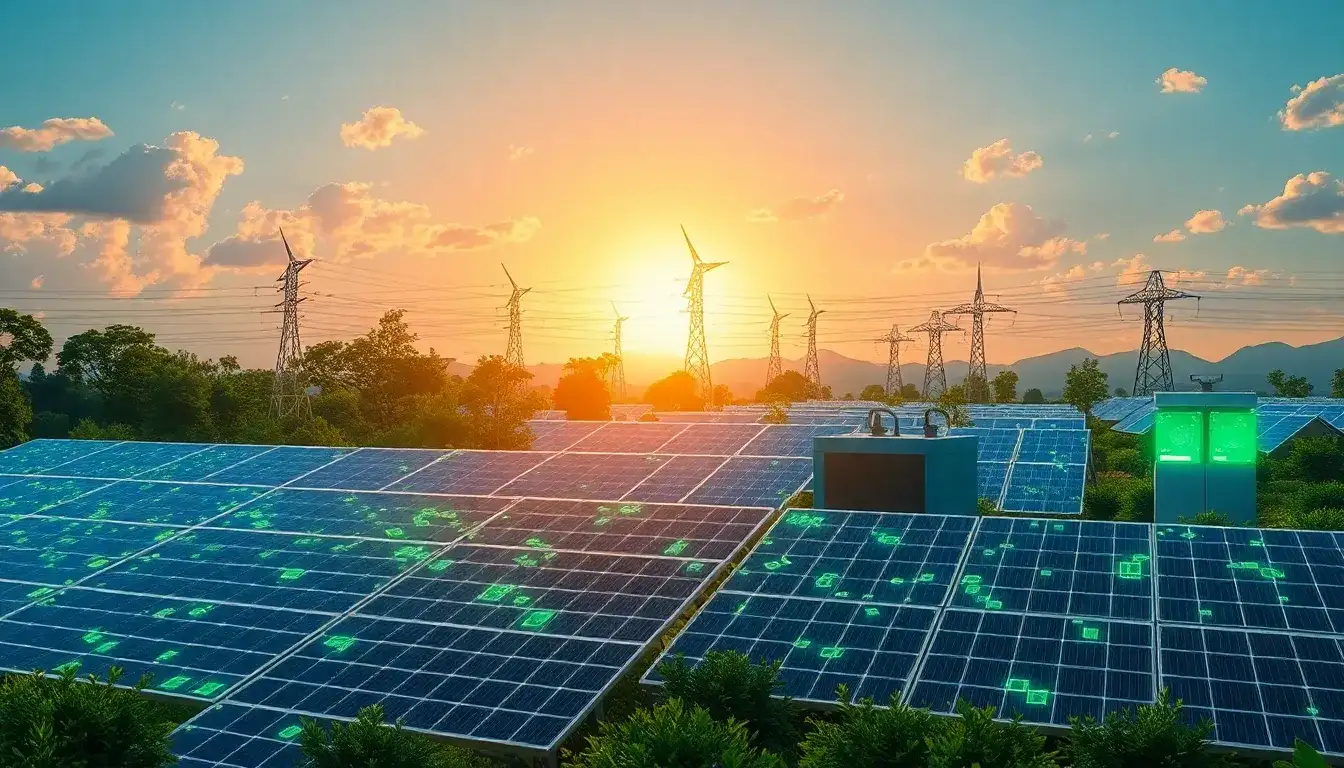
To maximize the benefits of bifacial solar panels’ higher energy output (5-30% more than traditional panels), the best battery technologies should prioritize high energy density, efficiency, and cycle durability. Below are optimal pairings:
1. Lithium-Ion (LiFePO4) Batteries
- Key Advantages:
- High efficiency (90-95%) minimizes energy loss during storage.
- Long cycle life (4,000-7,000 cycles) aligns with bifacial panels’ extended warranties (e.g., 25-30 years).
- Scalability suits residential and commercial systems paired with bifacial arrays.
- Best Use Case: Daily cycling for homes or businesses leveraging bifacial panels’ increased generation, especially in low-light conditions.
2. Flow Batteries (Vanadium Redox)
- Key Advantages:
- Unlimited cycle life and deep discharge capability ideal for utility-scale bifacial installations.
- Stable performance over time, matching bifacial panels’ durability (e.g., double-glass construction).
- Drawbacks: Lower energy density and higher upfront costs.
3. Solid-State Batteries (Emerging Tech)
- Key Advantages:
- Higher energy density and safety than conventional lithium-ion.
- Faster charging accommodates bifacial panels’ variable output (e.g., reflected light gains).
- Current Status: Limited commercial availability but promising for future pairings with high-efficiency bifacial systems.
4. Advanced Lead-Carbon Batteries
- Key Advantages:
- Lower cost and improved cycle life compared to standard lead-acid.
- Broad temperature tolerance suits ground-mounted bifacial arrays exposed to harsh conditions.
Recommendations by Use Case
| Application | Recommended Battery | Rationale |
|---|---|---|
| Residential | LiFePO4 | Balances cost, efficiency, and cycle life for daily use. |
| Commercial/Utility-Scale | Flow Batteries | Handles large-scale energy storage with minimal degradation. |
| Off-Grid/Remote | Lead-Carbon | Cost-effective for irregular maintenance scenarios. |
For systems using high-output bifacial panels like Renogy’s 220W module (up to 285W) or Q CELLS’ 21.4%-efficient panels, LiFePO4 batteries are typically ideal due to their reliability and lifespan. Emerging technologies like solid-state batteries may become viable as bifacial adoption grows.
General industry knowledge for technologies not explicitly covered in provided sources. Specific bifacial panel details from cited sources inform pairing logic.
Original article by NenPower, If reposted, please credit the source: https://nenpower.com/blog/what-are-the-best-battery-technologies-to-pair-with-bifacial-solar-panels/

