

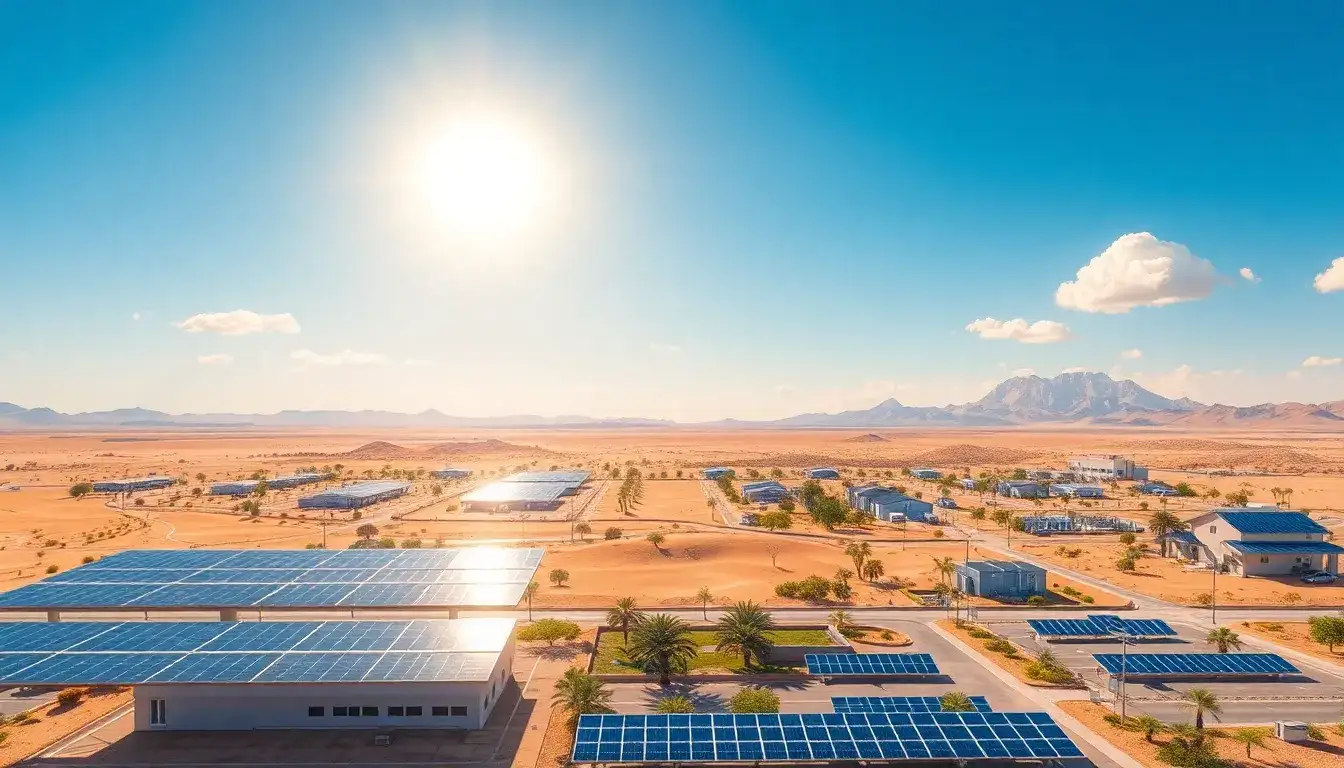
Thin-film solar panels offer several key benefits in hot climates, making them a favorable choice compared to traditional crystalline silicon panels:
Benefits of Thin-Film Solar Panels in Hot Climates
1. Better Temperature Coefficients and Heat Performance
Thin-film solar panels, especially those made from materials such as Cadmium Telluride (CdTe) and Copper Indium Gallium Selenide (CIGS), have superior temperature coefficients. This means their electrical efficiency decreases less as temperature rises, allowing them to maintain higher output in hot conditions where crystalline silicon panels typically lose significant efficiency. For instance, amorphous silicon (a-Si) thin-film panels can outperform crystalline silicon panels at temperatures above 45°C, despite having a lower efficiency rating under standard test conditions.
2. Reliable Energy Production Under High Temperatures
Unlike crystalline panels, which can experience notable power drops as module temperature exceeds 25°C (77°F), thin-film panels exhibit much less performance degradation when exposed to the extreme heat common in desert or tropical climates. This makes them especially effective in regions with intense sunlight and high ambient temperatures, such as parts of India, Arizona, and Bangladesh.
3. Better Performance in Diffuse and Low Light Conditions
Thin-film cells have a broader light absorption spectrum and are more sensitive to diffuse, reflected, and low-intensity light. This attribute enables them to generate electricity during cloudy, foggy, or rainy weather often found in tropical or monsoon climates alongside the heat. This advantage enhances their reliability and energy yield over a full day.
4. Lightweight and Flexible Design
Their thin and flexible construction allows better integration into surfaces with weak structural support, such as building facades or curved rooftops commonly found in hot urban environments. This flexibility can improve architectural aesthetics and expand installation options in hot climates where traditional heavy panels may not be suitable.
5. Cost-Effective and Easier Installation
Thin-film panels generally require less raw material and energy during manufacturing, which lowers production costs. The flexibility and lightweight nature also reduce installation complexity and cost, facilitating faster deployment in remote or infrastructure-limited hot regions.
6. Shorter Energy Payback Period
Due to their simpler manufacturing and reduced material use, thin-film solar panels typically have a shorter energy payback time, contributing to a more sustainable lifecycle suitable for rapid deployment in hot, resource-constrained locations.
Summary Table: Thin-Film vs. Crystalline Silicon Panels in Hot Climates
| Feature | Thin-Film Solar Panels | Crystalline Silicon Panels |
|---|---|---|
| Temperature Coefficient | Better (less efficiency loss in heat) | Worse (efficiency drops significantly above 25°C) |
| Performance in High Temperatures | Maintains output well | Efficiency decreases notably |
| Performance in Diffuse Light | Strong | Weaker |
| Weight and Flexibility | Lightweight and flexible | Rigid and heavier |
| Cost | Generally lower production cost | Higher material and manufacturing cost |
| Installation Ease | Easier due to flexibility | More complex, heavier mounting |
| Energy Payback Time | Shorter | Longer |
In essence, thin-film solar panels are particularly advantageous in hot climates due to their robustness against high temperatures, better performance in less-than-ideal light conditions, and flexible, lightweight design that suits architectural and structural constraints. These benefits make them a reliable, cost-effective solar energy solution for warm regions worldwide.
Original article by NenPower, If reposted, please credit the source: https://nenpower.com/blog/what-are-the-benefits-of-using-thin-film-solar-panels-in-hot-climates/

