

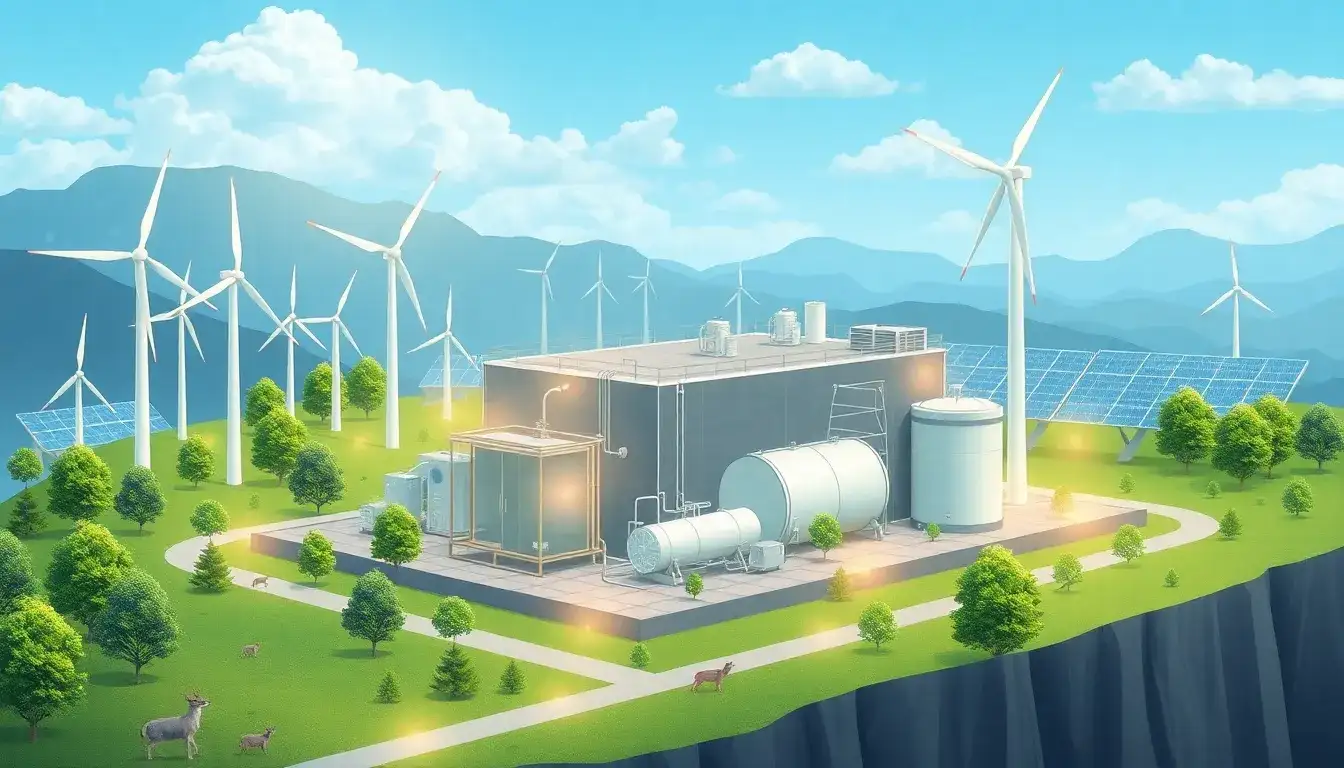
Small-scale, high-pressure Compressed Air Energy Storage (CAES) systems offer several benefits, particularly in residential or localized energy applications. Here are some of the key advantages:
- Trigeneration and Efficiency:
- These systems can provide electricity, heating, and cooling simultaneously. The heat generated during compression is used for heating and hot water, while the cold air during expansion is used for cooling and refrigeration.
- Despite their relatively low electrical efficiency (around 11-17%), the overall exergetic efficiency, which includes all forms of energy production (heat, cold, electricity), can be as high as 70%.
- Environmental Benefits:
- High-pressure CAES systems are more environmentally friendly compared to traditional energy storage methods, as they do not rely on finite resources like lithium or cobalt and produce no emissions when used with renewable energy sources.
- Longevity and Low Maintenance:
- CAES systems, including small-scale ones, require very little maintenance compared to other energy storage methods, leading to reduced operational costs over time.
- Flexibility and Versatility:
- These systems can be integrated into various settings, providing an alternative to chemical batteries with better lifecycle costs and longer lifespan.
- Energy Independence:
- They offer the potential for off-grid operation, reducing dependency on the electrical grid and potentially lowering energy bills and operational overhead.
Overall, small-scale high-pressure CAES systems provide a unique combination of energy efficiency, environmental sustainability, and practical utility that can be particularly beneficial in residential or small business settings.
Original article by NenPower, If reposted, please credit the source: https://nenpower.com/blog/what-are-the-benefits-of-using-small-scale-high-pressure-caes-systems/

