

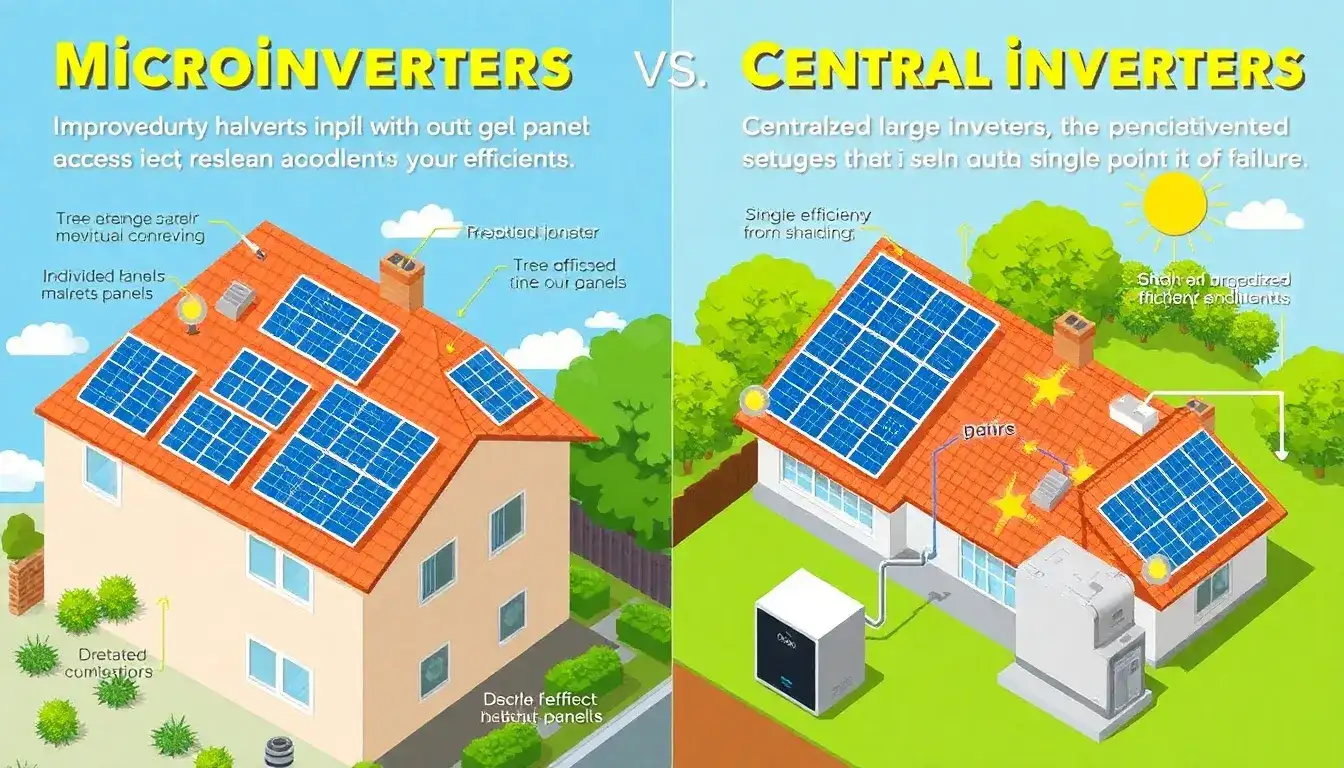
Benefits of Using Microinverters Over Central Inverters
1. Individual Panel Optimization and Increased Efficiency
Microinverters attach to each solar panel and convert DC to AC power individually. This design allows each panel to operate independently, preventing lower-performing panels (due to shade, dirt, or damage) from reducing the output of the entire system. This can lead to a 5-15% increase in overall solar energy production compared to central inverters, where all panels are linked in series and limited by the weakest panel in the string.
2. Better Performance in Shaded or Complex Roof Situations
Because microinverters optimize each panel separately, they are ideal for roofs with multiple angles, partial shading from chimneys or trees, or complex layouts. Unlike central inverters, where shading on one panel drags down the whole string’s output, microinverters minimize shading impact to only the affected panel(s) without compromising others.
3. Enhanced Monitoring Capabilities
Microinverters provide panel-level performance monitoring. Homeowners can track energy production per individual panel remotely, making it easier to identify and troubleshoot underperforming panels or equipment issues. Central inverters, in contrast, only provide aggregate system monitoring, complicating pinpointing problems.
4. Greater System Reliability and Uptime
In a microinverter setup, if one inverter fails, only the corresponding panel’s output is lost, while the rest of the system continues to function normally. In a central inverter system, if the inverter fails, the entire array stops producing electricity until repair.
5. Improved Safety
Microinverters convert electricity from DC to AC at the panel level, lowering the voltage running through the roof wiring. This reduces the risk of electrical fires compared to central inverters that consolidate high-voltage DC current traveling across the roof.
6. Easier System Expansion
Adding more panels in a microinverter system is straightforward because each panel operates independently. For central inverter systems, expansion might require installing an additional central inverter or replacing the existing one to handle increased capacity.
7. Longer Warranties
Microinverters typically come with a 25-year warranty, which matches or exceeds the lifespan of the solar panels themselves. Central inverters usually have shorter warranties (around 10–12 years), which can lead to higher long-term maintenance and replacement costs.
Summary Table of Benefits
| Benefit | Microinverters | Central Inverters |
|---|---|---|
| Panel-level optimization | Yes, each panel optimized independently | No, all panels in series |
| Efficiency gain | 5-15% higher overall production | Limited by lowest-performing panel |
| Performance in shade | Minimizes shading impact | Entire string output affected |
| Monitoring | Panel-level detailed monitoring | System-wide only |
| System reliability | Partial failure affects only one panel | Entire system affected if inverter fails |
| Safety | Lower voltage on roof wiring | High voltage DC runs across roof |
| System expansion | Easy, add panels individually | Complex, may require new inverter |
| Warranty | Typically 25 years | Typically 10–12 years |
Considerations
- Microinverters generally have a higher upfront cost compared to central inverters.
- Microinverters can be more difficult or costly to repair since each unit is mounted on the roof.
- Central inverters may offer easier monitoring for some users and potentially greater durability since they are installed in protected environments.
Conclusion
In conclusion, microinverters excel in maximizing solar power production, enhancing system reliability, safety, and monitoring, especially for homes with shading issues or complex roof configurations. Central inverters remain a cost-effective choice for simple, unshaded roofs but lack the panel-level advantages that microinverters provide.
Original article by NenPower, If reposted, please credit the source: https://nenpower.com/blog/what-are-the-benefits-of-using-microinverters-over-central-inverters/

