

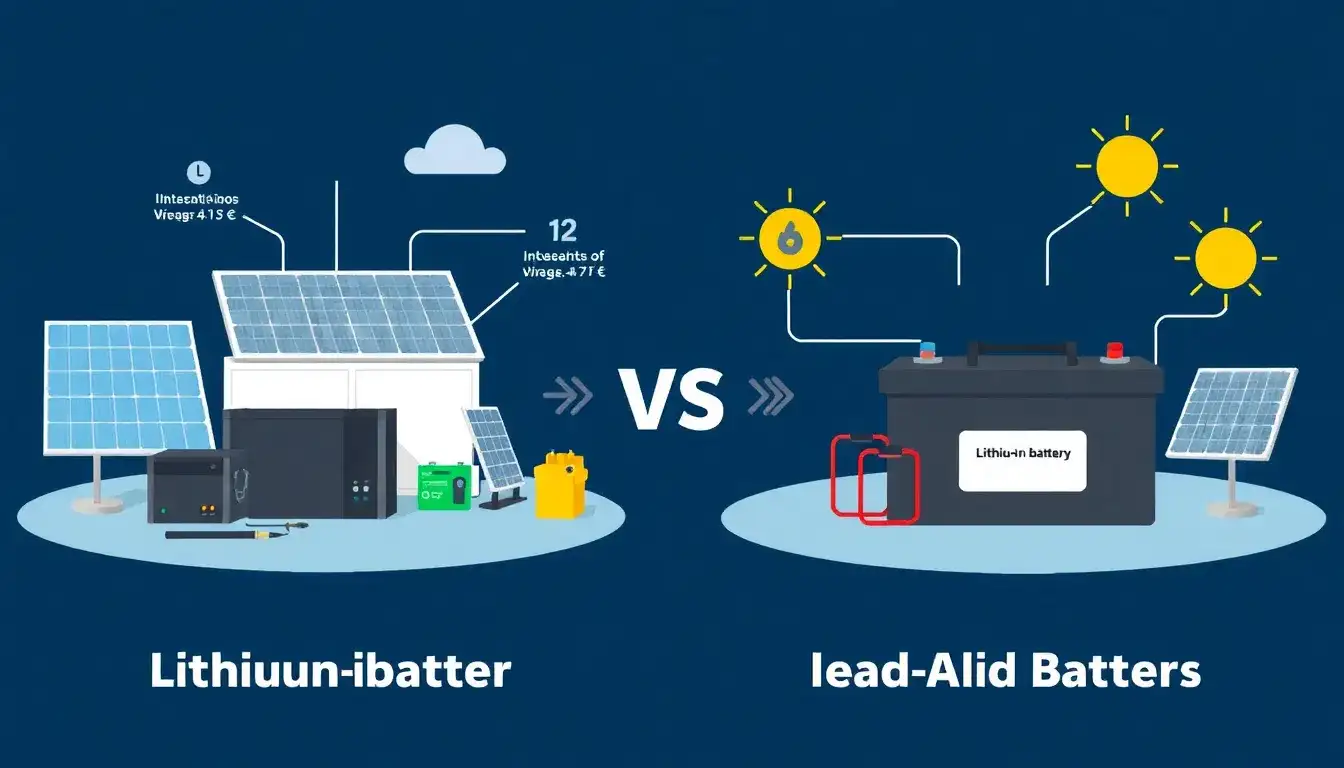
When comparing lithium-ion batteries to lead-acid batteries for use in solar systems, lithium-ion batteries offer several significant benefits:
Benefits of Lithium-Ion Batteries Over Lead-Acid Batteries
- Higher Efficiency: Lithium-ion batteries have a higher energy efficiency of about 90-95%, compared to 80-85% for lead-acid batteries. This means lithium-ion batteries can store and deliver more energy from solar panels.
- Longer Lifespan: Lithium-ion batteries generally last longer, with lifespans of 10-15 years compared to 3-12 years for lead-acid batteries. They also support more charge cycles, typically 2000-5000 cycles compared to 500-1000 for lead-acid.
- Deeper Depth of Discharge (DoD): Lithium-ion batteries can safely be discharged to around 80-85% capacity without significant damage, while lead-acid batteries usually should not exceed a 50% DoD to maximize lifespan.
- Higher Storage Capacity: Lithium-ion batteries typically offer greater storage capacities (over 15 kWh) compared to lead-acid batteries (1.5-5 kWh) for similar sizes.
- Lower Maintenance: While lithium-ion batteries require less maintenance, lead-acid batteries often need regular checks and adjustments to ensure optimal performance.
- Long-term Cost-Effectiveness: Despite higher upfront costs, lithium-ion batteries can be more cost-effective in the long run due to their longer lifespan and efficiency.
However, lead-acid batteries are cheaper upfront, which can be advantageous for small, infrequent use cases or budget-constrained projects.
Original article by NenPower, If reposted, please credit the source: https://nenpower.com/blog/what-are-the-benefits-of-using-lithium-ion-batteries-over-lead-acid-batteries-in-solar-systems/

