

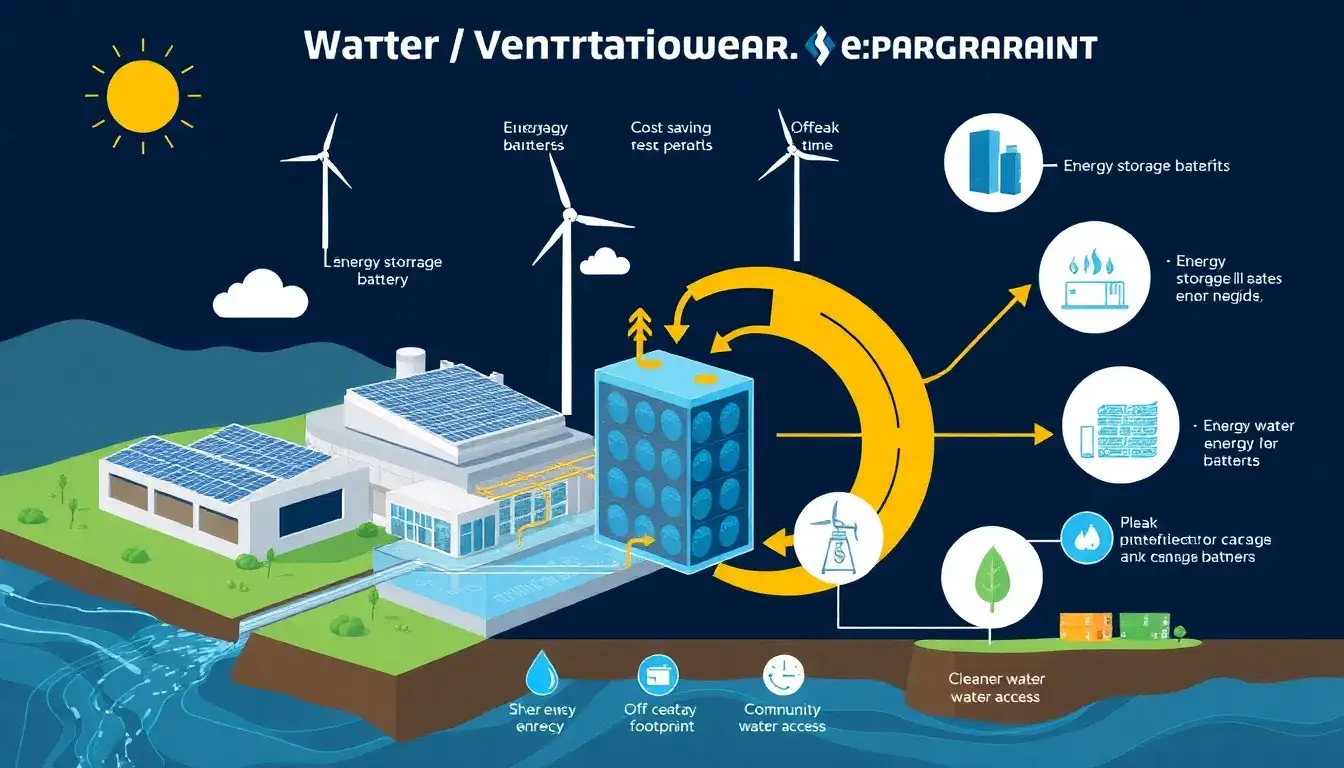
Benefits of Using Energy Storage Systems for Peak-Load Management in Water Treatment Facilities
Energy storage systems can play a crucial role in peak-load management for water treatment facilities by offering several key benefits:
Benefits
-
Reducing Peak Demand
- Energy storage systems reduce strain on the electrical grid during peak hours by providing additional power, thus preventing overload and the need for costly infrastructure upgrades.
- This helps manage energy costs associated with peak demand charges, which are often higher than regular usage rates.
-
Cost Savings
- By shifting energy use from peak to off-peak times, facilities can take advantage of lower electricity rates, reducing overall energy expenditures.
-
Reliability and Resilience
- Energy storage provides a backup power source during grid outages or disruptions, ensuring continuous operation of critical water treatment processes.
- This is particularly important for maintaining water quality and preventing public health issues during emergencies.
-
Integration of Renewable Energy
- Energy storage systems can stabilize the output from intermittent renewable sources like solar and wind, enabling facilities to use more renewable energy while maintaining consistent power supply.
- This integration supports decarbonization efforts and reduces dependence on fossil fuels, aligning with environmental goals.
-
Operational Flexibility
- Energy storage allows facilities to optimize their energy usage based on real-time pricing and demand conditions, enhancing operational flexibility and financial management.
- This flexibility also supports participation in energy-saving programs offered by utilities, potentially generating additional revenue.
-
Stabilizing Grid Operations
- By balancing supply and demand, energy storage helps maintain grid stability and reliability, which is essential for both water treatment facilities and the broader community.
Challenges
While energy storage systems offer numerous benefits, they also pose several challenges:
- Equipment Costs: Implementing energy storage systems can be capital-intensive, although costs are decreasing over time.
- Technology Selection: Choosing the right technology—such as battery energy storage systems (BESS) or pumped storage hydropower—depends on specific site conditions and energy requirements.
- Integration Complexity: Effective integration with existing infrastructure and renewable energy sources requires careful planning and management.
Overall, energy storage systems are a valuable tool for water treatment facilities to manage peak loads efficiently, reduce costs, enhance reliability, and support renewable energy integration.
Original article by NenPower, If reposted, please credit the source: https://nenpower.com/blog/what-are-the-benefits-of-using-energy-storage-systems-for-peak-load-management-in-water-treatment-facilities/

