

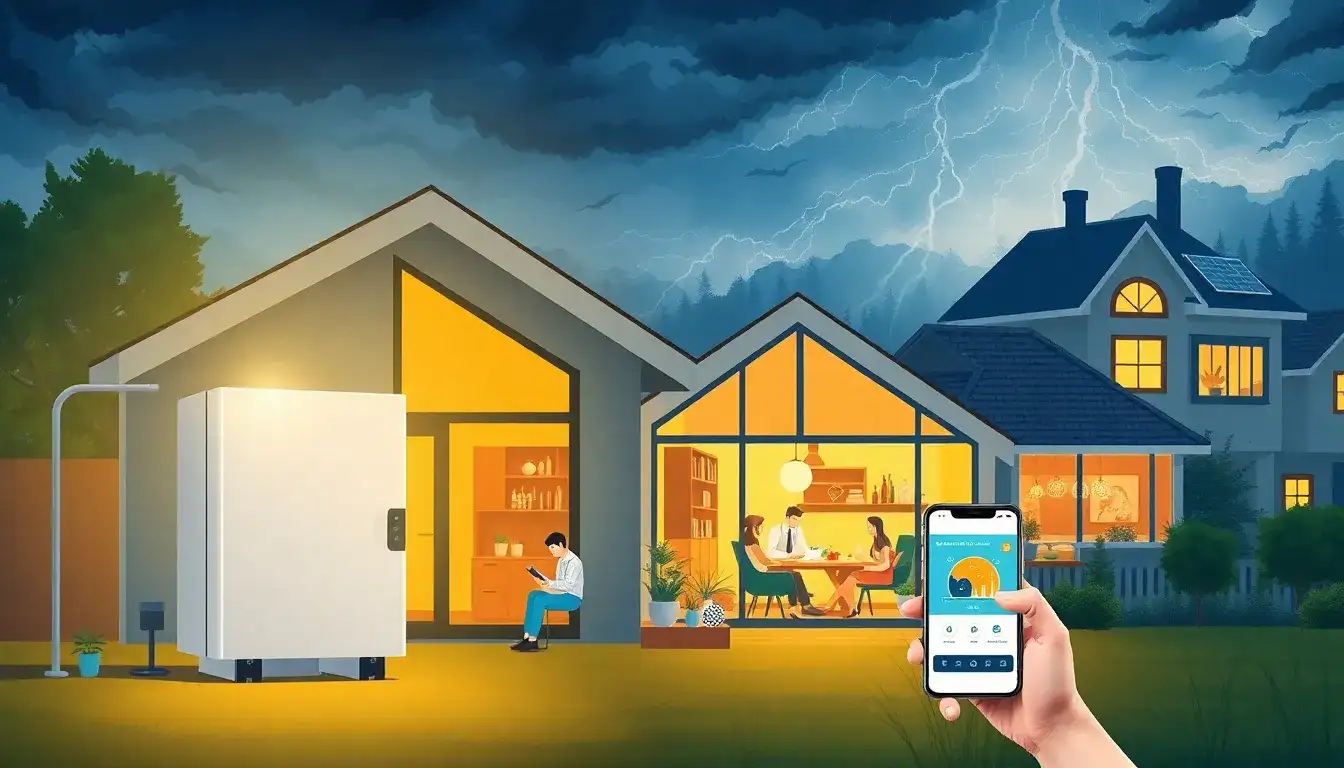
- Minimized Power Outages: Energy storage helps maintain continuous power supply, reducing disruptions from outages. This is crucial for critical services and infrastructure, such as hospitals, communication networks, and emergency response systems.
- Improved Grid Resiliency: By strategically placing batteries, the grid can better manage peak demand and unexpected disruptions. This allows for proactive load management, enhancing overall grid stability.
- Ensure Productivity: Battery storage ensures that work from home and businesses can continue uninterrupted during planned or unplanned power outages, maintaining productivity.
- Safe and Comfortable Living Conditions: Energy storage systems allow heating and cooling systems to operate, providing a safe environment during extreme weather conditions.
- Protection of Essential Appliances: These systems ensure that critical appliances like refrigerators and medical devices remain operational, safeguarding food and health during outages.
- Environmentally Friendly: Unlike traditional generators, battery storage systems are clean and quiet, offering a sustainable solution for energy needs.
- Energy Independence: With a battery storage system, homes can operate independently of the grid during outages, providing peace of mind and energy security.
- Avoidance of Backup Generators: Energy storage systems eliminate the need for fossil fuel-based backup generators, reducing reliance on polluting alternatives.
Overall, energy storage systems provide economic, environmental, and societal benefits by ensuring reliable power access during emergencies.
Original article by NenPower, If reposted, please credit the source: https://nenpower.com/blog/what-are-the-benefits-of-using-energy-storage-systems-during-power-outages/

