

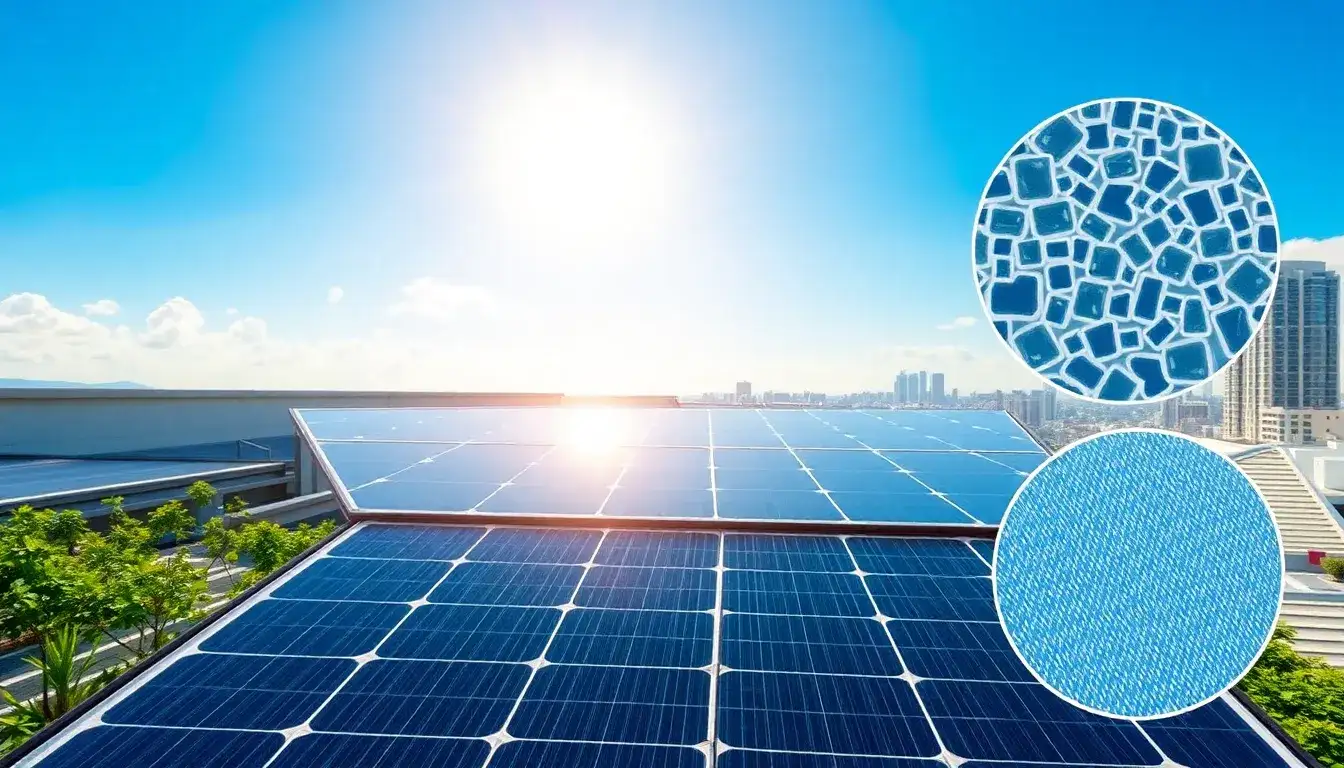
Key Benefits of Anti-Reflective Coatings on Solar Panels
- Improved Light Absorption and Efficiency
ARCs reduce the reflection of sunlight on the surface of solar panels, allowing a greater amount of light to penetrate through the glass and reach the photovoltaic (silicon) cells. Since bare silicon can reflect up to 30% of incoming sunlight, these coatings increase the effective light absorption and improve the panel’s efficiency by typically 3-5.5%, leading to higher electricity generation. - Enhanced Performance in Low-Light and Harsh Conditions
AR coatings improve performance not only in bright sunlight but also during cloudy days or when the sun is low on the horizon. This boosts energy yield at different times and under varying weather conditions. - Increased Energy Output and Reduced Levelized Cost of Energy (LCOE)
Research shows that solar modules with ARCs can generate about 5.5% more electricity compared to conventional modules, effectively lowering the LCOE by roughly 2.7%. This translates to significant economic benefits especially for large-scale solar power plants. - Hydrophobic and Self-Cleaning Properties
Many modern ARCs include hydrophobic coatings that repel water and reduce dirt accumulation on panel surfaces. This keeps panels cleaner for longer periods, decreases the frequency and cost of cleaning, and maintains high efficiency throughout the panel’s operational life. - Long-Term Durability
ARCs have excellent resistance to UV radiation, moisture, and abrasion. Laboratory abrasion tests indicate that such coatings can maintain optimal optical properties for decades, supporting dry cleaning methods and reducing maintenance costs in harsh climates like deserts. - Reduced Glare and Aesthetic Benefits
Applying AR coatings on the glass surface of solar panels decreases glare, which can improve visual integration of panels into their surroundings and allow safer installation near airports or residential areas. - Climate-Specific Advantages
In hot and dusty environments (e.g., parts of India and deserts), ARCs help sustain performance despite high temperatures and dust accumulation. The coatings’ ability to function effectively at temperatures up to 85°C and incorporate self-cleaning properties is especially valuable in such regions.
Summary Table of Benefits
| Benefit | Description |
|---|---|
| Increased Light Absorption | Reduces reflection, more sunlight reaches cells, boosting efficiency by about 3-5.5% |
| Enhanced Low-Light Performance | Improves output in cloudy weather and low sun angles |
| Higher Energy Generation | Increases electricity yield and lowers cost per kWh (LCOE reduced by ~2.7%) |
| Hydrophobic Properties | Water repellency reduces dirt build-up and cleaning frequency |
| Long-Term Durability | UV and abrasion resistant, maintains performance for decades |
| Reduced Glare | Less reflective glare, safer installations in sensitive zones |
| Climate Adaptation | Works well in high temperature, dusty environments, maintaining efficiency |
| Economic Benefits | Faster ROI due to higher production and lower maintenance costs |
In conclusion, anti-reflective coatings substantially optimize solar panel performance and lifespan. They enable more efficient energy conversion, reduce maintenance efforts and costs, and improve the overall economic feasibility of solar installations, particularly in challenging climates.
Original article by NenPower, If reposted, please credit the source: https://nenpower.com/blog/what-are-the-benefits-of-using-anti-reflective-coatings-on-solar-panels/

