

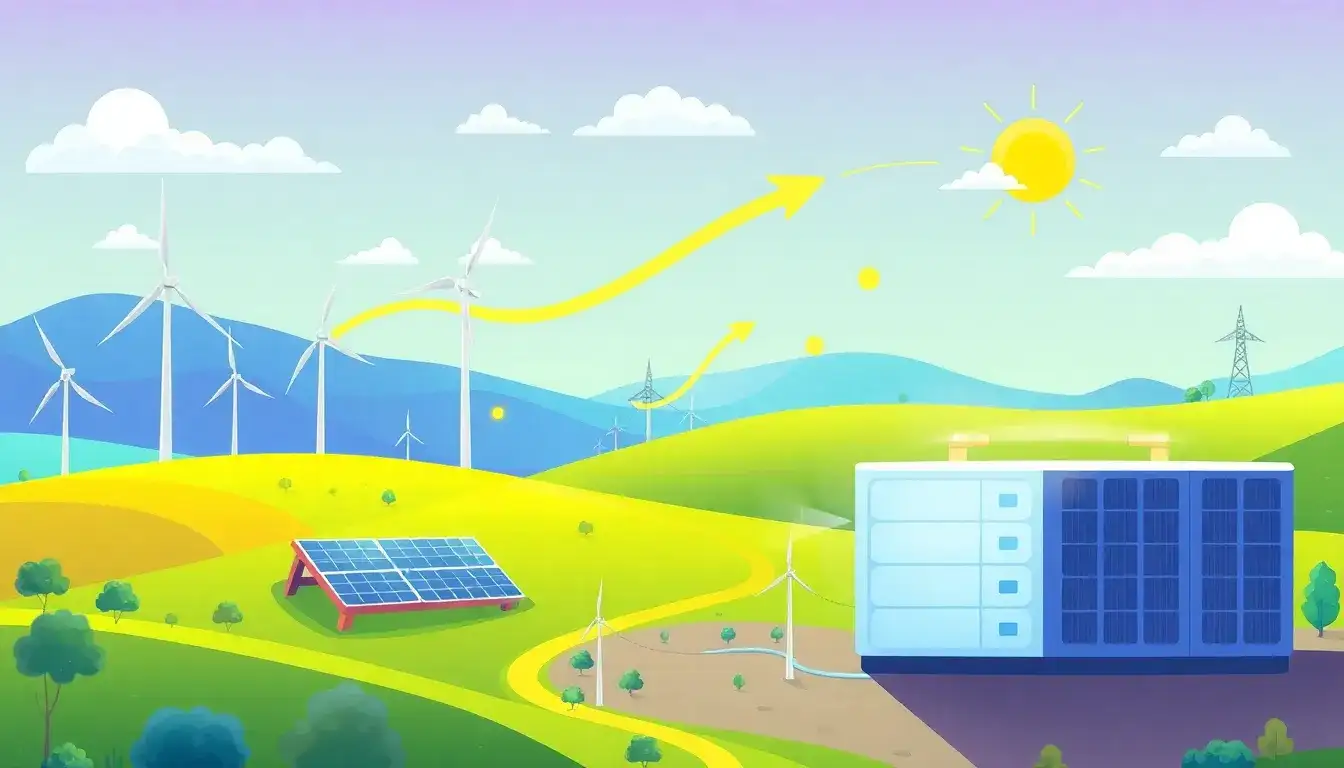
Co-locating utility-scale battery energy storage systems (BESS) with variable renewable energy (VRE) generators such as solar PV and wind offers multiple significant benefits:
Increased Renewable Energy Utilization and Efficiency
- Pairing batteries with solar or wind enables better capture and use of clean energy by storing excess generation when resource availability is high and discharging during times of low generation or high demand. This reduces curtailment of renewable energy and maximizes the use of affordable clean power for homes and businesses.
- Co-location allows cost-sharing and operational efficiencies between the generation and storage assets, improving overall system economics.
Grid Flexibility and Stability
- Batteries provide critical grid services such as frequency regulation, flexible ramping, and reserves, helping to smooth the variable output of renewables and maintain power quality and reliability.
- They can enable firm capacity by storing renewable generation and delivering power when the sun isn’t shining or the wind isn’t blowing, thus making renewable generation more dependable.
Transmission and Infrastructure Benefits
- For renewable resources located far from load centers, co-located batteries reduce the need for expensive transmission infrastructure expansions by charging during periods of excess local generation and discharging during demand peaks, thus better utilizing existing transmission capacity.
- This also helps alleviate transmission congestion and defers investments in grid reinforcement or new peak generation facilities.
Multiple Value Streams through “Value-Stacking”
- Batteries co-located with VRE can provide multiple services simultaneously—energy shifting, capacity firming, ancillary grid services, and congestion management—improving utilization rates and financial returns of storage assets.
Environmental and Economic Impact
- By facilitating higher penetration of renewable energy, co-located batteries reduce reliance on fossil fuel generation and decrease greenhouse gas emissions.
- In isolated or off-grid settings, pairing batteries with renewables can replace expensive and polluting diesel generators, lowering costs and emissions.
Summary Table of Benefits
| Benefit Area | Description |
|---|---|
| Renewable Energy Utilization | Increased clean energy use, reduced curtailment, cost-sharing |
| Grid Flexibility & Stability | Frequency regulation, ramping, firm capacity |
| Transmission Optimization | Reduced transmission needs, congestion relief |
| Financial Optimization | Multiple simultaneous services, improved asset utilization |
| Environmental & Off-grid Impact | Reduced fossil fuel use, lower emissions, cheaper electricity |
In essence, co-locating utility-scale batteries with variable renewable energy generators significantly enhances renewable integration, grid resilience, and economic value while supporting system decarbonization and reliability goals.
Original article by NenPower, If reposted, please credit the source: https://nenpower.com/blog/what-are-the-benefits-of-co-locating-utility-scale-batteries-with-variable-renewable-energy-generators/

