

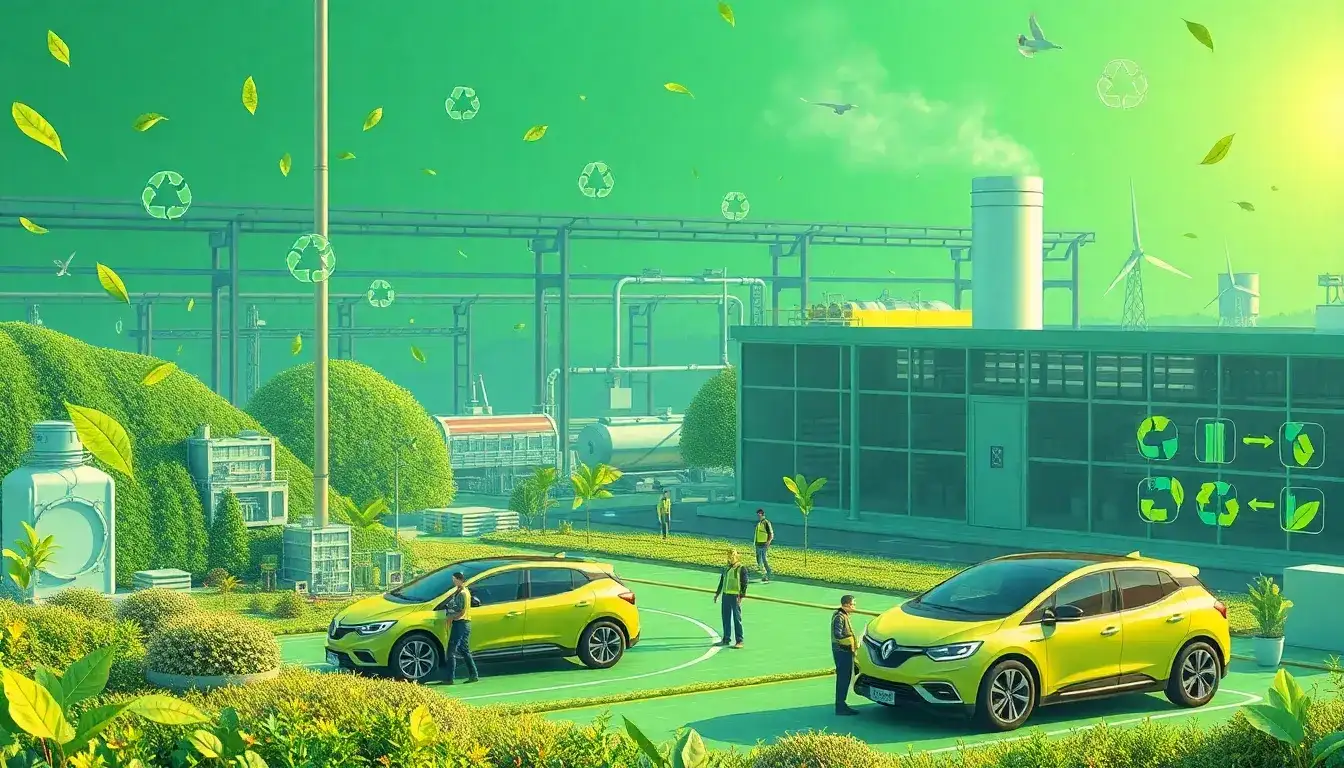
Adopting a circular economy in electric vehicle (EV) manufacturing offers numerous benefits across environmental, economic, and supply chain resilience categories. Here are the key advantages:
Environmental Benefits
- Reducing Raw Material Demand: Reusing and recycling components decreases the need for new raw materials, which in turn reduces the environmental impact of resource extraction, such as mining.
- Lowering Energy Consumption: Remanufacturing and recycling consume less energy compared to producing components from scratch, resulting in reduced greenhouse gas emissions.
- Minimizing Landfill Waste: By reusing or recycling EV components, fewer materials end up in landfills, which is especially important for hazardous materials like lithium-ion batteries.
Economic and Supply Chain Benefits
- Strengthening the Supply Chain: A circular economy helps meet mineral supply gaps by recovering minerals from end-of-life EV batteries, making supply chains more resilient and less dependent on virgin materials.
- Enhancing Sustainability and Profitability: Integrating circular strategies for all auto parts can increase profitability by reducing waste and the costs associated with raw material extraction and processing.
- Promoting Regional Supply Chain Resilience: By reducing dependence on a few key countries for raw materials, a circular economy can bolster regional supply chains, allowing them to withstand disruptions better.
Broader Implications
- Model for Sustainable Manufacturing: The EV industry sets an example for sustainable manufacturing practices that can be adopted across various sectors, demonstrating how businesses can reduce their environmental footprint and stimulate economic growth.
Overall, embracing a circular economy in EV manufacturing not only supports a more sustainable and environmentally friendly production process but also enhances economic stability and supply chain resilience.
Original article by NenPower, If reposted, please credit the source: https://nenpower.com/blog/what-are-the-benefits-of-adopting-a-circular-economy-in-ev-manufacturing/

