

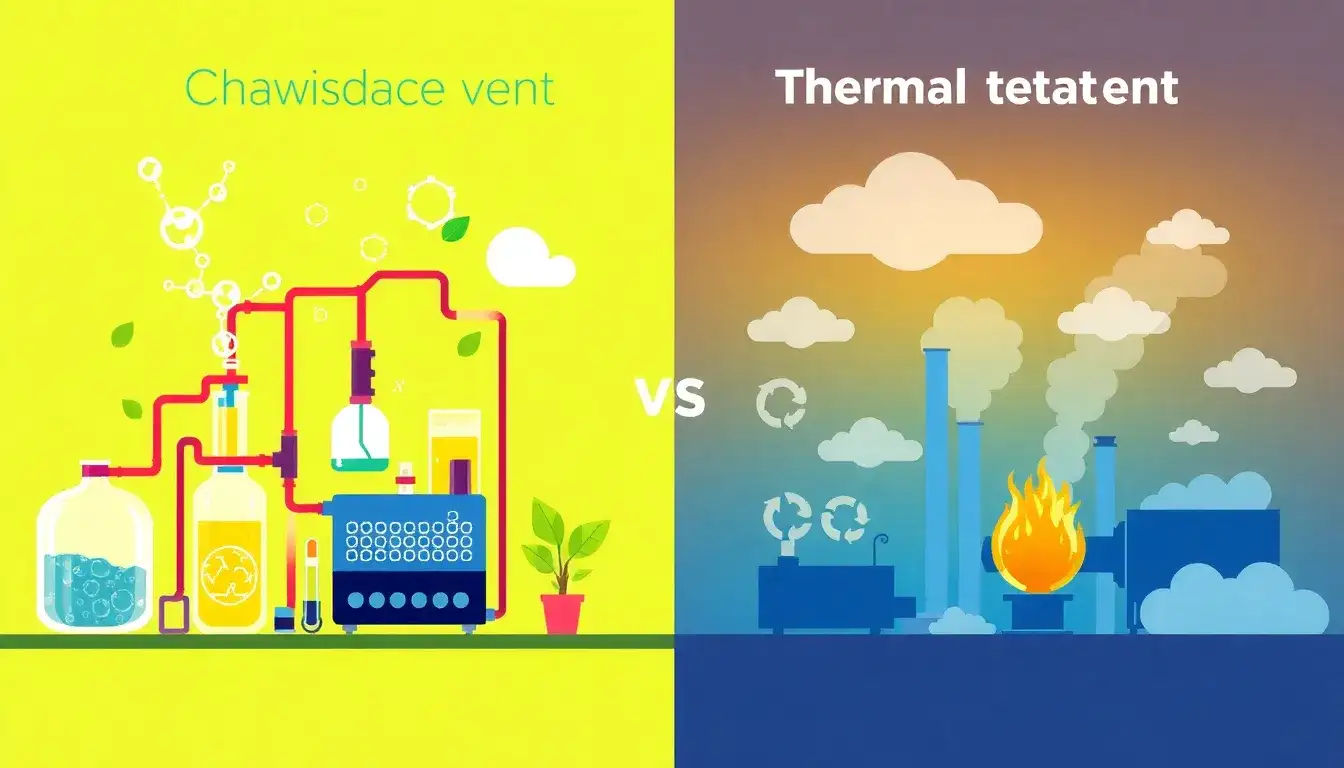
Advantages of Chemical Treatment Over Thermal Treatment in PV Recycling
Advantages of Chemical Treatment:
- Preservation of Materials: Chemical treatment is effective without damaging the glass and solar cells, preserving their integrity and allowing for high-quality material recovery. This is crucial because it enables the reuse of valuable components, such as silicon cells and glass, in new products.
- Environmental Benefits: Chemical processes can significantly reduce environmental impacts like acidification and eutrophication compared to some thermal methods. This is due to the ability to manage and treat chemical waste more effectively, though it still requires complex handling.
- Reduced Emissions: Chemical treatment generally produces fewer toxic emissions compared to thermal methods, which often release harmful fumes due to high temperatures.
Challenges in Chemical Treatment:
- Cost and Time: The chemicals used in this process are expensive, and the reaction time with adhesives and encapsulants can be lengthy, typically up to 10 days. This makes chemical delamination more resource-intensive than thermal methods.
- Complex Waste Management: The used chemical waste requires a complex treatment process, adding to the overall cost and environmental impact of this method.
Conclusion: While chemical treatment in PV recycling offers several advantages over thermal treatment, particularly in terms of material preservation and reduced emissions, it also presents challenges such as higher costs and longer processing times. The choice between methods depends on the balance between environmental benefits and operational efficiency.
Original article by NenPower, If reposted, please credit the source: https://nenpower.com/blog/what-are-the-advantages-of-chemical-treatment-over-thermal-treatment-in-pv-recycling/

