

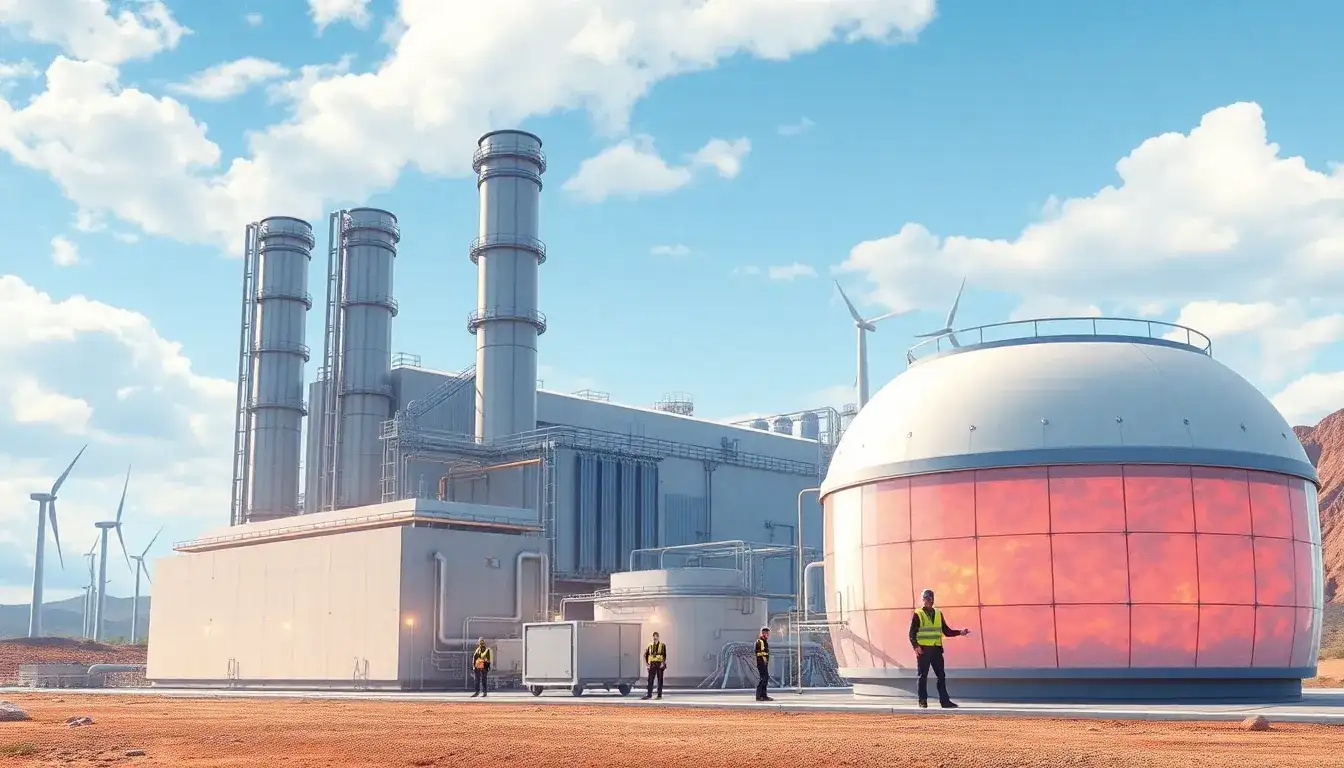
Using molten salt as a heat storage medium in Compressed Air Energy Storage (CAES) systems has distinct advantages and disadvantages rooted in its thermal properties and operational requirements.
Advantages of Using Molten Salt in CAES Heat Storage
- High Thermal Energy Storage Capacity: Molten salts can store large amounts of thermal energy per unit volume due to their high heat capacity, making them suitable for efficiently storing the heat generated or needed in CAES processes.
- Thermal Stability and Durability: The chemical stability and high thermal resistance of molten salts allow them to undergo numerous heating and cooling cycles with minimal degradation, enhancing the longevity and reliability of the heat storage system.
- Compatibility with High-Temperature Applications: Molten salts are well-suited for high-temperature thermal energy storage, as they remain liquid and stable at temperatures often exceeding 250°C, which aligns with the thermal requirements in CAES for heat regeneration or expander heating.
- Cost-Effectiveness for Large-Scale Storage: Compared to other energy storage technologies like batteries, molten salt thermal storage is more economical for large-scale applications, benefiting CAES systems that aim for substantial energy capacity.
- Reduced Intermittency in Energy Supply: When integrated into CAES, molten salt heat storage can store excess heat during compression and release it efficiently during air expansion, improving overall system efficiency and energy dispatchability.
Disadvantages of Using Molten Salt in CAES Heat Storage
- Need for Constant High Temperature Maintenance: Molten salts must be kept above their melting point (typically >250°C) to avoid solidification, which demands continuous energy input to maintain temperature, increasing parasitic energy losses and operational complexity.
- Thermal Losses Over Time: Despite good thermal insulation, molten salt storage tanks experience heat losses during storage and heat transfer phases, which can reduce overall system efficiency, especially if stored for extended periods.
- Corrosion and Material Constraints: The high operating temperatures and chemical nature of molten salts can cause corrosion or degradation in containment materials if not properly selected, increasing maintenance costs and system downtime risks.
- Infrastructure and Initial Investment: The construction of insulated tanks and associated infrastructure for molten salt thermal storage requires capital-intensive investment and may limit deployment in regions lacking supporting facilities or expertise.
- Operational Complexity: Managing molten salt heat storage involves handling molten materials safely and reliably, which adds operational challenges compared to simpler heat storage mediums or direct electrical storage technologies.
In summary, molten salt as a heat storage medium in CAES offers high storage capacity, thermal stability, and cost advantages for large-scale, high-temperature energy storage. However, these benefits come with challenges such as the need to maintain high operating temperatures continuously, thermal losses, corrosion issues, and higher capital and operational demands. The choice to use molten salt in CAES systems involves balancing these factors based on scale, economic considerations, and technical capabilities.
Original article by NenPower, If reposted, please credit the source: https://nenpower.com/blog/what-are-the-advantages-and-disadvantages-of-using-molten-salt-as-a-heat-storage-medium-in-caes/

