

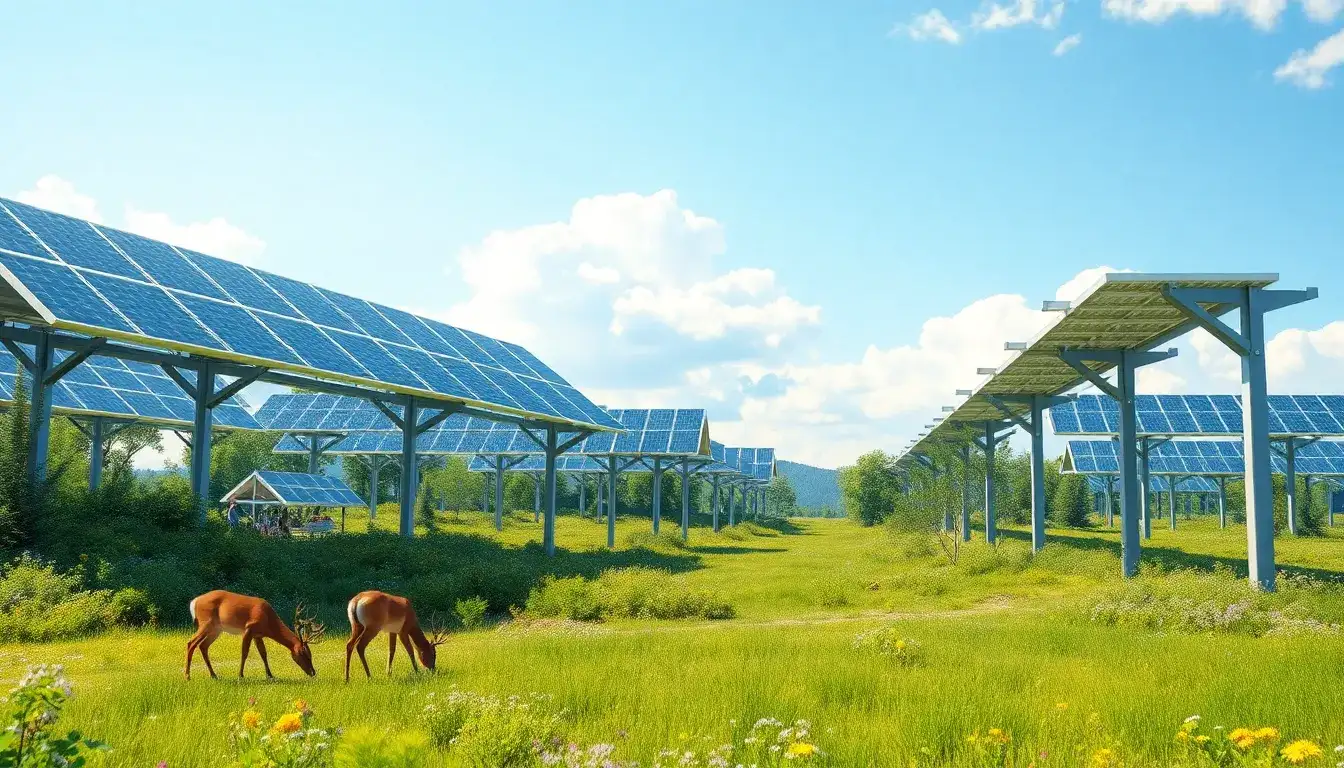
Innovative solutions to minimize the impact of solar panels on wildlife focus on integrating ecological considerations into solar energy development to support biodiversity while maintaining renewable energy goals. Key approaches include:
Habitat-Friendly Solar Panel Design and Placement
- Elevated Solar Panels: Raising solar panels higher above the ground (e.g., 42 inches rather than the industry standard 24 inches) allows for vegetation growth beneath the panels and preserves habitat connectivity for ground-dwelling species.
- Increased Spacing Between Panels: Expanding the spacing between arrays (from 14 feet to 20 feet) reduces habitat fragmentation and allows more sunlight to reach the ground, supporting native vegetation and wildlife movement.
- Maintaining Natural Topography and Vegetation: Minimizing vegetation clearing and only clipping what is necessary helps preserve existing plants and microhabitats, benefiting local wildlife.
Wildlife Passage and Protection Measures
- Perimeter Fence Openings: Installing small openings (e.g., 10 inches wide by 7 inches tall) in fences around solar sites enables safe passage for small wildlife species, maintaining landscape connectivity.
- Protective Fencing and Wildlife Crossings: Specialized fencing and designated wildlife corridors help protect vulnerable species, such as the desert tortoise in California’s Mojave Desert, reducing mortality and habitat disruption.
- Temporary Relocation and Monitoring: For species particularly at risk, temporary relocation before construction and use of radio telemetry to monitor post-construction movement support conservation efforts.
Environment-Integrated Solar Arrays
- Floating Solar Panels: Deploying solar panels on water bodies provides benefits such as shading reservoirs to reduce evaporation, lower water temperatures, and create healthier aquatic habitats—helping conserve water and support aquatic wildlife in drought-prone areas.
- Incorporating Native Plantings and Pollinator Habitats: Designing solar sites with native plants and pollinator-friendly vegetation enhances local biodiversity, supports pollinators and other wildlife, and improves ecosystem health within solar arrays.
Design to Reduce Wildlife Disturbance
- Optimized Panel Orientation: Positioning panels to reduce glare and light pollution minimizes disruption to nocturnal species like bats and night-flying insects.
- Restricting Vehicle Speeds and Access: Limiting maintenance vehicles to small utility types with low speeds reduces wildlife disturbance and vehicle-related mortality within solar farms.
Collaborative Conservation Efforts
- Partnering with wildlife biologists and conservation organizations enables solar developers to conduct species surveys and implement tailored mitigation strategies, as demonstrated by successful cases like the Solar Energy Generating Systems (SEGS) in California and the Topaz Solar Farm.
- Using pilot projects to test and refine wildlife-friendly protocols helps evolve best practices that balance renewable energy production and wildlife conservation.
These innovative approaches demonstrate that thoughtful solar design and operational practices can transform solar energy sites into habitats that support rather than compromise wildlife populations, advancing both clean energy and ecological stewardship goals.
Original article by NenPower, If reposted, please credit the source: https://nenpower.com/blog/what-are-some-innovative-solutions-to-minimize-the-impact-of-solar-panels-on-wildlife/

