

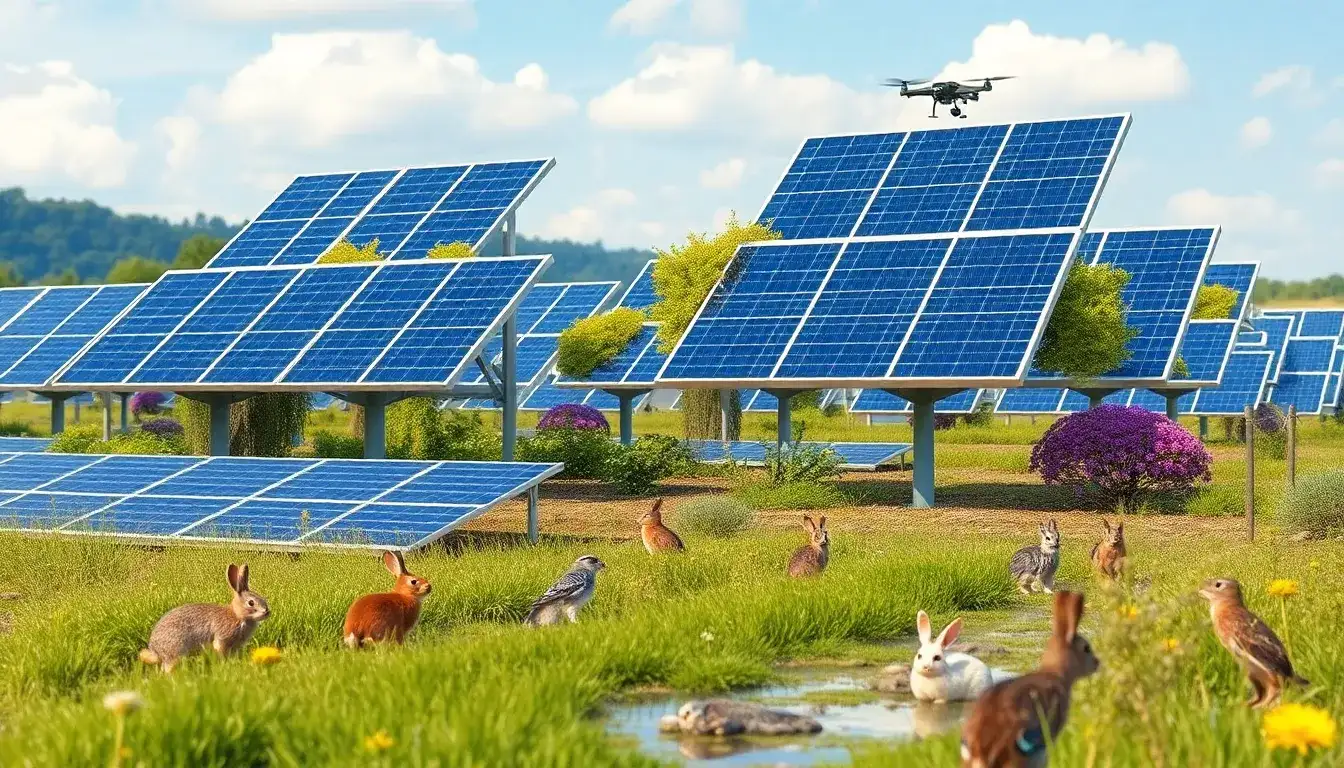
Innovative Methods for Wildlife Conservation in Solar Projects
1. Habitat Creation and Enhancement
- Native Vegetation: Planting native grasses and wildflowers around solar arrays attracts pollinators like bees and butterflies, enhancing biodiversity.
- Biodiversity Hotspots: Identifying and avoiding areas of high biodiversity helps minimize ecological impacts during solar development.
2. Wildlife-Friendly Design
- Solar Panel Orientation and Placement: Optimizing panel orientation reduces visual disturbance and solar glare, lessening impacts on nocturnal species.
- Innovative Panel Placement: Elevating panels higher than standard allows vegetation to grow underneath, supporting ecosystem health.
3. Protecting Endangered Species
- Species-Specific Measures: Implementing protective measures such as relocation efforts for endangered species like the desert tortoise during construction phases.
- Habitat Restoration and Wildlife Crossings: Creating wildlife crossings and restoring habitats to ensure species continuity.
4. Monitoring and Adaptive Management
- Real-Time Monitoring: Employing sensors to track wildlife movements helps in refining conservation strategies over time.
- Collaboration with Conservationists: Working with ecologists and conservation organizations ensures that habitat creation aligns with local wildlife needs.
5. Reduced Vehicle Impacts
- Limited Vehicle Use: Restricting maintenance vehicles to reduce disturbance and ensuring staff are trained in wildlife awareness.
These methods demonstrate that solar energy can be harnessed effectively while preserving natural habitats and supporting local wildlife populations.
Original article by NenPower, If reposted, please credit the source: https://nenpower.com/blog/what-are-some-innovative-methods-used-in-solar-projects-to-conserve-wildlife/

