

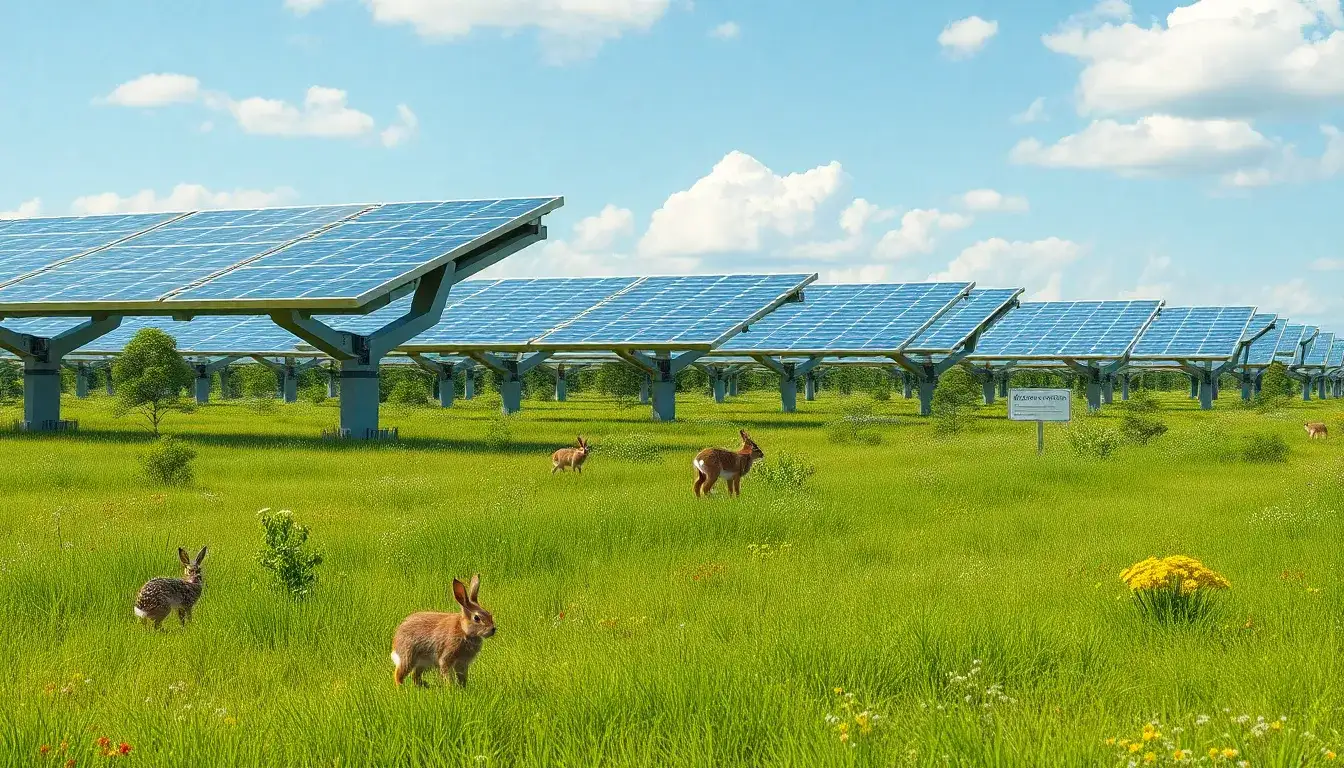
Innovative Design Features to Minimize Wildlife Collisions with Solar Panels
1. Panel Surface Treatments and Coatings
- Applying bird-friendly features such as textured or patterned glass surfaces, anti-reflective coatings, and UV-visible markings improves panel visibility to birds to reduce collision risk. These coatings make the panels more apparent in birds’ visual spectrum, helping them avoid flying into panels mistaken for open sky or water.
- Research is ongoing to develop multifunctional solar control coatings that combine energy efficiency with bird collision prevention.
2. Solar Panel Orientation and Placement
- Adjusting the tilt angles and orientation to reduce reflective glare minimizes disruption to wildlife behavior and decreases the likelihood that birds and flying insects will mistake panels for water or open sky.
- Reducing light pollution and reflective surfaces also helps protect nocturnal wildlife such as bats and night-flying insects.
3. Elevated and Spaced Panel Arrays
- Installing panels elevated higher off the ground (e.g., 42 inches instead of industry standard 24 inches) allows more light and natural vegetation beneath, supporting habitat and reducing the “lake illusion” that attracts birds.
- Increasing spacing between panels (e.g., from 14 feet to 20 feet) can reduce visual confusion and collision risk.
4. Habitat Integration and Connectivity
- Incorporating native plantings, pollinator gardens, and wildlife corridors within solar arrays promotes biodiversity and provides foraging and nesting opportunities for various species.
- Facilitating natural wildlife movement by including openings in perimeter fencing (e.g., 10×7 inch openings every 260 feet) supports habitat connectivity and reduces injury or mortality associated with confinement.
5. Use of Artificial Intelligence and Monitoring Technology
- AI-enabled camera systems are being used to monitor bird behavior around solar panels in real time, detecting different interactions such as flying over, perching, or colliding. This technology helps researchers understand risk patterns and develop targeted mitigation strategies.
- Early findings show low collision incidences, suggesting current or improved designs may be effective, but further large-scale studies are needed.
6. Construction and Operational Protocols
- Wildlife-sensitive site preparation (e.g., minimizing vegetation clearing), restricting maintenance vehicle speeds, and wildlife awareness training for staff reduce habitat disturbance and direct risk to animals during construction and operation.
- Temporary relocation and monitoring of vulnerable species such as desert tortoises help avoid harm during solar facility developments.
These designs represent a holistic approach to sustainable solar energy development that balances maximizing renewable energy output with protecting wildlife. By combining thoughtful physical design, habitat integration, advanced materials, and monitoring technologies, solar facilities can significantly reduce wildlife collisions and support ecosystem health alongside clean energy goals.
Original article by NenPower, If reposted, please credit the source: https://nenpower.com/blog/what-are-some-innovative-designs-to-minimize-wildlife-collisions-with-solar-panels/

