

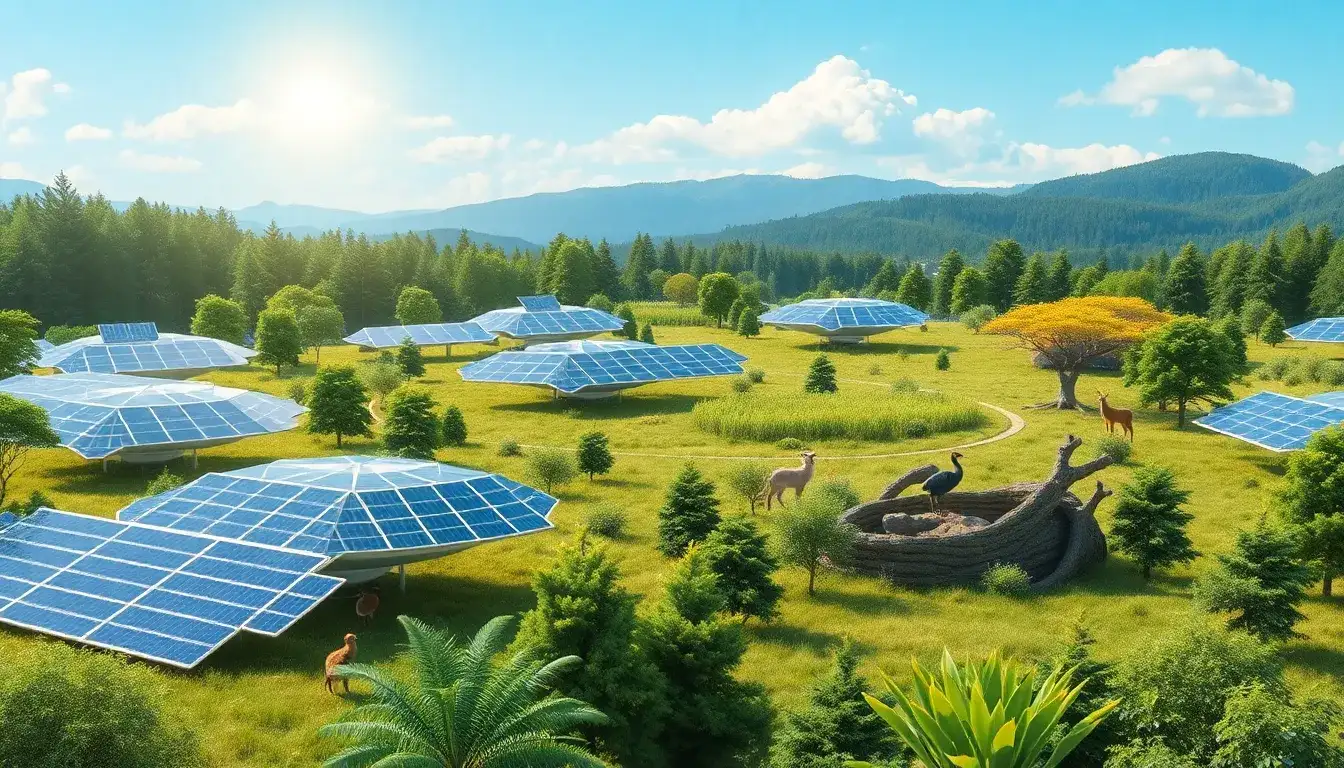
Innovative designs for wildlife-friendly solar panels focus on integrating renewable energy production with habitat conservation and minimizing negative impacts on wildlife. Key approaches include:
Innovative Solar Panel Placement and Habitat Integration
- Panels are installed with minimal vegetation clearing, preserving natural topography and native plants to maintain functional habitats. For example, the Desert Sunlight Solar Farm raised the lower edge of solar panels to 42 inches above ground (above the industry standard of 24 inches) to allow vegetation growth underneath and increased spacing between panels from 14 to 20 feet to reduce the visual effect of a continuous shiny surface, thus minimizing disruption to wildlife like the Mojave desert tortoise.
- Openings are incorporated into perimeter fencing to maintain habitat connectivity, such as 10 inches by 7 inches gaps spaced regularly to allow wildlife movement.
- Relocation and monitoring of sensitive species during construction help protect vulnerable wildlife populations.
Bird-Friendly and Wildlife-Safe Panel Designs
- Utilization of non-reflective or matte solar panels reduces glare and reflections that can confuse or harm birds and flying insects.
- Collaboration with ornithologists to identify collision risk areas and incorporation of bird-safe design features, such as panel orientation and surface treatments, reduce avian mortality.
- Monitoring programs adjust designs based on observed wildlife behavior to continually reduce harmful impacts.
Pollinator-Friendly Solar Habitats
- Projects like the Butter Solar Project in Minnesota integrate native plantings between panels to create pollinator habitats, supporting biodiversity alongside energy production.
Biomimicry in Solar Panel Mounting and Operation
- Inspired by geckos’ unique adhesion, some solar panel mounts use tiny hair-like structures to adhere panels without adhesives or heavy hardware, reducing installation damage and facilitating easy removal/replacement, which is less disruptive to the underlying habitat.
Wildlife-Friendly Lighting for Solar Facilities
- Use of solar-powered, low-wattage, wildlife-sensitive lighting designs with shielded bulbs and long wavelengths minimizes disturbance to nocturnal animals while maintaining safety.
- These lighting solutions reduce the need for invasive infrastructure work (e.g., trenching), thereby protecting underground ecosystems.
Summary Table of Innovations
| Innovation Category | Design Feature | Wildlife Benefit |
|---|---|---|
| Solar Panel Placement | Higher elevation (42 inches), larger spacing (20 feet) | Allows vegetation growth, reduces habitat loss |
| Habitat Connectivity | Fencing openings (10″x7″) | Enables free movement of wildlife |
| Bird-Friendly Panels | Non-reflective surfaces, bird collision monitoring | Minimizes bird strikes and disorientation |
| Pollinator Habitat Integration | Native plant seeding between panels | Supports pollinator populations and biodiversity |
| Biomimetic Mounting | Gecko-inspired adhesive structures | Low-impact installation, preserves substrates |
| Wildlife-Friendly Lighting | Solar-powered, low wattage, shielded, long wavelength bulbs | Reduces night-time disturbance to wildlife |
These designs demonstrate that solar energy development can be harmonized with ecological needs to create “power-generating habitats” that serve both humans and wildlife.
Original article by NenPower, If reposted, please credit the source: https://nenpower.com/blog/what-are-some-innovative-designs-for-wildlife-friendly-solar-panels/

