

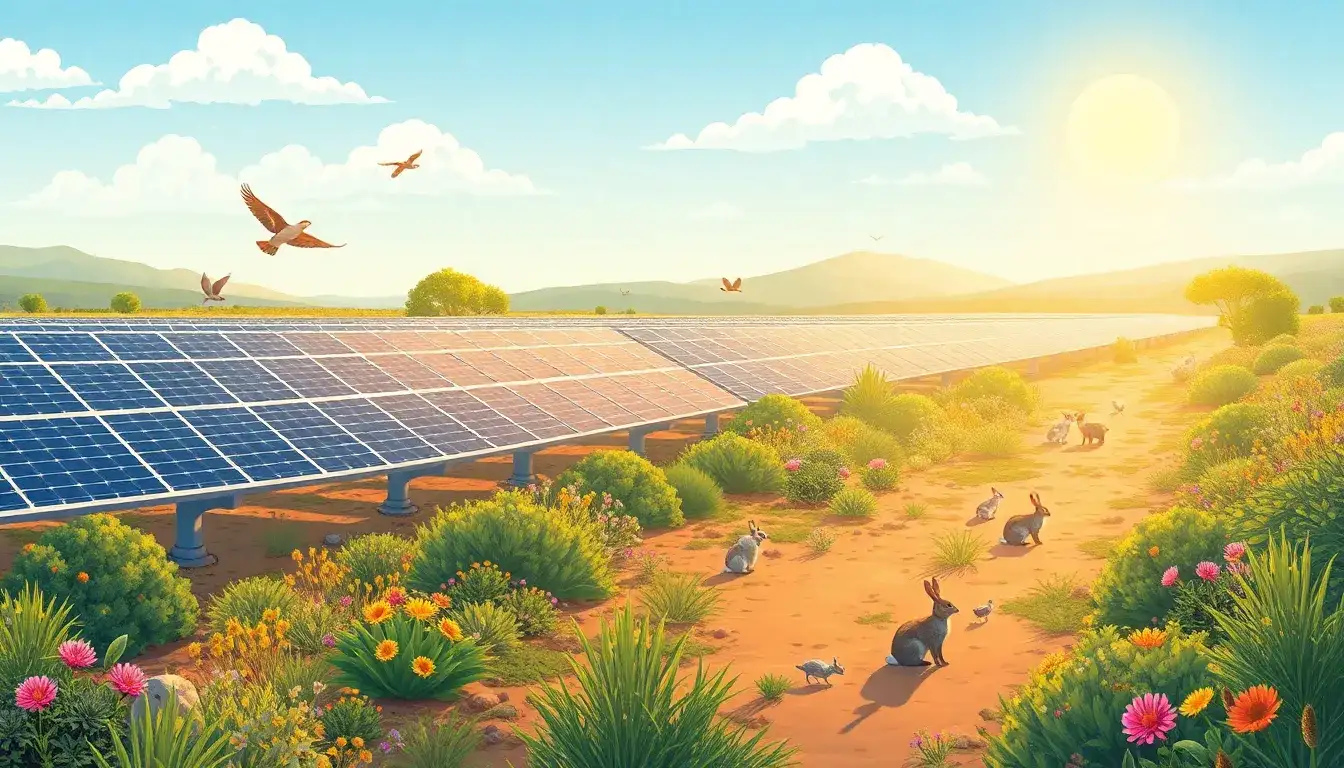
Innovative approaches used in solar farms to protect wildlife focus on minimizing habitat disruption, maintaining connectivity, and integrating habitat-friendly designs. Key strategies include:
-
Thoughtful Site Selection and Habitat Preservation
- Locating solar farms away from areas with high conservation value to reduce wildlife impact.
- Maintaining existing vegetation and natural topography instead of clearing entire areas, preserving native plants and habitat structures.
-
Modified Solar Panel Placement and Design
- Raising solar panels higher above the ground than industry standards (e.g., 42 inches instead of 24 inches) to allow vegetation growth underneath and maintain habitat for ground-dwelling species.
- Increasing spacing between panels to allow more light to reach the ground, preventing the panels from creating “lake illusions” that disturb wildlife.
- Orienting and tilting panels to reduce reflective surfaces and solar glare that can confuse or disorient animals, especially nocturnal species like bats and insects.
-
Maintaining Wildlife Connectivity
- Installing wildlife-friendly fencing with openings sized to permit small animals (e.g., raccoons, rabbits, squirrels) to pass through freely.
- Creating larger unfenced wildlife passageways through solar farms for movement of bigger mammals such as deer, coyotes, and bears.
- Incorporating intentional openings in perimeter fencing (e.g., 10 inches by 7 inches every 260 feet) to facilitate animal transit without compromising security.
-
Conservation and Monitoring Measures
- Temporarily relocating sensitive or threatened species (such as the desert tortoise) during construction to protect them from disturbance, with ongoing monitoring using radio transmitters to track their return and habitat use.
- Restricting vehicle types and speeds within solar sites to reduce harm to wildlife and training staff on species awareness.
- Using real-time monitoring systems to gather data on wildlife presence and movement, informing adaptive management strategies.
-
Habitat Creation and Biodiversity Enhancement
- Planting native grasses and wildflowers around solar arrays to attract pollinators like bees and butterflies, thereby enhancing local biodiversity.
- Designing solar farms as potential conservation allies by integrating habitat creation and restoration measures within the project footprint.
-
Collaboration with Ecologists and Conservationists
- Engaging wildlife biologists and conservation organizations throughout project planning and operation to tailor mitigation strategies to local species and ecosystems.
- Using scientific monitoring and data collection to refine wildlife-friendly practices continuously.
These approaches demonstrate how solar farms can balance renewable energy generation with wildlife protection by emphasizing habitat preservation, connectivity, species-specific protections, and biodiversity enhancement. They also illustrate that thoughtful design and management can transform solar farms into functional habitats that support local wildlife populations.
In summary, innovative wildlife-friendly solar farm practices include elevated and spaced panel placement, permeable fencing and wildlife corridors, sensitive species relocation and monitoring, native vegetation planting, and close scientific collaboration—all aimed at minimizing environmental impact while promoting ecosystem health.
Original article by NenPower, If reposted, please credit the source: https://nenpower.com/blog/what-are-some-innovative-approaches-used-in-solar-farms-to-protect-wildlife/

