

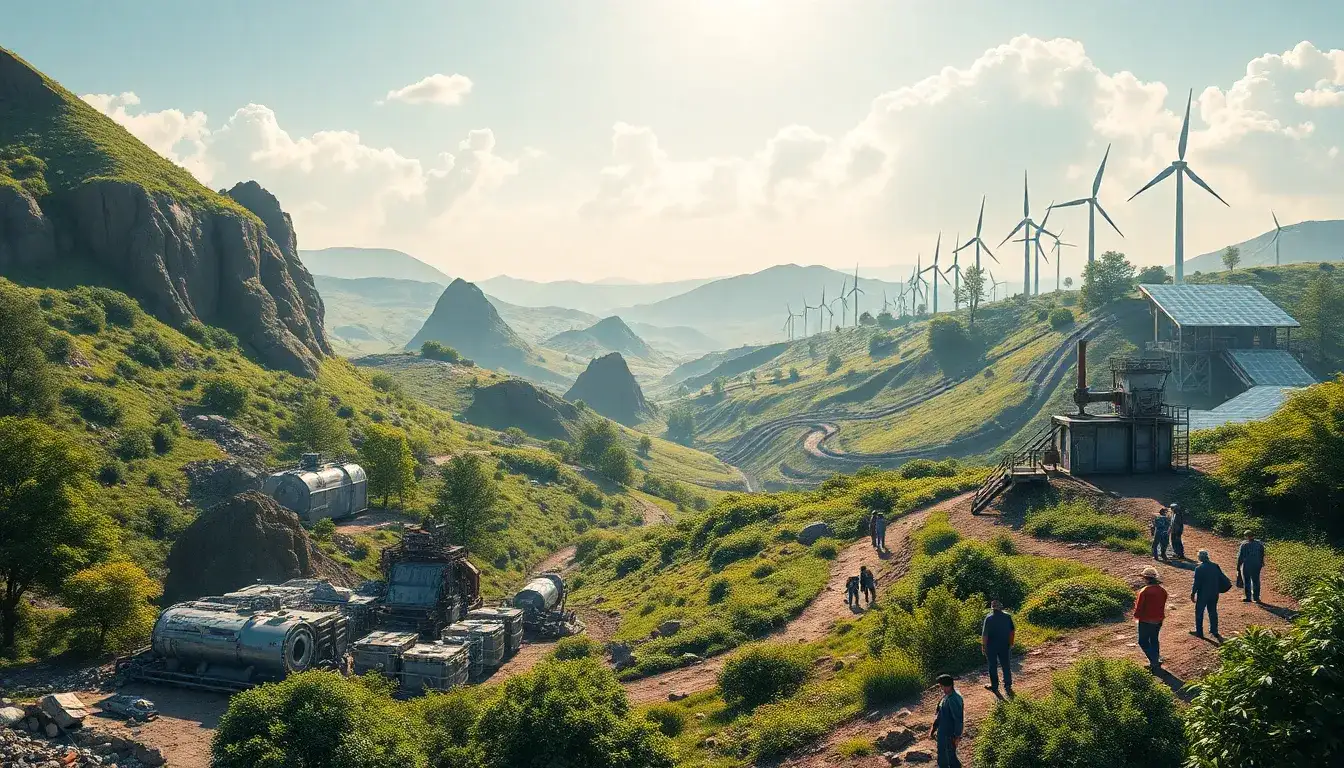
Countries dependent on Chinese rare earth imports have a range of alternatives they are exploring or developing to reduce reliance on China’s dominant supply, though challenges remain in scaling these options quickly.
Key Alternatives to Chinese Rare Earth Imports
1. Developing Alternative Mining and Processing Sources Outside China
- Australia is a leading alternative supplier with significant rare earth deposits such as Browns Range, which is being developed to produce heavy rare earths like dysprosium. Australia’s Lynas Rare Earths is currently the largest producer of separated rare earths outside China, though it still depends on China for refining. Processing capacity outside China is limited but is expected to improve around 2026.
- Other countries with active or developing rare earth initiatives include Brazil, South Africa, Saudi Arabia, Japan, and Vietnam. These nations are investing in mining, processing, R&D, and magnet manufacturing to build alternative supply chains.
2. Japan’s Strategy: Diversification and Innovation
- Japan has lowered its dependence on Chinese rare earths from 90% to 60% by discovering new reserves, partnering with other resource-rich countries like Namibia and Australia, and investing through the state-owned JOGMEC. Japanese companies have also innovated by developing technologies that reduce or eliminate the need for heavy rare earths, such as Honda’s new motor.
- Japan’s approach highlights the need for sustained financial and diplomatic support to develop these alternatives and create a viable supply chain outside China.
3. U.S. Efforts to Build Domestic Capacity and Alternative Sources
- The U.S. has increased domestic rare earth mining by 54% since 2019 and is the second-largest global producer after China. However, it currently lacks sufficient domestic refining capacity, leading to exports of mined ore and dependence on foreign refiners. The U.S. is investing hundreds of millions of dollars to boost extraction, refining, and downstream manufacturing, aiming to reduce import reliance on China over time.
- In addition to increasing domestic production, the U.S. is diversifying imports from countries such as Estonia and Malaysia to reduce vulnerability.
Challenges and Considerations
- China still dominates refined heavy rare earth production, giving it a near-monopoly that is difficult to quickly replace.
- Building alternative supply chains requires long-term financial commitment and industrial scaling, especially for refining and downstream manufacturing, which are bottlenecks outside China.
- Market viability and sustainability of these alternative efforts are uncertain without consistent public funding and international cooperation.
Summary
Countries reliant on Chinese rare earth imports are pursuing a mix of strategies to reduce dependence, including developing mining and refining capacity in Australia and other countries, diversifying supply chains (e.g., Japan’s investments abroad), boosting domestic production (e.g., U.S. initiatives), and innovating to reduce rare earth usage. However, China’s existing dominance in refining capacity and market scale means these alternatives require substantial time, investment, and policy support to become fully effective.
Original article by NenPower, If reposted, please credit the source: https://nenpower.com/blog/what-alternatives-are-available-for-countries-dependent-on-chinese-rare-earth-imports/

