

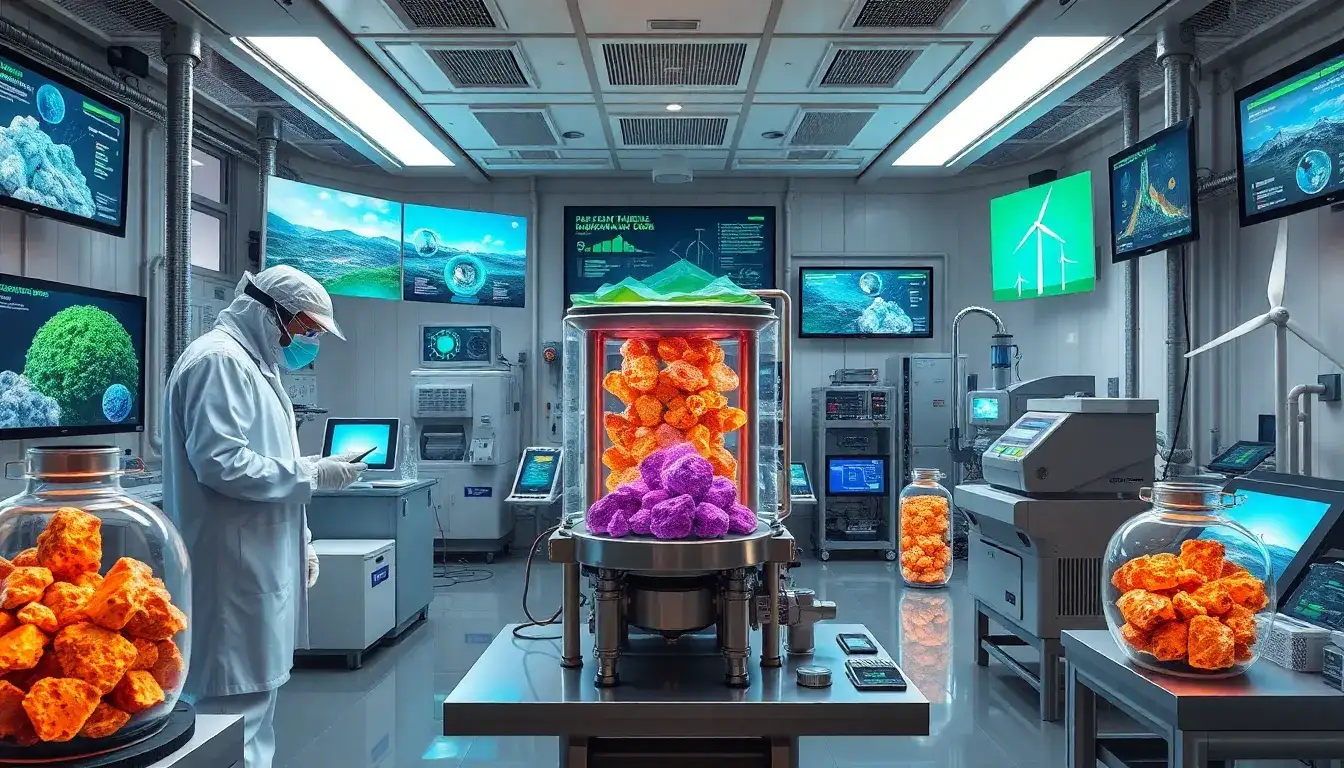
Here are key alternative sources of rare earth elements (REEs) currently being explored:
1. Bauxite Residue (Red Mud)
Derived from aluminum production, red mud contains REEs like cerium, lanthanum, and scandium in concentrations exceeding 1 kg per ton in certain regions (e.g., Greek bauxite). Extraction methods are proven but not yet scaled industrially, offering dual benefits: waste repurposing and reduced mining dependency.
2. Coal Ash
Purdue University researchers developed a cost-effective method to recover REEs from coal ash, which matches the REE concentration of some ores. This could utilize the 129 million tons of coal ash produced annually in the U.S., reducing reliance on traditional mining while addressing waste disposal challenges.
3. Sedimentary Deposits
River, stream, lake, and ocean sediments are under investigation for REE content. These deposits could provide alternative mining sites, particularly in regions with less environmental sensitivity compared to traditional mines.
4. Biomining Innovations
The EMBER program (U.S. initiative) uses microbes to selectively extract REEs from complex mixtures like electronic waste or low-grade ores. Teams at Lawrence Livermore National Laboratory and Battelle Memorial Institute are testing microbial processes to improve specificity and scalability.
5. Domestic Mining Expansion
New U.S. deposits are being tapped:
- Elk Creek, Nebraska: Potential for niobium, scandium, and titanium.
- Bitterroot River, Montana: “Highest-grade” U.S. REE deposit.
- Southeastern Wyoming: Largest known North American deposit, targeting eco-friendly processing.
These efforts aim to diversify supply chains, reduce geopolitical risks (e.g., China’s processing dominance), and mitigate environmental impacts of traditional mining.
Original article by NenPower, If reposted, please credit the source: https://nenpower.com/blog/what-alternative-sources-of-rare-earth-elements-are-being-explored/

