

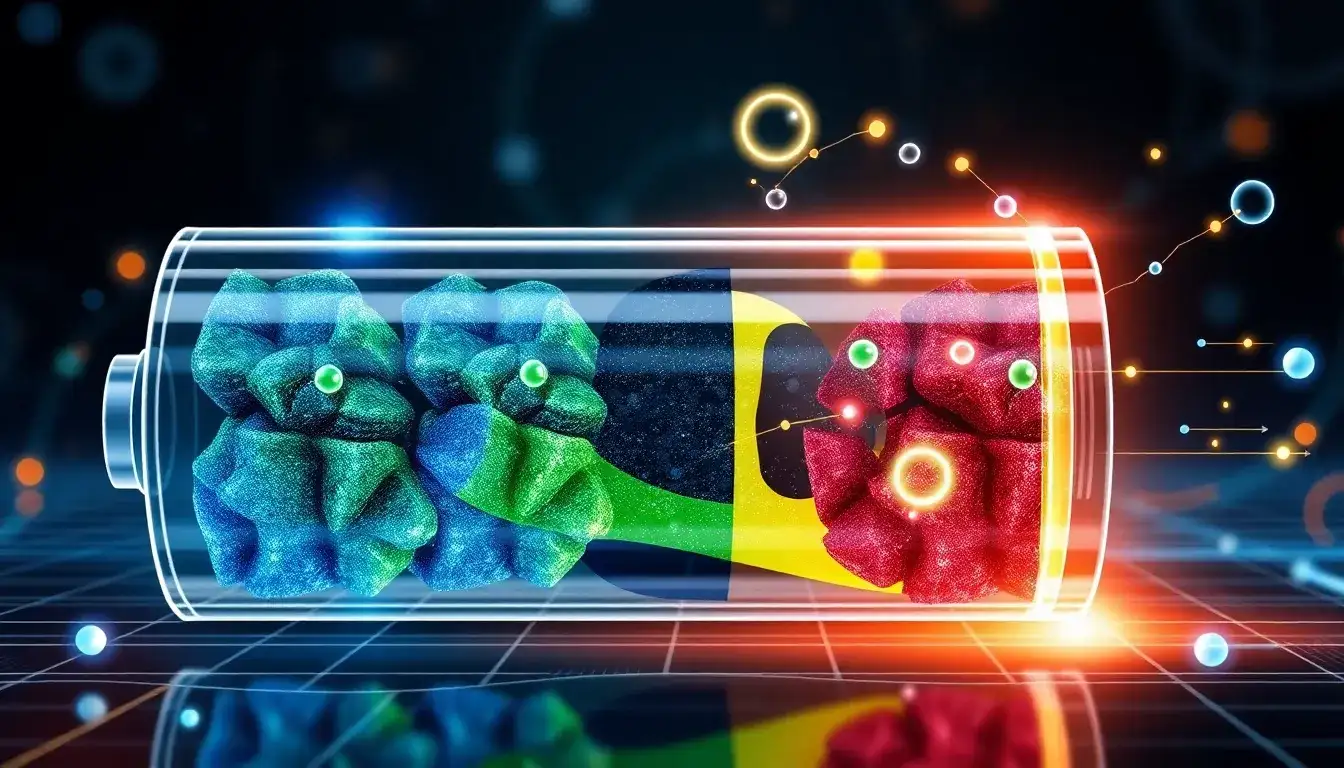
Advancements in materials have significantly contributed to the high energy density of lithium-ion batteries. Some of the key contributions include:
Cathode Materials
- Lithium-Rich Manganese-Based Cathodes: Researchers have developed high-capacity cathodes, such as lithium-rich manganese-based materials, which have led to record-breaking energy densities. For example, recent designs have achieved energy densities of over 700 Wh/kg, which is significantly higher than previous benchmarks.
- Nickel-Cobalt-Manganese (NCM) and Nickel Cobalt Aluminum Oxide (NCA): These cathode materials offer higher specific capacities, contributing to increased energy density.
Anode Materials
- Lithium Metal Anodes: Thin lithium metal anodes have been used to achieve high specific energy and contribute to record-breaking energy densities in some battery designs.
- Silicon-Based Anodes: Silicon can store much more lithium than traditional graphite, potentially increasing battery capacity and energy density. Silicon-based alloys are being explored as promising alternatives for anodes.
Electrolytes and Other Innovations
- Solid-State Electrolytes: Solid-state batteries replace liquid electrolytes with solid ones, which can increase energy density while reducing safety risks like leaks and fires.
- Optimized Battery Design: Advances in battery cell design, such as minimizing auxiliary materials and maximizing active materials, have enhanced energy density. Techniques like using ultrathin current collectors have also improved efficiency.
These material advancements and design optimizations have collectively driven the increase in lithium-ion battery energy density, making them more efficient for various applications, including electric vehicles and portable electronics.
Original article by NenPower, If reposted, please credit the source: https://nenpower.com/blog/what-advancements-in-materials-have-contributed-to-the-high-energy-density-of-lithium-ion-batteries/

