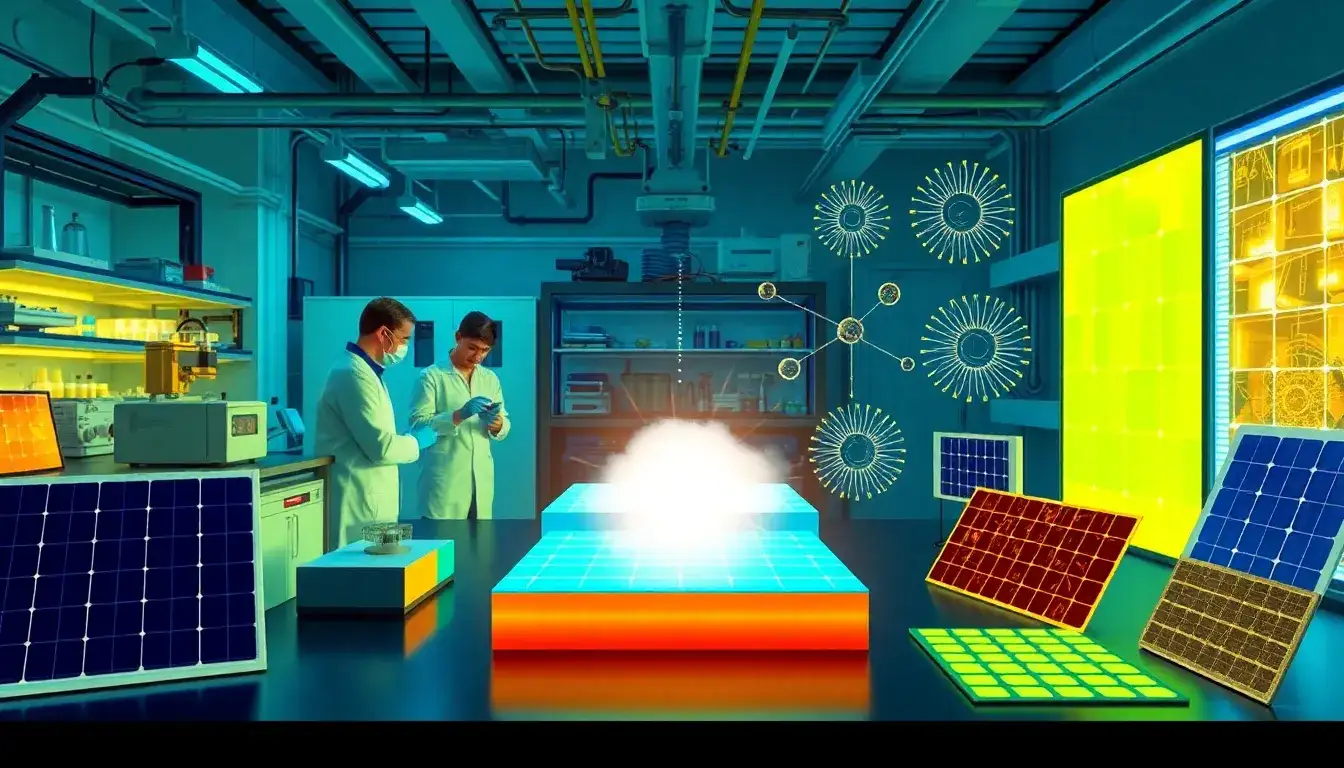
Significant advancements have been made to improve the stability of perovskite solar cells (PSCs), addressing one of their major challenges despite reaching high power conversion efficiencies (up to about 25.8%). These improvements stem from structural modifications, advanced fabrication processes, and novel materials integration:
Key Advancements in Stability Enhancement
1. Structural Modification and Fabrication Techniques
- Various structural modifications in the perovskite films and device architectures have been employed to enhance stability. Optimizing the fabrication process helps reduce degradation caused by environmental factors such as moisture, oxygen, UV light, and heat.
- Using hydrophobic hole transport materials (HTM) significantly improves stability by reducing moisture ingress. For example, poly(3-hexylthiophene)-based HTM combined with methylammonium lead iodide bromide perovskite showed much better stability, maintaining performance for extended periods.
- Replacing commonly used lithium-based dopants (e.g., LiTFSI), which are hygroscopic and corrosive, with less reactive alternatives like spiro-OMeTAD without lithium compounds has also enhanced device longevity.
2. Advanced Hole Transport Materials and Dopants
- Introduction of new dopants such as iridium complexes has been proposed to improve stability by enhancing conductivity without introducing corrosive side effects.
- Using hydrophobic HTMs mitigates degradation caused by moisture and oxygen, which are key factors in PSC instability.
3. Protective Interlayers to Suppress Metal Diffusion
- A recent breakthrough involves developing chemically protective cathode interlayers. For example, an amine-functionalized perylene diimide (PDINN) cathode interlayer was designed to form strong tridentate metal complexes that suppress inward metal diffusion, a major cause of degradation in tin-lead halide perovskites (TLHPs).
- This PDINN interlayer not only stabilizes the perovskite material but also effectively extracts electrons, significantly improving both the stability and efficiency of PSC devices. These advancements show promise not only for photovoltaic applications but also for integration in green hydrogen production systems.
4. Understanding and Mitigating Degradation Mechanisms
- Comprehensive studies on degradation mechanisms revealed that exposure to water, oxygen, UV light, and heat accelerates PSC degradation. Efforts to improve encapsulation, control of fabrication atmosphere, and material compositions have helped reduce these effects.
Summary Table of Stability Improvement Approaches
| Approach | Key Benefit | Example/Material |
|---|---|---|
| Structural modification | Reduced environmental degradation | Mixed halide perovskites, optimized films |
| Hydrophobic HTM | Prevents moisture ingress | Poly(3-hexylthiophene), spiro-OMeTAD without Li dopants |
| Novel dopants | Enhances conductivity without corrosion | Iridium complexes |
| Protective cathode interlayers | Suppresses inward metal diffusion | Amine-functionalized perylene diimide (PDINN) |
| Improved fabrication processes | Better film quality, less defects | Controlled atmosphere, solvent engineering |
These approaches collectively have moved perovskite solar cells closer to commercial viability by improving operational stability while maintaining or enhancing efficiency.
In conclusion, the stability of PSCs has been improved through advanced material engineering, new protective layers, and optimized fabrication methods. Ongoing research focusing on mitigating degradation pathways is critical for achieving long-term durable high-performance perovskite solar cells suitable for wide deployment.
Original article by NenPower, If reposted, please credit the source: https://nenpower.com/blog/what-advancements-have-been-made-to-improve-the-stability-of-perovskite-solar-cells/