

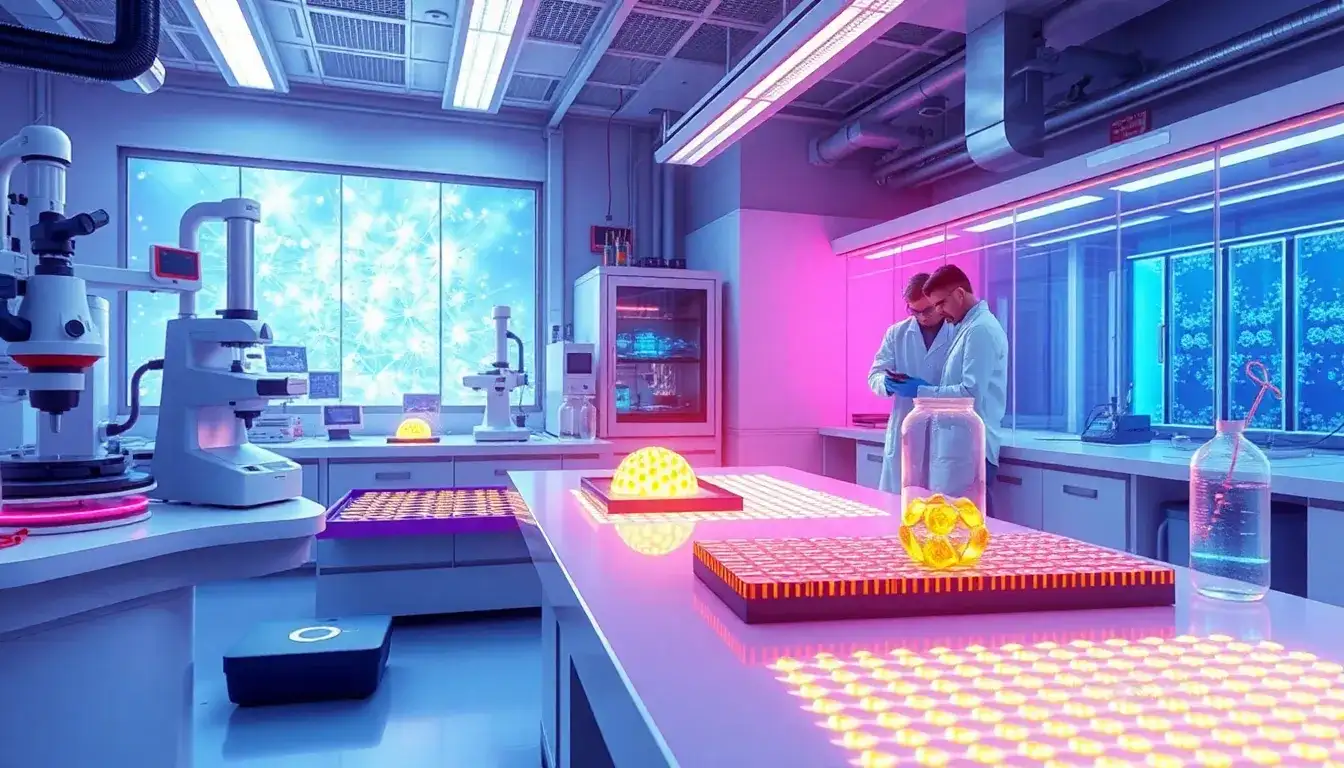
Advancements in material optimization for indoor perovskite solar cells (PSCs) have focused on enhancing efficiency, stability, and cost-effectiveness while tailoring materials for low-light indoor environments.
Key Material Optimization Advances for Indoor PSCs
1. Improved Power Conversion Efficiency (PCE):
Perovskite solar cells have seen remarkable improvements in PCE, rising from about 3.5% to over 25% within a decade due to refined material compositions and processing techniques. This efficiency boost is critical in indoor applications where light intensities are much lower than outdoors.
2. Tailored Perovskite Compositions:
Material scientists have developed new organic-inorganic hybrid perovskites by modifying organic cations (such as formamidine (FA), butyl ammonium (BA), cyclopropylamine (CA), and others). These modifications optimize crystal structure, stability, and light absorption properties specifically for indoor lighting spectra.
3. Low Exciton Binding Energy for Efficient Charge Separation:
Indoor PSC materials exhibit low exciton binding energy, facilitating easier separation of electron-hole pairs into free charge carriers under low-light conditions. This characteristic enhances solar energy conversion efficiency indoors.
4. High Dielectric Constant Materials:
Perovskites with high dielectric constants effectively screen charge carriers, reducing recombination losses. This property is essential for maximizing charge extraction and maintaining high efficiency under indoor lighting.
5. Thin Film and Flexible Designs:
Optimized perovskite films can be made very thin due to their high absorption coefficient. Thin layers reduce material usage, lower manufacturing costs, and enable flexible, lightweight solar cells suitable for integration into indoor electronics and surfaces where traditional panels are impractical.
6. Controlled Crystal Growth and Morphology:
Advances in deposition techniques, anti-solvent treatments, and dopant usage enable controlled crystallization, producing uniform perovskite layers with fewer defects. This enhances charge transport and stability, critical for reliable indoor performance.
7. Cost Reduction and Scalability:
Material optimization has led to lower material consumption and simplified fabrication, making indoor PSCs more affordable and scalable for widespread use in powering Internet-of-Things (IoT) devices and other low-power indoor electronics.
In summary, the key advancements in material optimization for indoor perovskite solar cells involve engineering perovskite compositions and thin films with high efficiency and stability under low-light conditions, coupled with cost-effective and flexible fabrication techniques. These developments position PSCs as promising candidates for indoor energy harvesting applications.
Original article by NenPower, If reposted, please credit the source: https://nenpower.com/blog/what-advancements-have-been-made-in-material-optimization-for-indoor-perovskite-solar-cells/

