

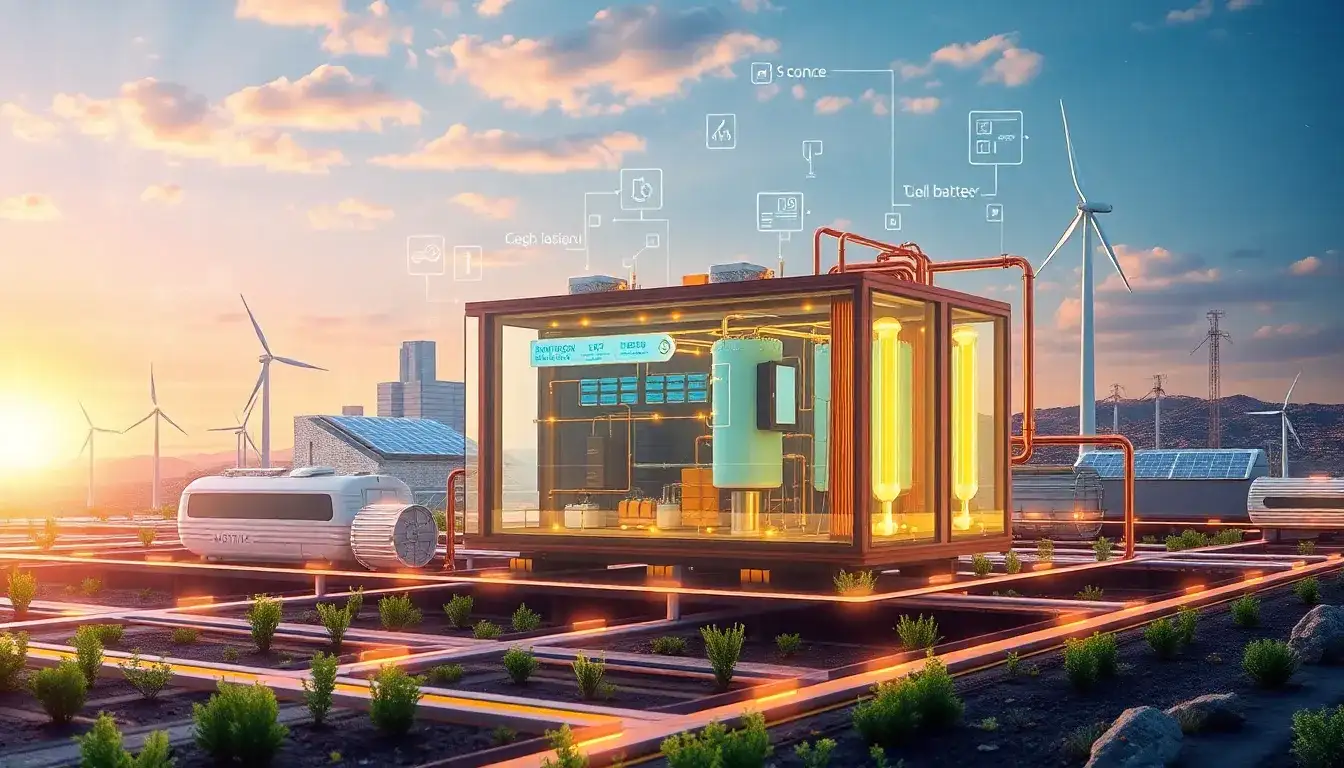
To make flow batteries more competitive in the energy storage market, several advancements are necessary:
Advancements Needed
- Cost Reduction:
- Levelised Cost of Storage (LCOS) Reduction: A significant reduction in the LCOS is crucial. As of now, the LCOS for flow batteries is around $0.160/kWh, but it is projected to decrease to as low as $0.052/kWh by 2030, making them more competitive.
- Innovative Materials and Manufacturing Processes: Developing novel active electrolytes and implementing scalable and efficient manufacturing processes can help reduce costs.
- Scalability and Flexibility:
- Flow batteries already offer scalability and flexibility, allowing them to discharge energy over extended durations. Enhancing this capability will further improve their competitiveness.
- Miniaturization: Miniaturizing flow battery designs, as shown by recent advancements at the Pacific Northwest National Laboratory, can reduce material costs and accelerate innovation by allowing quicker testing of new materials.
- Reliability and Safety:
- Flow batteries are already noted for being more reliable and safer than some traditional technologies, such as lithium-ion batteries, in certain applications. Continuing to enhance these aspects will be beneficial.
- Integration with Renewable Energy:
- Flow batteries are well-suited for storing energy from intermittent renewable energy sources. Improving their integration with these sources will enhance their value in the energy storage market.
- Grid-Scale Applications:
- Research and models, such as those developed at MIT, are important for optimizing flow batteries for large-scale grid applications.
These advancements will help position flow batteries as a leading technology in the evolving energy storage landscape.
Original article by NenPower, If reposted, please credit the source: https://nenpower.com/blog/what-advancements-are-needed-to-make-flow-batteries-more-competitive-in-the-energy-storage-market/

