

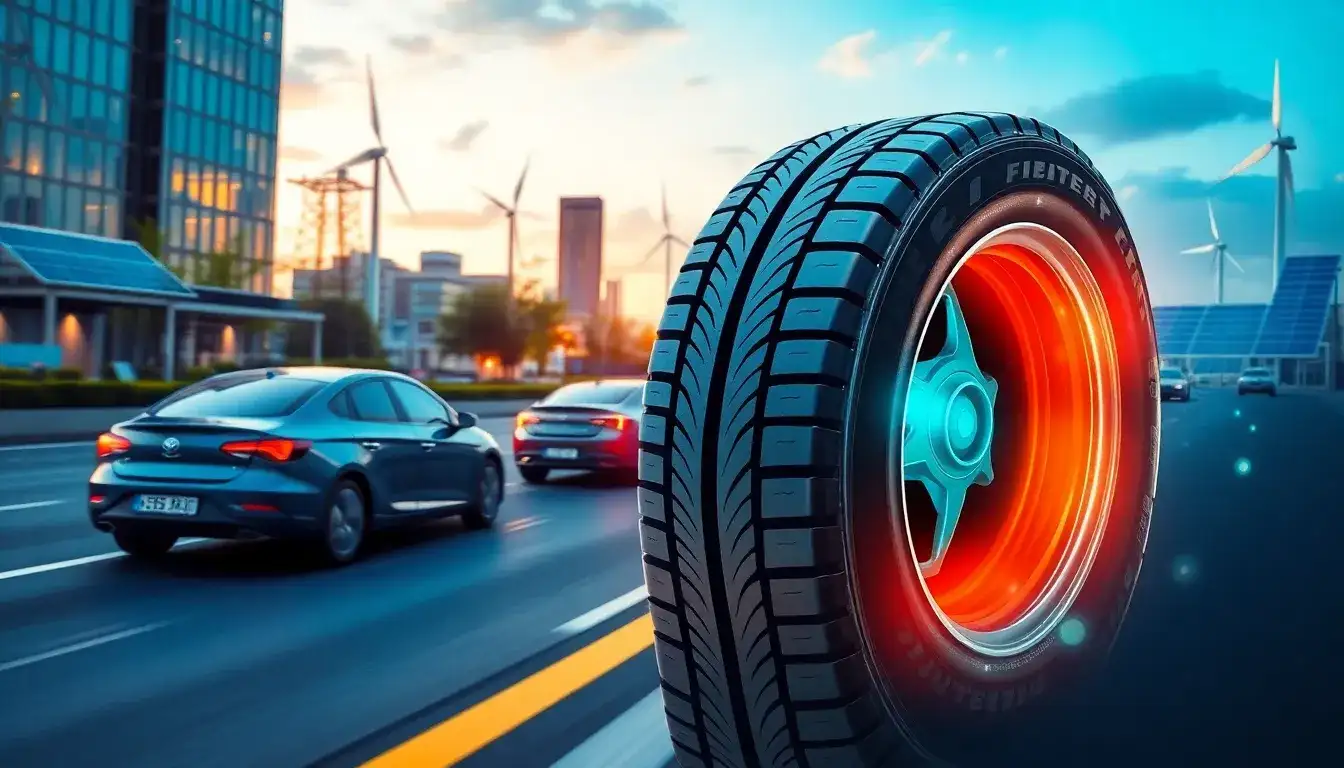
Advancements in electric vehicle (EV) tire technology are focused on addressing the unique demands of EVs such as enhanced efficiency, noise reduction, durability, and sustainability. Key developments include:
Customized Rubber Compounds and Tread Designs
EV tires use specialized rubber compounds and tread designs to balance traction, rolling resistance, and tread life. These compounds often incorporate synthetic elastomers that help improve wet weather handling and wear without compromising energy efficiency, crucial for maximizing EV range. Tire makers have invested significant resources to optimize these formulations specifically for EVs, supporting their heavier weight and instant torque characteristics.
Noise Reduction Technologies
Because EVs are quieter than internal combustion engine vehicles, tire noise becomes more noticeable. To combat this, manufacturers embed sound-deadening foam blocks or strips inside tire cavities to reduce air resonance and decrease cabin noise by up to 50%. This innovation enhances ride comfort, making EV driving quieter overall.
Use of Sustainable Materials
Tire companies like Goodyear have introduced EV tires containing at least 50% sustainable materials by weight, including natural rubber sourced sustainably, soybean oil, and rice husk ash silica. This focus on eco-friendly inputs aligns with the broader sustainability goals of the EV industry.
Improved Rolling Resistance and Tread Life
New tire models such as Goodyear’s ElectricDrive 2 feature improved rolling resistance to enhance EV efficiency and longer-lasting tread life to withstand the demands of EV driving patterns. These tires also offer all-season performance with asymmetric tread patterns for better handling on wet and dry roads.
Emerging Innovations in Tire Construction
Experimental technologies are under development that could revolutionize tires for EVs in the near future:
- Adaptive Tread Patterns: Tires capable of changing their tread pattern dynamically (e.g., switching between winter and summer modes) through modular tread blocks. While still in prototype stage, this could improve tire versatility and performance dramatically.
- Self-Healing Tires: Tires with polymer materials that can self-heal minor damage or punctures by closing up small cuts or abrasions, enhancing tire safety and durability.
Summary Table
| Advancement | Description | Benefit for EVs |
|---|---|---|
| Specialized Rubber Compounds | Enhanced elastomers tailored for EV weight and torque | Better traction, wear, efficiency |
| Noise Reduction Foam Inserts | Sound-deadening foam inside tire cavity | Quieter cabin, improved comfort |
| Sustainable Materials | Use of soy oil, rice husk silica, natural rubber | Eco-friendly, aligned with EV goals |
| Improved Rolling Resistance | Lower energy loss, longer tread life | Extends EV driving range and tire life |
| Adaptive Tread Patterns | Prototype tires that alter tread pattern on demand | Versatile performance in all seasons |
| Self-Healing Tires | Polymer technology to self-repair minor damage | Increased safety, durability |
In conclusion, EV tire technology is evolving rapidly with innovations aimed at enhancing efficiency, noise reduction, sustainability, and durability, while some groundbreaking tech like adaptive and self-healing tires are on the horizon but not yet commercially available.
Original article by NenPower, If reposted, please credit the source: https://nenpower.com/blog/what-advancements-are-being-made-in-ev-tire-technology/

