

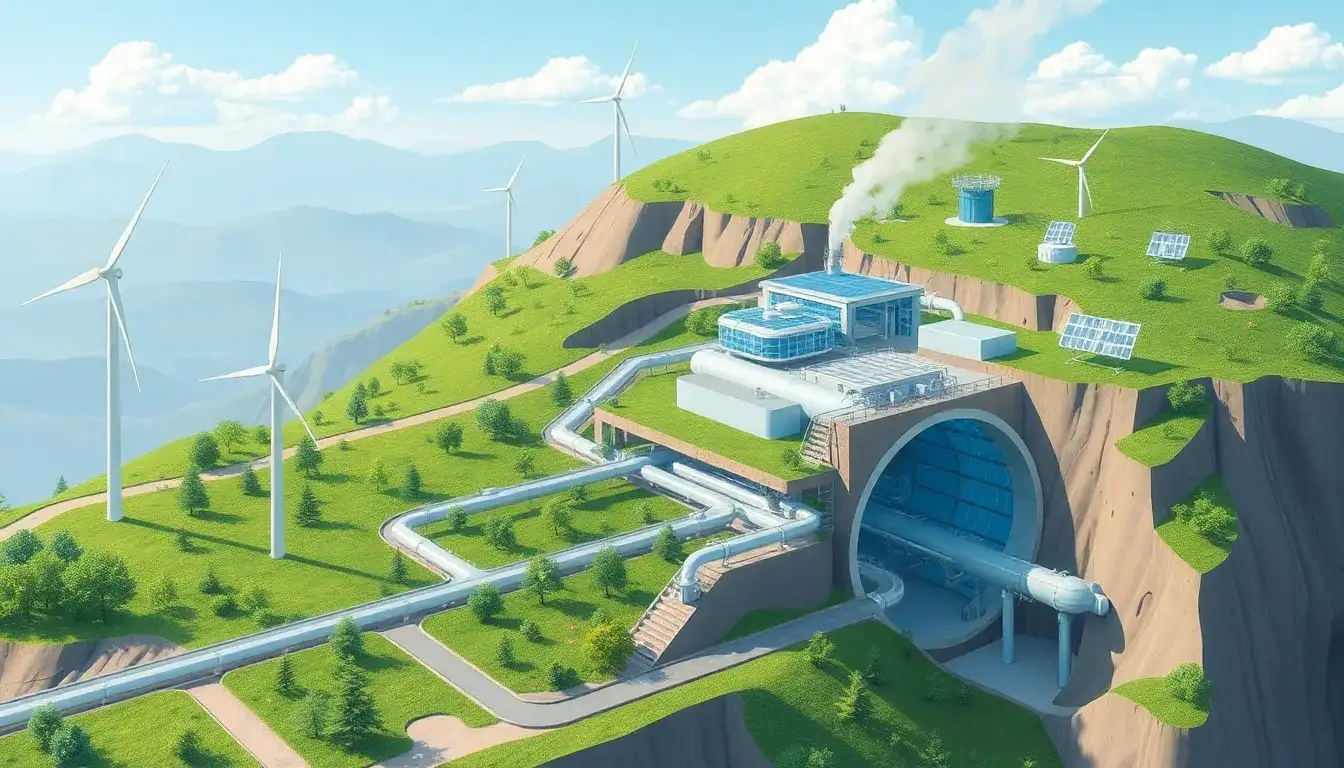
Advancements in Compressed Air Energy Storage (CAES) for Renewable Energy Integration
Compressed Air Energy Storage (CAES) has been recognized as a promising technology for integrating renewable energy into the grid by storing excess energy generated from intermittent sources like wind and solar. Recent advancements and ongoing research are aimed at enhancing the efficiency, sustainability, and cost-effectiveness of CAES.
1. Energy Storage Methods and Efficiency
- Adiabatic Systems: These systems aim to capture the heat generated during compression for use during decompression, which can significantly enhance efficiency and reduce reliance on fossil fuels. Although these systems are still in development, they offer a path towards more environmentally friendly and efficient energy storage.
- Diabatic Systems (Widely Implemented): Current commercial CAES systems use diabatic methods, which dissipate excess heat during compression and require additional heat (often from natural gas) during expansion. Research aims to minimize this dependency on fossil fuels.
- Isothermal Systems: These ideal systems aim for perfect heat exchange during compression and expansion but are largely theoretical and not yet applied at scale.
2. Advanced Materials and Storage Solutions
- Higher Energy Density: Researchers are exploring ways to increase energy density by utilizing advanced materials in storage vessels. This involves identifying suitable underground reservoirs and developing new storage mediums, such as large bags under the ocean, that utilize natural water pressure to maintain air pressure.
- Alternative Storage Mediums: Exploring alternatives to traditional compressed air storage, such as compressed carbon dioxide, could further enhance efficiency and reduce emissions.
3. Technological Improvements
- Turboexpander and Generator Enhancements: Developing turbines that operate efficiently at lower temperatures can minimize reheating needs, improving efficiency.
- Compressed Air and Hydrogen Energy Storage (CAHES) Systems: Integrating hydrogen into CAES systems by compressing and storing both air and hydrogen can offer additional energy solutions and potentially reduce greenhouse gas emissions.
4. Economic and Sustainability Impacts
- Cost-Effectiveness: CAES systems are economically viable for large-scale energy storage, with lower capital costs compared to some other methods like lithium-ion batteries.
- Environmental Sustainability: CAES systems contribute to a carbon-free environment, support long-duration energy storage, and can restore operations without external power during failures.
Overall, advancements in CAES technology are pivotal for integrating renewable energy sources into the grid efficiently and sustainably. As renewable energy demand grows, CAES is poised to play a critical role in ensuring a stable and reliable energy supply.
Original article by NenPower, If reposted, please credit the source: https://nenpower.com/blog/what-advancements-are-being-made-in-caes-technology-to-support-renewable-energy-integration/

