

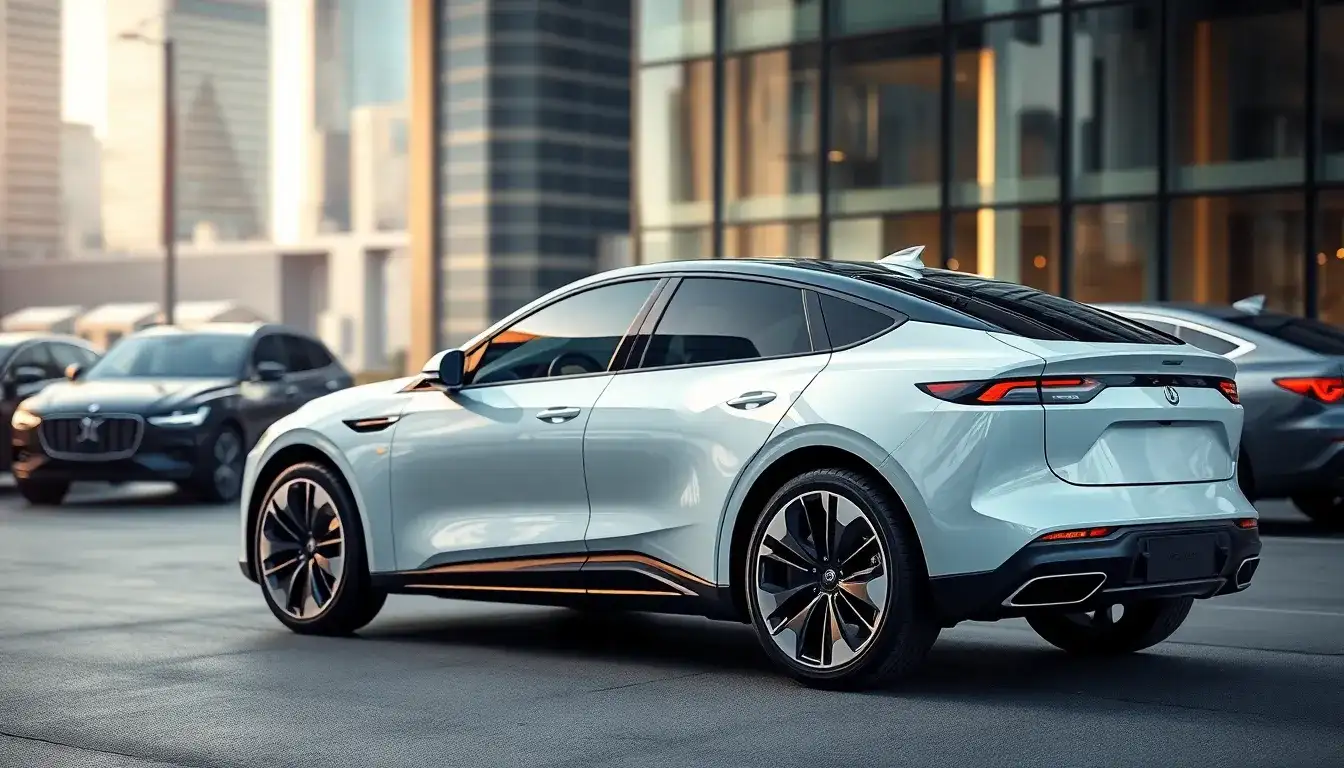
For three consecutive months, the Wenjie M9 has maintained a remarkable resale value of over 86%, breaking the common depreciation trend seen in electric vehicles. As of March 2025, the China Automobile Circulation Association reported that the three-year resale values for plug-in hybrid and pure electric vehicles stood at 45.4% and 45% respectively, reflecting a depreciation of over 50%. In contrast, certain luxury fuel vehicles can achieve a resale value of up to 69.3%.
When consumers consider purchasing a new energy vehicle, the resale value is often a significant factor in their decision-making process. Typically, new energy vehicles depreciate rapidly upon purchase, which can discourage buyers. The latest data shows that while overall used car prices are recovering, the gap in resale value between new energy vehicles and traditional fuel vehicles remains substantial. The higher resale value of fuel vehicles can be attributed to their established market presence, longer product life cycles, and a well-developed market infrastructure.
Fuel vehicles benefit from a century of proven technology and a standardized supply chain for parts. In contrast, the rapid technological advancements and environmental variability affecting battery longevity and electric motor life in new energy vehicles lead to a higher perceived valuation risk in the used car market. Established detection standards, comprehensive repair networks, and consumer familiarity with fuel vehicles contribute to a more efficient used car market, while the lack of standardized battery assessment criteria hampers the resale market for new energy vehicles.
Despite these challenges, the new energy vehicle sector is making strides. Certain brands are narrowing the resale value gap with fuel vehicles through technological innovation and strategic market adjustments. According to the China Automobile Circulation Association, the Wenjie M9 leads the list of major pure electric vehicles with a one-year resale value of 86.4%.
As of December 2024, the resale values were still considerably lower for new energy vehicles, with plug-in hybrids and pure electric models at 45.5% and 45.7% respectively, compared to 52% for fuel vehicles. Resale value fundamentally reflects market confidence in a vehicle’s overall worth. New energy vehicles typically depreciate by around 55% over three years, influenced by an imperfect second-hand market system, battery degradation, rapid technological changes, and price wars.
The common method for assessing resale value is to calculate the ratio of the used car price to the new car’s suggested retail price, multiplied by 100%. Factors such as brand reputation, model, vehicle condition, and market supply and demand all play roles in determining a new vehicle’s resale value. Traditionally, Japanese cars have boasted high resale values. However, the new energy market has yet to develop a complete valuation system, as traditional methods do not fully apply to these vehicles.
For instance, the assessment of battery health is crucial since battery degradation is a significant concern for resale value in new energy vehicles. Due to irreversible loss of lithium-ion battery activity, this degradation is a physical law. Yet, there is a lack of standardized testing protocols for battery health, including the assessment of cycle counts and the uniformity of battery cells. These factors contribute to high battery replacement costs, which further undermine market confidence.
Consumer expectations regarding the ownership costs of used new energy vehicles have risen, negatively impacting transaction prices. The rapid pace of technological changes also exacerbates the factors affecting resale values. The report from March 2025 indicates that as major automakers announce “standard” intelligent driving features, older used models display significant product disadvantages that cannot be compensated for by merely being in good condition.
In March, the resale values of plug-in hybrids fell, as intelligent driving features became essential considerations for second-hand car buyers. Frequent price cuts driven by market competition have further eroded residual values. In 2024, these price reductions led to situations where the prices of some used cars exceeded those of new models. This situation compresses dealer profit margins and increases inventory turnover pressure.
For example, in March, the three-year resale value of plug-in hybrid vehicles dropped by 8.3 percentage points year-on-year, with some dealers even experiencing “losses on sales.” This negative cycle has reduced the number of market participants, further diminishing the liquidity of new energy used cars.
The Wenjie M9 stands out with a one-year resale value of 86.4%. Its high resale value correlates closely with consumer purchase intent, prompting manufacturers to explore ways to enhance resale values and build market confidence in their products. The Wenjie brand has gained significant consumer trust thanks to its philosophy of “safety as the ultimate luxury,” which is evident in its vehicle design and after-sales services.
Battery safety and health are primary concerns for consumers, particularly regarding battery degradation. The battery warranty for models like the Wenjie M5 and M7 extends to 8 years or 160,000 kilometers, covering essential components such as battery cells and management systems. Furthermore, Wenjie’s warranty is not limited to the first owner and provides lifetime coverage against non-human damage, including issues arising from excessive charging or cycle use.
On March 20, Wenjie launched the “Wenjie Smart Enjoy Service No Worries” plan, which includes a pioneering lifetime warranty for paint repairs and complimentary basic maintenance appointments lasting over 45 minutes. Wenjie has also introduced hardware upgrade services, allowing owners of older M9 models to upgrade features like laser radar through factory solutions, alleviating concerns over “hardware obsolescence” and indirectly stabilizing resale values.
With the backing of Huawei technology and the HarmonyOS ecosystem, Wenjie offers cutting-edge technology that instills confidence in the market. The 2025 Wenjie M9 redefines market perceptions of “technological luxury” by leveraging Huawei’s full-stack technology capabilities, such as the ADS 3.3 intelligent driving system and Harmony Cabin 4.0, which provide a vastly superior intelligent experience compared to traditional luxury brands focused solely on mechanical opulence.
The 2025 M9 model introduces three high-precision laser radars and ten other technological highlights, further reinforcing its technical advantages. This technological empowerment strengthens Wenjie’s competitive edge and supports consumer confidence in resale values. On March 20, the China Insurance Automotive Safety Index awarded the Wenjie M9 an impressive set of ratings, making it the only model among those assessed by the China Insurance Research Institute to achieve excellence in all four categories.
In addition to the manufacturer’s efforts to bolster consumer confidence, the steadily increasing market share of Wenjie enhances trust in its resale values. Since its launch at the end of 2023, the cumulative delivery of the Wenjie M9 surpassed 170,000 vehicles, consistently ranking as the best-selling luxury model priced above 500,000 yuan for eleven consecutive months, effectively breaking the long-standing monopoly of traditional luxury brands.
By addressing consumer concerns regarding resale values, Wenjie has successfully transformed this anxiety into a driving force for sales growth. This trend is evident not only in older models but also in the appeal of new vehicles. For instance, the recently launched Wenjie M8, positioned as a family-oriented flagship SUV, has a starting pre-sale price of 368,000 yuan. Since the order period began in March 2025, it quickly surpassed 100,000 orders.
Currently, domestic new energy brands face challenges such as rapid technological iterations leading to quick model depreciation, price wars squeezing used car residual values, a lack of unified assessment standards in the market, and consumer trust issues stemming from battery safety and range anxiety. However, Wenjie has forged a path of its own underpinned by its technological advantages.
Original article by NenPower, If reposted, please credit the source: https://nenpower.com/blog/wenjie-m9-achieves-record-high-resale-value-defying-electric-vehicle-depreciation-trends/

