

On February 2, in Singapore, Liu Hanqiang, the Deputy General Manager of Weihai Zhizhen Marine Technology Co., Ltd., has been traveling back and forth between Weihai and Singapore for 600 days. He is well-acquainted with the route between the two locations, having spent his time marketing, meeting clients, and showcasing technology. This time, his efforts have yielded substantial results: a new shipowner has confirmed a partnership, and another batch of underwater cleaning robots is set to be delivered to the strategic shipping hub of the Malacca Strait for operational deployment.
“Marketing is like navigating a route; you need to accurately gauge customer demands while relying on solid capabilities to establish a foothold,” Liu Hanqiang said as he received a video from the Weihai development team showcasing the robot’s testing. Initially, many shipowners expressed concerns regarding the robot’s operational capabilities in challenging sea conditions. However, with existing customers referring new clients and new shipowners extending offers, the fourth-generation cleaning robot from Zhizhen Marine has established a unique reputation in the Malacca Strait.
In 2025, this robot successfully completed its first year of operation in the Malacca Strait, cleaning over 1,000 vessels. This area is known for its high current and turbulent sea conditions, making anchorage operations a significant challenge for underwater cleaning—tides bring variable currents, and swift flows during low tide can render conventional equipment uncontrollable. Zhizhen Marine’s fourth-generation robot is currently the only device capable of stable operation in these conditions, providing Liu Hanqiang with strong negotiating leverage.
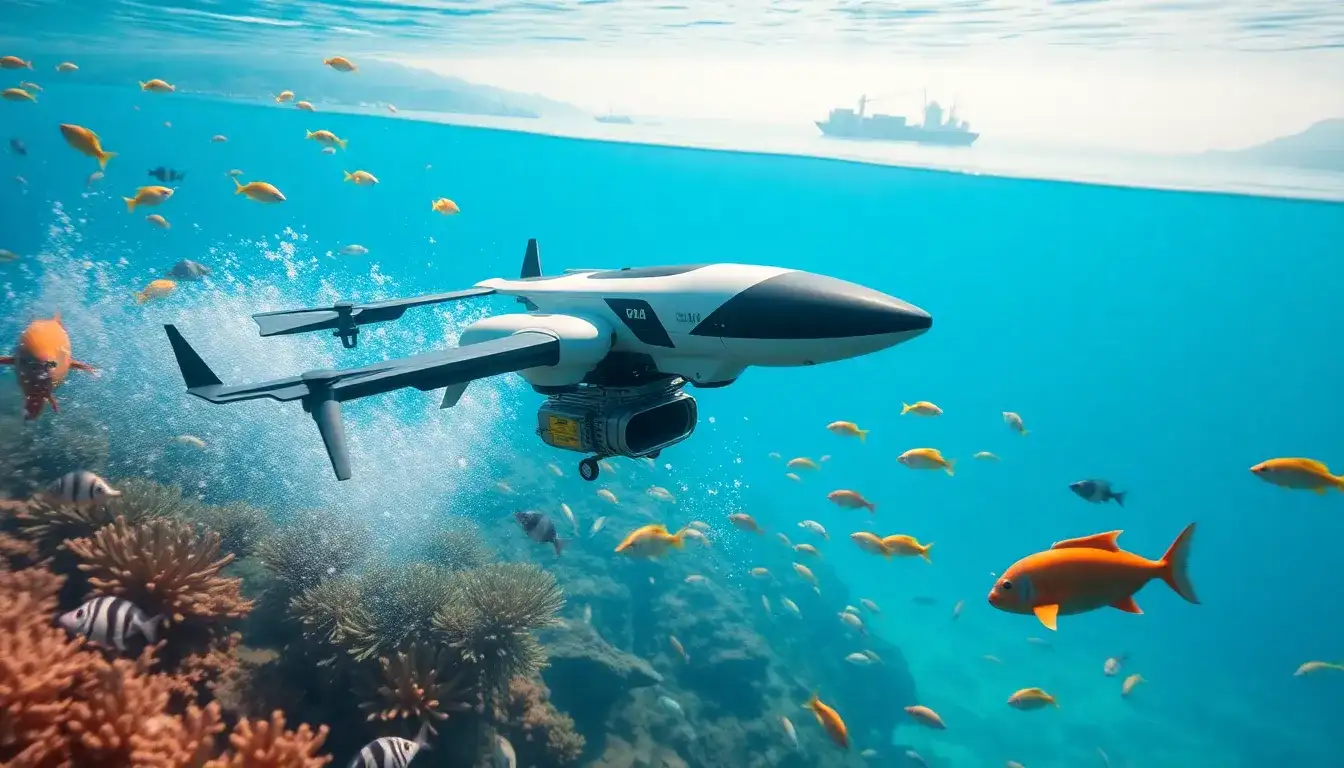
This confidence stems from the robot’s advanced design. It is equipped with six high-definition cameras that provide a panoramic view, allowing operators on the ship to “see” the underwater conditions in real-time. With a cleaning efficiency of 2,000 square meters per hour, a single device can handle the cleaning of 1,000 to 1,500 ships each year. Liu Hanqiang shared a video on his phone, showing the robot moving gracefully along the vessel’s hull, effectively detaching barnacles, shellfish, algae, and other debris—even in turbulent waters. The intelligently planned cleaning route ensures no spot is missed.
The journey from being merely functional to becoming the “only” viable option was not achieved overnight; the robot has undergone four iterations. “Not all cleaning can be done in calm ports,” Liu Hanqiang explained. In the ever-changing currents of open anchorage, the challenges for the equipment are much harsher. The R&D team monitored tidal data in the Malacca Strait, conducting repeated tests to enhance the robot with high-precision sensors and redesigning its power configuration to withstand currents from all angles. Today, features like autonomous positioning, one-key depth setting, and adaptive wall-following allow the robot to operate steadily in complex waterways for extended periods without faltering.
Good news from the Singapore market has reached the research center in Weihai. At this moment, engineers in Weihai are busy adjusting parameters for the next-generation robots. “Market demand drives our research direction; every operational feedback from the Malacca Strait becomes inspiration for our upgrades,” Liu Hanqiang noted. The new generation of products, which are more intelligent and efficient, is currently undergoing rigorous testing and is about to make its “deep-sea debut.”
Original article by NenPower, If reposted, please credit the source: https://nenpower.com/blog/weihai-made-underwater-robots-make-waves-in-the-strait-of-malacca/

