

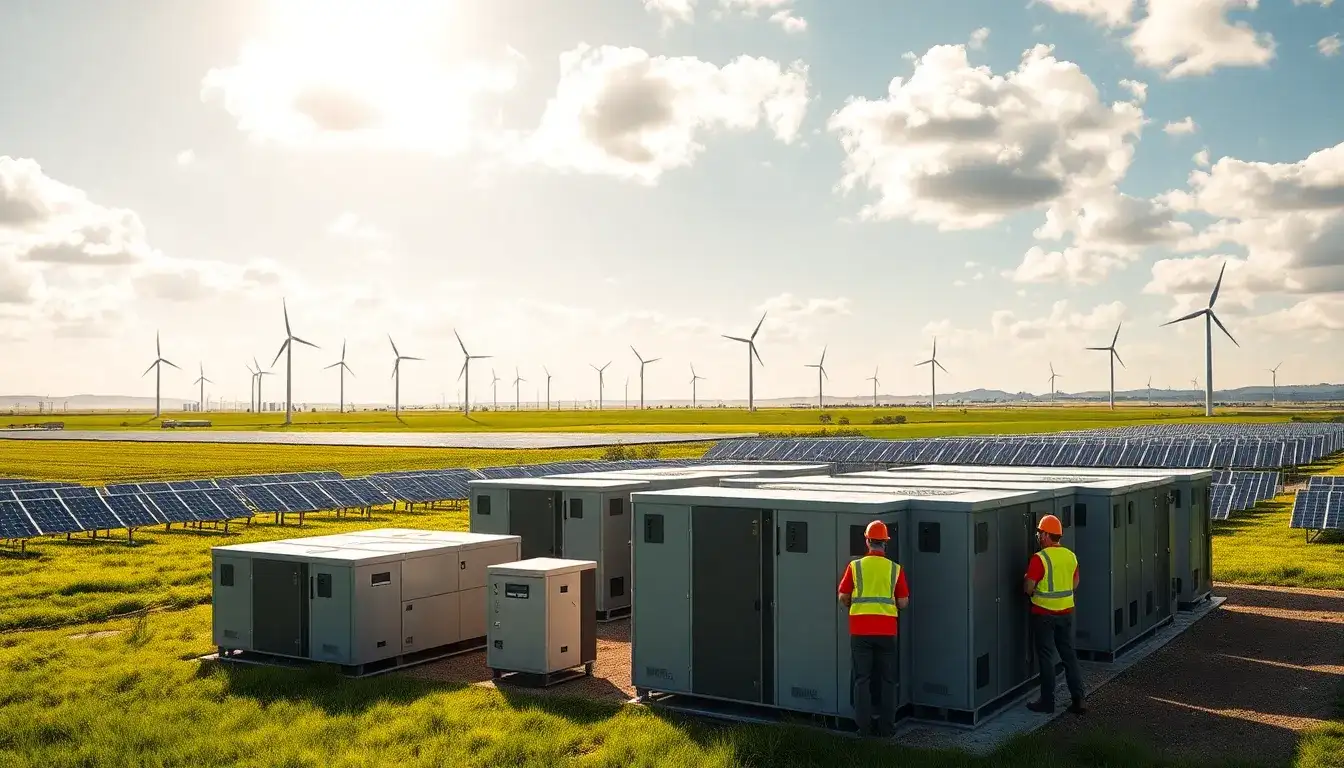
Utility-scale energy storage refers to large-scale technologies connected to the electrical power grid designed to store energy for later use, playing a crucial role in balancing supply and demand, particularly with the integration of variable renewable energy sources like solar and wind.
Key Functions and Benefits
- Grid Balancing and Reliability: Utility-scale storage stores excess energy when production exceeds demand and releases it during peak demand periods, stabilizing the grid and improving reliability.
- Enabling Renewables: It facilitates a higher share of renewables on the grid by smoothing out their variable output through a process called capacity firming, thus reducing dependence on polluting “peaker” plants and fossil fuels.
- Grid Services: Provides essential grid services such as frequency regulation, capacity reserve, ramp rate control, and can help in restarting the grid after outages.
- Infrastructure and Resilience: Can defer expensive upgrades to grid infrastructure, relieve transmission congestion, enhance emergency preparedness, and increase overall grid resilience.
Technologies Used
Utility-scale energy storage can store energy in various forms:
| Energy Storage Form | Description | Examples |
|---|---|---|
| Gravitational Potential Energy | Uses elevated water reservoirs to store energy | Pumped hydroelectric storage |
| Chemical Energy | Stores energy chemically in batteries | Lithium-ion batteries, flow batteries |
| Mechanical Energy | Stores energy in kinetic forms | Flywheels, compressed air energy storage |
| Thermal Energy | Stores energy as heat | Molten salt thermal storage |
| Hydrogen Storage | Converts electrical energy to hydrogen via electrolysis | Green hydrogen for long-duration storage |
Among these, pumped-storage hydroelectricity remains the largest form globally. Lithium-ion batteries dominate short-duration storage (<8 hours), while other technologies like flow batteries and compressed air can offer medium-duration storage. Long-duration storage options include green hydrogen and thermal storage, though their economics are more challenging.
Examples and Applications
- Tesla’s Megapack is an example of a utility-scale battery system designed to stabilize the grid and prevent outages, showcasing the increasing commercialization of these technologies.
- Companies like EVESCO provide utility-scale battery solutions that help integrate renewable energy more reliably into grids, especially in isolated or off-grid communities, reducing reliance on costly diesel generators.
Economic and Job Impacts
- Utility-scale energy storage tends to become more affordable with scale and technological learning; for example, lithium-ion battery costs have dropped approximately 20% with each doubling of capacity worldwide.
- The deployment of these technologies creates jobs in construction, installation, maintenance, and new technology development, supporting economic growth while reducing pollution compared to coal or gas power plants.
In summary, utility-scale energy storage is a vital enabling technology for transitioning to low-carbon, renewable-heavy energy grids. It enhances grid flexibility, reliability, and resilience while supporting cleaner and more cost-effective power systems.
Original article by NenPower, If reposted, please credit the source: https://nenpower.com/blog/utility-scale-energy-storage/

