

“`markdown
Solar News This Week – June 2, 2025
by Jay Warmke and Tim Chavez
June 6, 2025
US Solar Industry Continues Growing
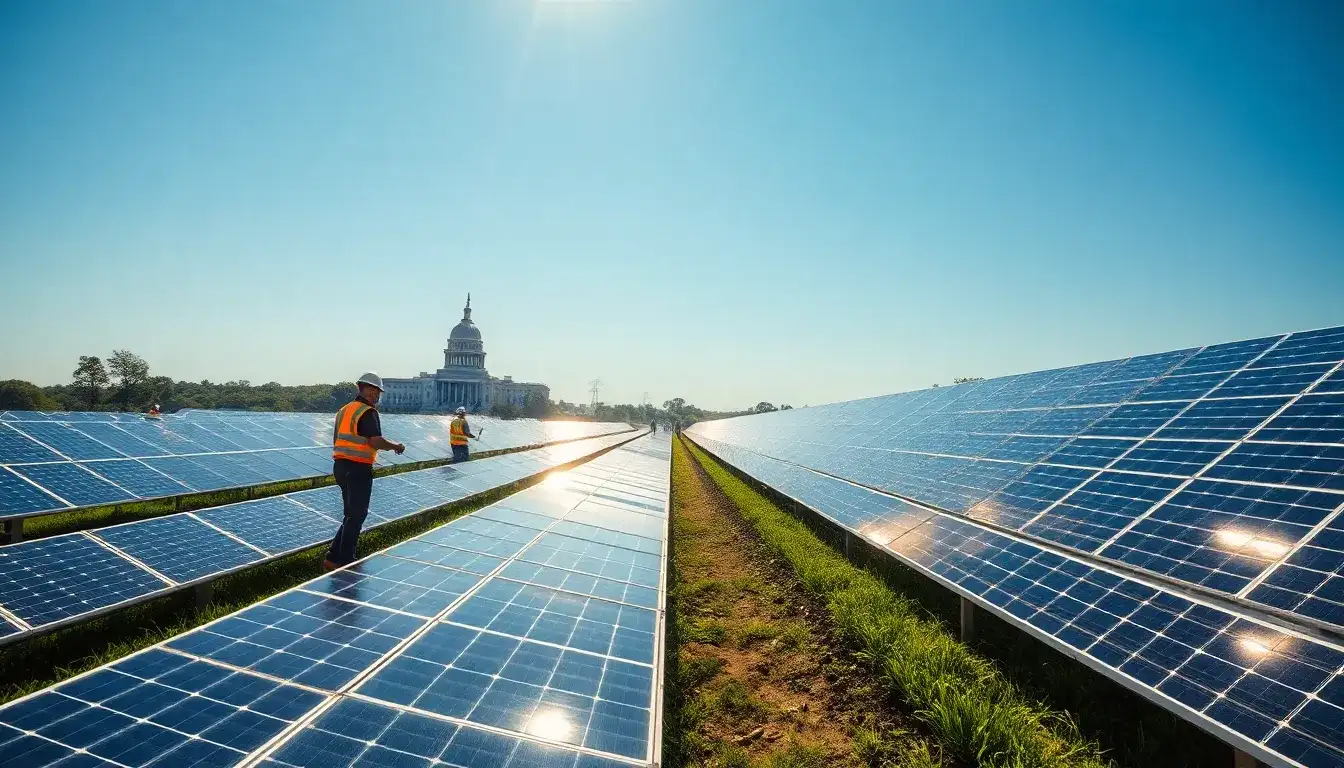
The latest data from the U.S. Energy Information Administration (EIA) indicates that renewable energy sources accounted for nearly one-third of total electric generation in the U.S. during the first three months of 2025. Utility-scale solar power surged by 43.9 percent in the first quarter of this year, while small-scale rooftop solar saw an increase of 11 percent compared to the same period in 2024. Together, utility-scale and small-scale solar contributed over one-third of total U.S. electric generation, rising to 6.8 percent from 5.3 percent the previous year. This marks a significant milestone, as solar energy production has now surpassed that of the nation’s hydroelectric plants, which generated 5.7 percent.
Biofuels Demand More Land than Solar Generation
Research conducted by the University of Arkansas reveals that even with an aggressive expansion of solar energy infrastructure, only a small fraction of agricultural land would be repurposed for solar farming. The study found that by the end of 2026, approximately 22,000 to 35,000 acres of farmland in Arkansas would be utilized for solar projects, representing about 0.2 percent of the state’s total agricultural land. If solar capacity expanded to 15,000 megawatts—equivalent to the total electrical capacity used in Arkansas across all energy sources—it would require around 137,000 acres, or roughly 1 percent of the state’s farmland. A 2021 study by the National Renewable Energy Laboratory (NREL) indicated that transitioning the U.S. grid to renewable energy sources like wind and solar would require about one-third of the land currently used for corn production for ethanol, which occupies about 30 million acres in the U.S., or 40 percent of the entire corn crop.
International Shortfall of Critical Minerals is Predicted
A recent report from the International Energy Agency (IEA) forecasts that demand for copper and lithium will exceed supply over the next decade. These essential minerals are vital for the green energy transition. The Global Critical Minerals Outlook 2025 report predicts that rapidly increasing demand for copper could lead to significant shortages, with a projected 30 percent supply shortfall by 2035. Factors contributing to this shortfall include declining ore grades, rising costs, fewer resource discoveries, and a lack of diversification in mining sources. Additionally, it typically takes an average of 17 years from the discovery of a copper deposit to its production.
Transformer Supply Shortfall Threatens Stability/Growth
The modernization of the U.S. power grid is being hindered by delays in accessing new electric transformers. Global supply chain disruptions have slowed the availability of these critical components, which are essential for stabilizing power system voltages and enhancing efficiency. According to the National Association of Electrical Manufacturers (NEMA), the delivery time for new transformers has increased to up to three years, compared to just four to six weeks five years ago. As of late 2024, the U.S. power system housed between 60 to 80 million transformers, with estimates suggesting a 260 percent increase in demand over the next decade. NREL reported that approximately 55 percent of all residential transformers are nearing the end of their operational life, with many exceeding 40 years of age.
Anti-Renewable Bill Fails in Texas Statehouse
Three anti-solar bills in Texas have effectively stalled after failing to meet the legislative deadline necessary for their progression. Senate Bill 819 aimed to impose additional fees, permitting restrictions, mandated setbacks, and regulatory requirements on utility-scale wind and solar projects within the state. Despite facing significant opposition during committee discussions, the legislation passed the Texas Senate with a vote of 22 to 9 last April. Other bills that passed the Senate sought to mandate that at least half of Texas’s electricity generation come from coal or natural gas. However, these three bills missed the deadline for Senate-approved legislation to advance through House committee votes, meaning they will not be considered in the House this year.
“`
Original article by NenPower, If reposted, please credit the source: https://nenpower.com/blog/us-solar-industry-sees-historic-growth-amid-challenges-and-legislative-developments-june-2025-update/

