

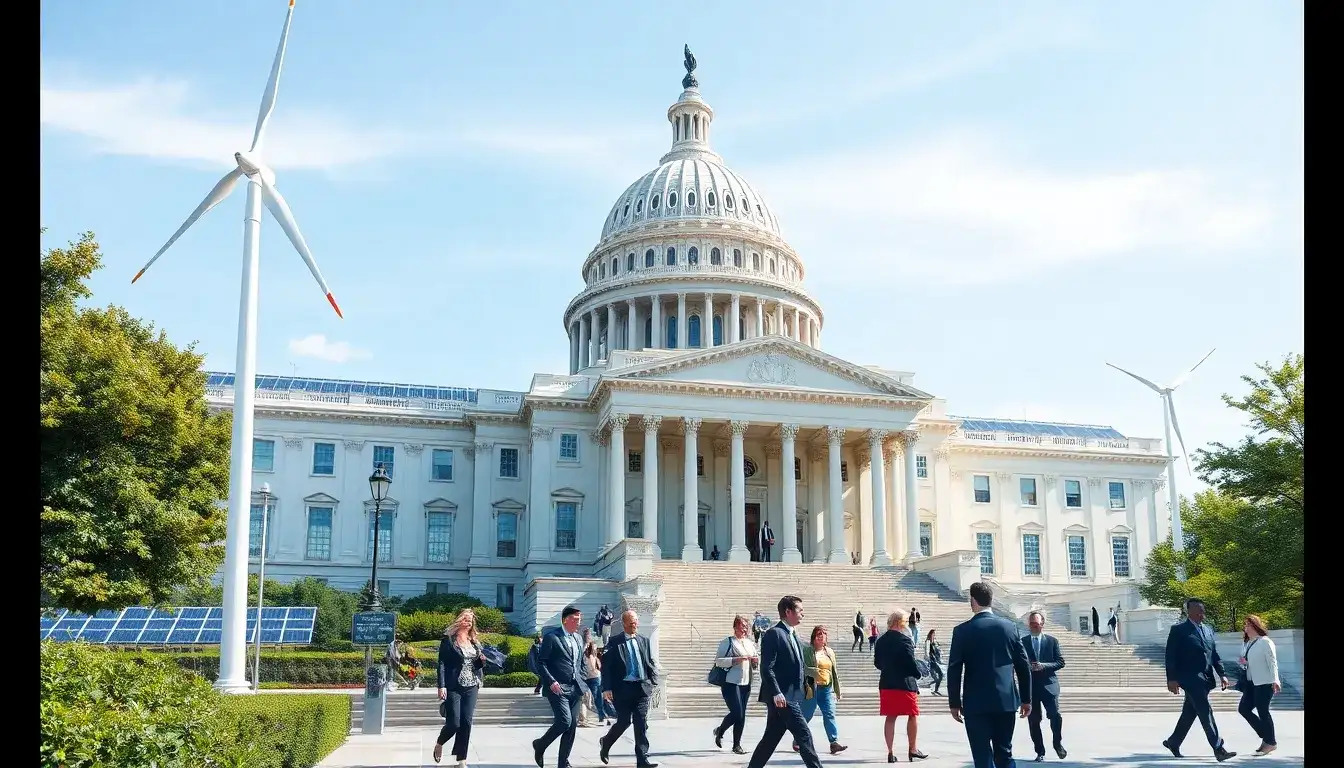
The US Senate has approved a budget bill that makes adjustments to clean energy tax incentives, granting wind and solar projects more time to qualify for subsidies. This decision comes as part of a broader Republican initiative to repeal a majority of the clean energy tax credits established in the Inflation Reduction Act while simultaneously expanding oil and gas leasing.
In the updated version of the bill, which passed with a narrow 51-50 vote, wind and solar projects can now qualify for clean electricity tax credits if they begin construction within 12 months of the bill’s enactment. Notably, Republican leaders opted to remove a newly proposed excise tax on these renewable energy projects to secure support from moderates, including Senator Lisa Murkowski from Alaska.
Despite these modifications, the bill still aims to eliminate tax credits for wind and solar projects that are not operational by the end of 2027. However, developers who start construction within the specified timeframe can still benefit from tax credits amounting to 30% of a project’s costs or up to $15 per MWh. Renewable energy stakeholders view this change as a positive development compared to earlier drafts that threatened tax credits for projects already in the pipeline. Lynn Abramson, president of the Business Council for Sustainable Energy, expressed concern, stating that the legislation marks a “significant step backward” for the industry.
Following the Senate’s approval, the bill is set to move to the House of Representatives for a final vote, which could occur as early as Wednesday. House Speaker Mike Johnson indicated that the chamber would act swiftly to pass the bill, although this will require near-unanimous support from House Republicans, some of whom are dissatisfied with the Senate amendments. President Donald Trump has urged for a final vote by July 4, encouraging House Republicans to disregard dissenting voices that have previously obstructed his legislative agenda.
The Senate bill is projected to eliminate approximately $560 billion in clean energy tax credits from the Inflation Reduction Act. However, this reduction will be overshadowed by additional spending and tax cuts proposed in the bill, which the US Congressional Budget Office estimates could add nearly $3.3 trillion to the national debt over the next decade.
Among the significant changes, the bill intends to revoke a $7,500 tax credit for electric vehicles purchased after September 30 and eliminate penalties for automakers who do not meet fuel economy standards, thereby undermining incentives for the sale of electric and hybrid vehicles. Tesla’s CEO Elon Musk criticized the bill as “utterly insane and destructive,” arguing it favors outdated industries while harming future growth sectors.
The bill also softens some of the tax credit cuts originally supported by the House. For instance, clean hydrogen projects must now begin construction by January 1, 2028, to qualify for a tax credit of up to $3 per kg, a more lenient deadline compared to the House’s end-of-2025 cutoff. Additionally, the bill extends tax credits for biofuels for two more years, until 2029, instead of the four-year extension initially proposed by the Senate.
Furthermore, the legislation aims to expand federal oil and gas leasing by mandating biannual lease sales in the Gulf of Mexico and regular onshore leases. It also seeks to reduce royalty rates to their lowest levels in nearly 20 years and delays the implementation of a $900 per metric tonne fee on methane leaks indefinitely. Plans to allocate $171 million for purchasing crude oil to replenish the US Strategic Petroleum Reserve are also included, though this is a fraction of the $1.3 billion fund approved by the House.
While Republicans initially aimed to revamp permitting within the bill, the only eligible program for the filibuster-proof process would allow industries to pay a fee to expedite environmental reviews. Other provisions include reducing coal royalties on federal land, providing tax credits for metallurgical coal, and permanently extending certain business tax breaks.
Original article by NenPower, If reposted, please credit the source: https://nenpower.com/blog/us-senate-approves-changes-to-clean-energy-tax-credits-amid-budget-bill-passage/

