

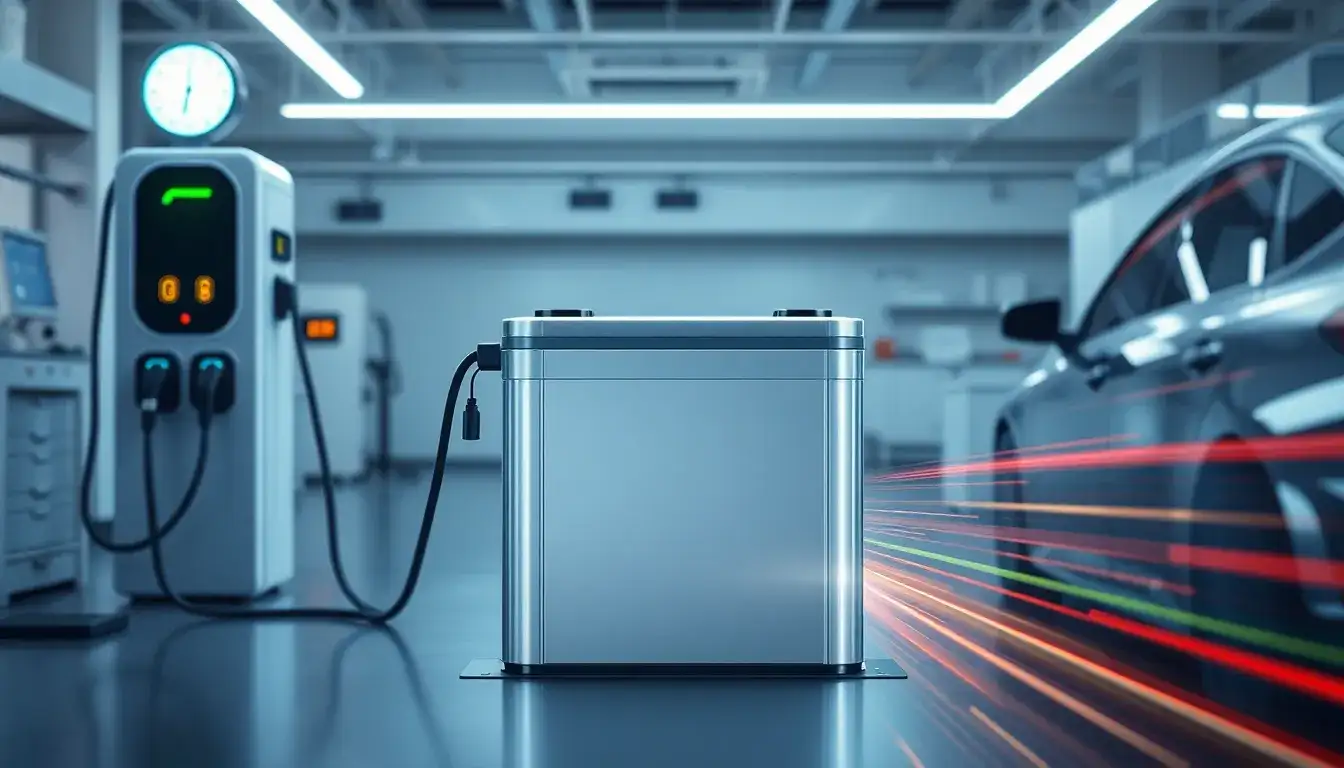
Researchers at the Department of Energy’s Oak Ridge National Laboratory (ORNL) have made a remarkable breakthrough in electric vehicle (EV) battery technology. They have developed a battery capable of charging to 80% in just 10 minutes, which could significantly change the landscape of the automotive industry. This innovation not only enhances charging speed but also addresses issues related to critical material sourcing, making it a vital advancement for the future of electric mobility.
### Revolutionizing EV Battery Technology
The new battery technology created at ORNL is set to transform the EV realm. By utilizing an innovative current collector, this battery achieves improved energy density and rapid charging capabilities. This advancement allows the battery to regain 80% of its capacity in just 10 minutes. Notably, it requires significantly less metal, particularly high-demand copper, thereby alleviating pressure on U.S. supply chains. Led by Georgios Polyzos, the research team has emphasized the substantial reduction in the use of near-critical materials, which not only boosts energy density but also aligns with sustainability goals.
### Faster, Lighter EV Batteries
Collaborating with industry partner Soteria Battery Innovation Group, ORNL has developed an advanced current collector. This component consists of a polymer sandwiched between ultra-thin layers of copper or aluminum, which significantly cuts manufacturing costs while enhancing energy capacity. Remarkably, the new design maintains high energy density even after 1,000 cycles, despite the usual wear associated with fast charging. One standout feature of this current collector is its lightweight nature, weighing only a quarter of traditional designs, allowing EVs to travel further on a single charge.
### A Breakthrough in Battery Safety
The metal-polymer current collector not only enhances battery manufacturing but also improves lithium-ion battery safety. By reducing metal content by 80%, the battery can manage fast charging while minimizing fire risks. Brian Morin, CEO of Soteria, highlighted that the polymer functions like a circuit breaker within the battery, effectively preventing fires caused by short circuits. Testing has also shown that this polymer reduces the risk of electric shocks, adding another layer of safety.
### Implications for the Future of EVs
Supported by the Department of Energy’s Advanced Materials and Manufacturing Technologies Office, this project represents a significant advancement toward sustainable and affordable EV technologies. As demand for electric vehicles continues to rise, innovations like ORNL’s battery provide promising solutions to meet this growing need. The technology enhances performance and reduces dependence on foreign-sourced materials, bolstering domestic production efforts.
The study detailing this breakthrough has been published in the journal *Energy & Environmental Materials*, highlighting its potential impact on the future of electric vehicles. As the automotive industry shifts towards more sustainable options, developments like the ORNL battery technology pave the way for cleaner, more efficient transportation solutions.
Will these advancements usher in a new era of energy-efficient transport? Only time will tell how they will shape the future of the automotive industry.
Original article by NenPower, If reposted, please credit the source: https://nenpower.com/blog/us-researchers-unveil-revolutionary-ev-battery-capable-of-10-minute-charges-and-1000-cycles/

