

“`markdown
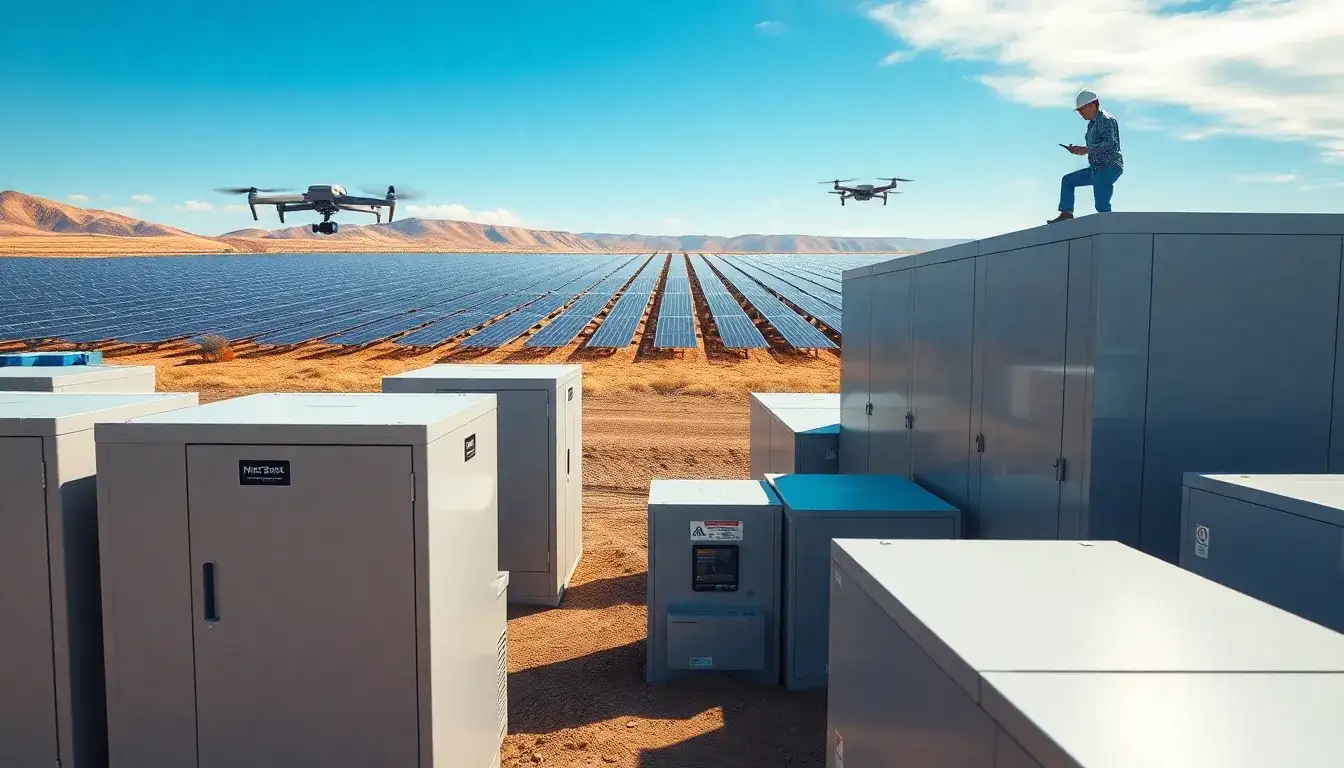
The U.S. energy storage market achieved a remarkable milestone in the first quarter (Q1) of 2025, adding over 2 GW across all segments, the highest for any Q1 on record. According to the latest U.S. Energy Storage Monitor report from the American Clean Power Association and Wood Mackenzie, the utility-scale energy storage sector contributed 1,558 MW of this capacity, reflecting a significant 57% increase year-over-year (YoY).
In Q1 2025, deployments rose by 33%, increasing energy storage from 3,056 MWh to 4,078 MWh compared to the same period in the previous year. California led the nation with 457 MW of installed capacity, followed by Indiana with 256 MW. Both Arizona and Texas added 255 MW each, while Nevada contributed 200 MW. Texas also topped the project count this quarter with eight installations, and California saw the launch of the largest project at 240 MW.
The residential energy storage sector experienced the most significant growth among all segments, with installed power capacity soaring by 82% to 458 MWh in Q1 2025, up from 252 MWh in Q1 2024. Energy capacity also rose to 893 MWh from 516 MWh, marking a 73% YoY increase. The expansion in California and Puerto Rico drove this growth, with these markets accounting for 74% of the overall increase. Illinois has emerged as a new player in the market, although attachment rates have yet to meet expectations. Efforts are ongoing nationwide to capitalize on existing tax credits while they remain available.
The commercial, community, and industrial (CCI) segment also saw advancements, with power capacity additions climbing to 26 MW in Q1 2025, up from 19 MW in Q1 2024, an increase of 33%. Energy capacity additions grew by 6%, rising from 59 MWh to 63 MWh during the same period. However, the California CCI sector faces challenges due to the slow adoption of NEM 3.0 projects, and the limited number of new community storage projects this quarter has hindered growth.
A key factor driving growth this quarter was the reduction in system costs. The average price of utility-scale battery systems decreased to $874/kW in Q1 2025, down from $1,165/kW in Q1 2024, representing a 25% decline that has improved the economics of storage projects and encouraged broader deployment across market segments.
The future pipeline for utility-scale projects is also expanding. By the end of Q1 2025, the total utility-scale segment pipeline reached 603 GW, which includes 127 GW of projects in Wood Mackenzie’s database and 476 GW in interconnection queues. This marks a 12% increase from the Q1 2024 pipeline of 538 GW.
Looking ahead, a total of 15.2 GW/48.7 GWh of capacity is expected to be added in 2025. In the short term, all segments of the energy storage market are likely to encounter policy-related challenges. Despite this, cumulative installations are projected to reach 79.8 GW and 289.4 GWh. This year is on course to set new records for utility-scale storage, with an anticipated 22% YoY growth rate. However, political uncertainties may hinder progress in 2026, with the utility-scale segment expected to decline by 29% compared to 2025.
Throughout Q1 and Q2, fluctuating tariff rates have limited battery procurement from China. Unless changes are made to the Investment Tax Credit (ITC) or Section 45X, a market rebound is forecasted for 2028 and 2029. Over the next five years, cumulative installations are anticipated to align with earlier projections despite short-term volatility. Long-term demand will be supported by significant interest in renewables from large-scale users, capacity constraints in independent system operators, and state-level goals.
The residential storage market is projected to grow by 45% in 2025, bolstered by stabilized tariffs, ongoing price reductions, and program expansions. The net billing transition in select regions will also contribute to increased adoption rates. However, growth in the CCI segment remains limited due to lower-than-expected uptake in California, ongoing tariff and policy uncertainties, complex application processes, and weak project economics. A reduction in tax credit availability could further impact this segment’s growth trajectory.
Provisions in the House reconciliation bill are expected to affect the energy storage sector significantly. The potential outcomes over the next five years show a possible 29.5 GW difference between high and low scenarios. The high case anticipates an additional 8 GW of storage capacity deployment, assuming that federal clean energy tax credits remain intact, no new tariffs are imposed, and that renewables paired with storage are actively utilized to meet rising electricity demand. This scenario also assumes improved financing conditions and fewer interconnection delays.
Conversely, the low-case forecast predicts a 27% decline in total installations from 2025 through 2029, should the reconciliation bill pass in its finalized form. In this case, projects would need to start construction within sixty days of the bill’s passage and achieve operational status by the end of 2028. The abrupt end of the ITC could lead to widespread project cancellations as developers struggle to qualify, and financial institutions become increasingly risk-averse. The low case also foresees ongoing trade tensions between the U.S. and China, with volatile tariffs persisting through 2026. Such conditions would likely escalate system prices and create further procurement delays. For the residential sector, it is assumed that the tax credit under Section 25D will expire after 2025, affecting even leased systems.
“`
Original article by NenPower, If reposted, please credit the source: https://nenpower.com/blog/us-energy-storage-achieves-record-high-with-over-2-gw-installed-in-q1-2025/

