

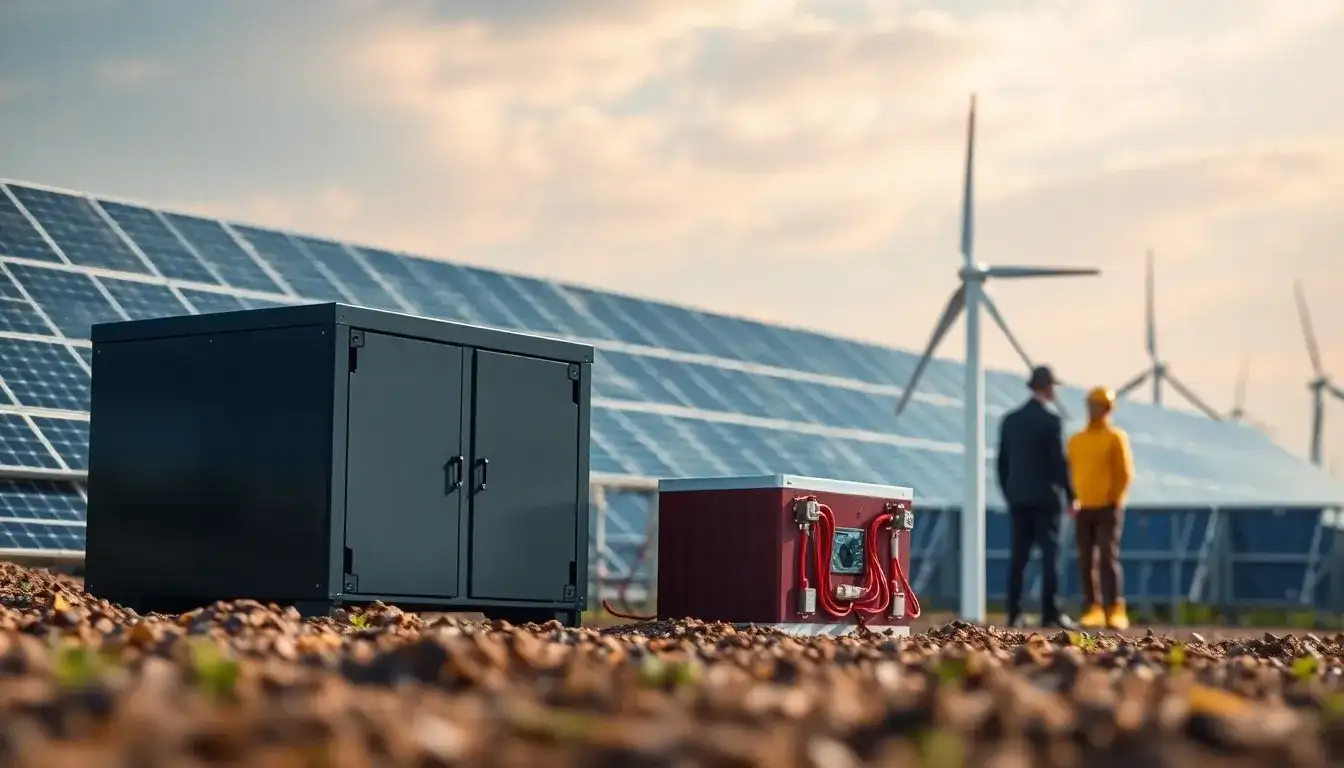
The US energy storage market achieved a remarkable milestone in the first quarter of 2025, adding over 2 gigawatts (GW) of capacity across all segments. This impressive growth, highlighted in the latest US Energy Storage Monitor report from Wood Mackenzie and the American Clean Power Association (ACP), marks the largest first quarter for energy storage in US history.
The primary driver of this surge was utility-scale projects, which contributed more than 1.5 GW of the new capacity, reflecting a significant 57% increase compared to Q1 2024. John Hensley, the Senior Vice President of Markets and Policy Analysis at ACP, noted, “Surging energy demand is putting the electric grid under strain. The energy storage market is responding to help keep the lights on and support this unprecedented growth in an affordable and reliable way.”
However, this positive momentum faces challenges due to policy uncertainties that could hinder future growth.
### Indiana’s Rapid Expansion
Energy storage is no longer confined to early-adopter states like California and Texas. In Q1, Indiana made significant strides by adding 256 megawatts (MW) of new energy storage, effectively quadrupling its total installed capacity. The state now boasts over 10 GW of new storage in its interconnection queue, ranking fifth in the nation. Indiana’s growth is fueled by its available land and straightforward permitting processes, which are often barriers in other states. Noah Roberts, Vice President of Energy Storage at ACP, remarked, “We’re now seeing significant deployment in emerging markets like Indiana, while states across the Southwest, such as Nevada and Arizona, continue to expand their energy storage portfolios.”
### Residential Storage Surge
Residential energy storage also reached a new high, with 458 MW installed in Q1, marking the largest amount ever recorded in a single quarter. California and Puerto Rico led this growth, accounting for 74% of the new installations, while Illinois and other emerging markets began to accelerate their efforts.
### Potential Challenges Ahead
Despite a robust near-term outlook, the long-term perspective appears less certain. While the five-year forecast for utility-scale storage looks promising, potential changes to federal policy could significantly impact future growth. If proposed modifications to the Investment Tax Credit (ITC) in the House’s reconciliation bill are enacted, total storage buildout over the next five years could decrease by 27% compared to the current base case. Distributed storage might face an even more severe reduction, with projections indicating a 46% decline, while utility-scale storage could see a contraction of up to 16 GW. The community, commercial, and industrial (CCI) segment has already experienced a 42% reduction in its five-year outlook, hampered by tariff risks and slow adoption of California’s NEM 3.0 regulations.
Allison Weis, global head of energy storage at Wood Mackenzie, stated, “The Q1 2025 results demonstrate the demand for energy storage in the US to serve a grid with both growing renewables and growing load. However, the industry stands at a crossroads, with potential policy changes threatening to disrupt this momentum.”
In the immediate future, the report anticipates the installation of 15 GW/49 GWh of new storage capacity across all segments in 2025, with utility-scale installations projected to grow by 22% year-over-year. However, the utility-scale segment may face a potential 29% decline in 2026 due to ongoing policy uncertainty.
In summary, while the energy storage boom continues unabated for now, the industry is closely monitoring developments in Congress.
Original article by NenPower, If reposted, please credit the source: https://nenpower.com/blog/us-energy-storage-achieves-record-growth-in-q1-2025-amid-policy-concerns/

