

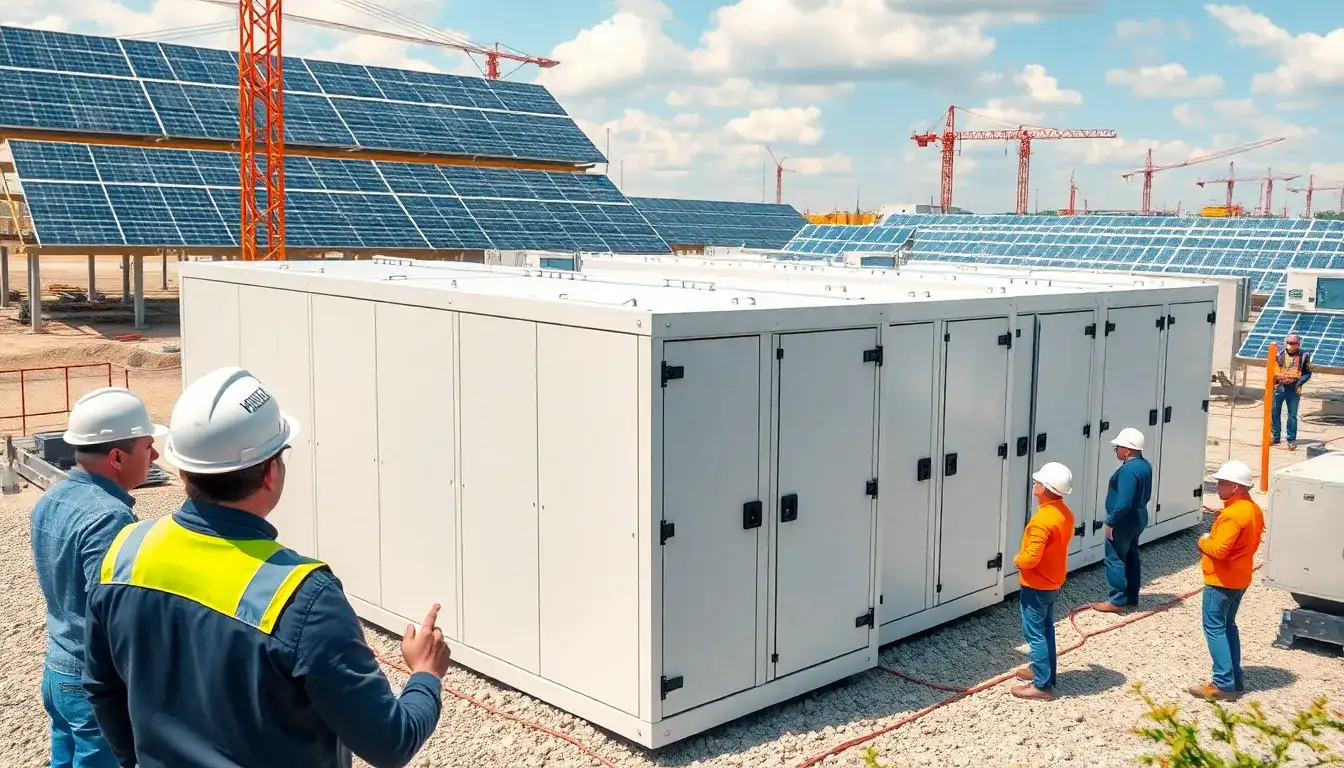
The US battery energy storage market is experiencing remarkable growth this year, building on an already impressive trajectory from 2024. This surge can be attributed, in part, to decreasing battery manufacturing costs, with Rystad Energy forecasting that this trend will persist over the next five to seven years due to ongoing design advancements. While investments in renewable energy face potential policy challenges as lawmakers consider rolling back tax incentives for low-carbon technologies, the grid-scale battery energy storage (BESS) market remains largely unaffected for the time being. Rystad Energy predicts that this growth will continue, estimating an installation rate of approximately 16 GW per year by early 2026.
As energy demand in the US rises, driven by increased electrification, grid resilience becomes increasingly crucial. Batteries are essential in addressing this demand, complementing both traditional and renewable energy sources. The US grid-scale BESS market saw a robust growth rate of around 60% in 2024, with capacity additions increasing from six gigawatts (GW) in 2023 to 10 GW in 2024. The planned inventory serves as a strong leading indicator of actual capacity additions, and this growth trajectory is expected to result in heightened annual battery demand for grid-scale BESS.
States like Texas and Arizona are leading the charge in BESS market growth, while California’s market stabilized last year. Texas emerged as the largest US BESS market in 2024, currently exhibiting an installation rate of around four GW per year, similar to California. Unlike California, however, Texas’s BESS inventory has risen from five GW to over seven GW in the past year, indicating a likely further increase in installations this year.
While Texas is experiencing significant growth, other parts of the country are also witnessing a BESS boom. Arizona leads the way, with the BESS inventory across emerging US markets expanding from three GW in the second quarter of last year to seven GW currently. The current installation rate stands at around three GW, aligning with the inventory level from 12 months ago. While some construction delays may occur, it is clear that these emerging markets will drive most of the growth in the latter half of this year and into the first half of next year and beyond.
In more mature markets, batteries are playing an increasingly vital role during peak power demand periods by extending solar generation curves into the evening hours. Over the last 90 days, batteries have met 13% of the power demand of the California Independent System Operator (CAISO) during discharge hours. Although this trend is relatively new, it is becoming increasingly common for batteries to deliver more than 16% of electricity during these periods. Currently, the average contribution across all discharge hours is around 13%, with peak contributions nearing 30%. The average peak hour contribution over the last 90 days stands at 26%, representing a 10 percentage point increase over the past year.
Looking at the share of CAISO’s power demand satisfied by renewables—primarily solar, wind, and hydro—we note that the annual average has risen from less than 30% in 2021 to over 40% in the past year. While the peak renewable contribution in spring is increasing each year—renewables met more than 65% of daily demand on certain days this year—winter contributions remain relatively stable, with renewables providing only 20% to 25% of demand. Consequently, the integration of renewables has only managed to reduce CAISO’s dependency on energy imports, which fell from around 27% to approximately 16% of system demand over the last four years.
As both BESS and solar PV capacities continue to grow in California, it is crucial to keep in mind two key points: the specific power system challenges that batteries are addressing and the limitations of what batteries can effectively resolve. Whether it is feasible to rely entirely on renewable energy and BESS systems within CAISO, as well as the associated overbuild and economic implications for project developers and consumers, remains to be seen.
Original article by NenPower, If reposted, please credit the source: https://nenpower.com/blog/us-battery-energy-storage-market-experiences-unprecedented-growth-amid-policy-changes/

