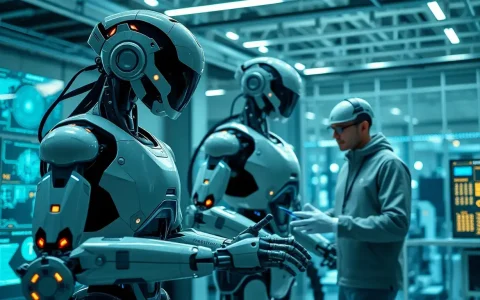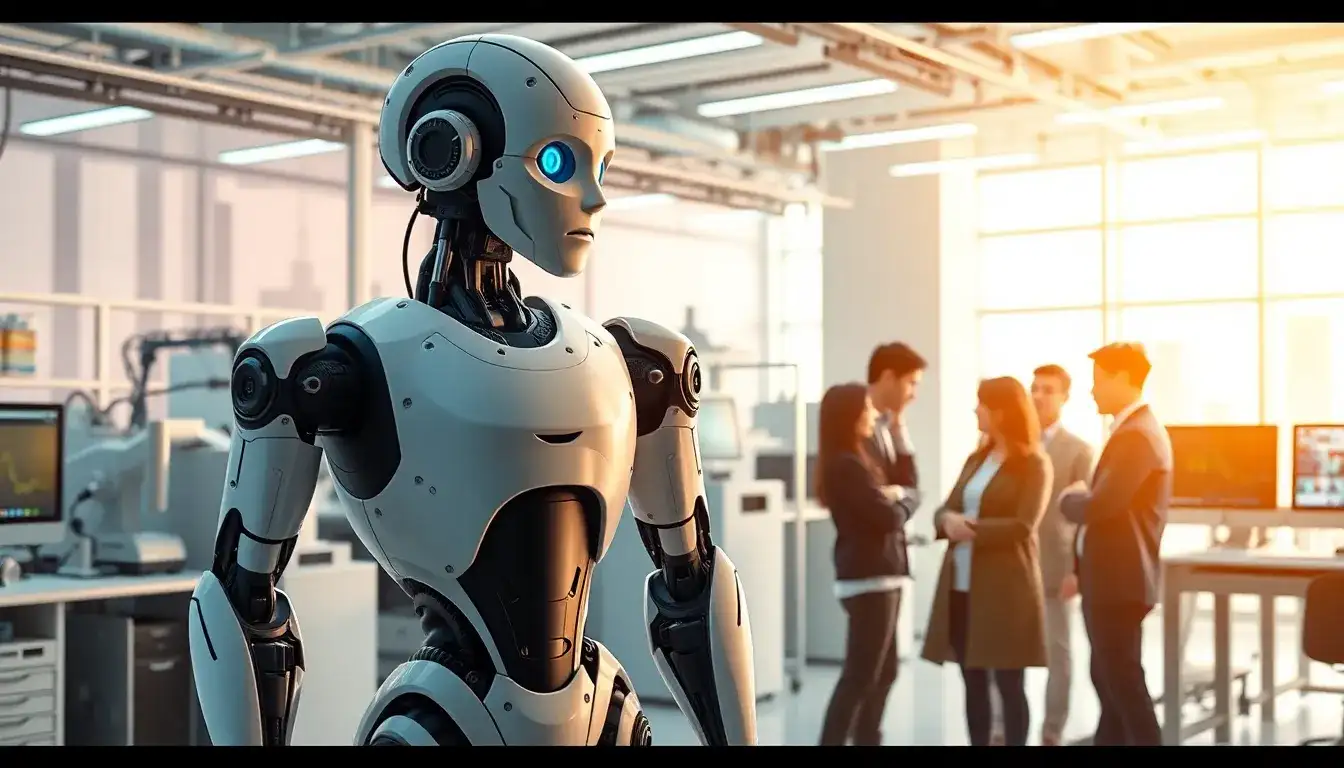
In March 2023, Jensen Huang, the CEO of Nvidia, showcased a humanoid robot modeled after Olaf from Disney’s Frozen during the Nvidia AI conference held in San Jose, California. This robot exemplifies a collaboration among three of America’s most renowned companies: its intelligence is powered by AI technology from both Nvidia and Google, while its character originates from Disney. However, it also highlights China’s capabilities. According to a research paper from Disney, the robot would not be able to walk or move its body without components supplied by the Chinese robotics manufacturer Unitree, which are responsible for its neck and leg movements.
Chinese companies are making significant strides in solidifying their positions within the humanoid robot supply chain. Both Jensen Huang and Elon Musk, the CEO of Tesla, have identified humanoid robots as the next big trend in technology. While the United States dominates the advanced chips and technologies required for robotic brains, China holds an unmatched lead in the hardware manufacturing ecosystem for humanoid robots. Huang stated in a podcast in March, “Microelectronics, electrical engineering, rare earths, and magnets are fundamental to robotics technology and are among the world’s best. The global robotics industry will have to rely heavily on them.”
Reports indicate that Tesla is forming a team in China to collaborate with its suppliers for the Optimus humanoid robot, with employees visiting local manufacturers of sensors, motors, and other components in preparation for mass production. Musk predicted in November that Optimus would be “the most impactful product ever.” For years, American tech companies have relied on Chinese manufacturers for the production of products like the iPhone. However, some American policymakers are uneasy about the central role Chinese companies are playing in the humanoid robot supply chain, especially considering that these robots could potentially be utilized in military or other sensitive areas.
In February, a bipartisan group of lawmakers proposed legislation to establish a committee to assess the United States’ competitiveness in robotics, including an investigation into supply chain risks and manufacturing challenges. The Chinese government has similarly viewed the robot supply chain as a strategically important area. In 2023, it announced plans to develop a secure and reliable domestic supply chain for humanoid robots by 2027, aiming to shield China from external shocks and reduce dependence on countries like Japan and Germany, which are experts in robot components.
This February, China released its first national standards for humanoid robots, covering critical technologies and components. With an ample supply of domestic precision parts, Chinese humanoid robot manufacturers can bring products to market faster. According to Morgan Stanley, Chinese companies launched 28 humanoid robots last year, nearly three times the number produced by American firms. With government subsidies and rising public interest driven by robotic competitions and television shows, more users are emerging, and Chinese companies are garnering increased capital investment.
Unitree is one of the leading manufacturers of complete robots and components, planning its initial public offering (IPO) in Shanghai this year, aiming to raise approximately $610 million. The company stated that it delivered over 5,500 humanoid robots in 2025 for applications in research, education, and public performances, far surpassing American competitors. In its IPO documents, Unitree noted, “Mass production enhances the company’s bargaining power with upstream suppliers, creating a sustained cost advantage.” Morgan Stanley estimates that the Chinese supply chain can reduce the manufacturing costs of humanoid robots by up to two-thirds. Parts that control a humanoid robot’s movements, including specialized motors and gears, account for about 55% of the total cost of the robot.
Kei Onishi, chairman of Yamaha Motor Ventures, a subsidiary of Yamaha Motor located in Silicon Valley, stated last year, “The advantage of Chinese humanoid robot startups lies in their ability to leverage their extensive supply chains. China has a market to test a wide variety of applications, and suppliers are willing to take risks.” However, American robot manufacturers have a competitive edge in accessing Nvidia chips and other American AI technologies, which is why Chinese companies are eyeing opportunities to become component suppliers.
From Singapore and Tokyo to Riyadh and Las Vegas, Chinese component manufacturers have become regular attendees at robotics industry trade shows over the past year. Companies like UBTech and Unitree have also hired local distributors to help reach overseas buyers. In March, during an education summit hosted by First Lady Melania Trump at the White House, a humanoid robot developed by Silicon Valley company Figure AI stood beside her and introduced itself, stating, “I am Figure 03, a humanoid robot made in America.” According to analysts from HSBC and informed sources, early models from Figure AI used robotic joints, sensors, and motors from Chinese suppliers.
While some humanoid robot components are adapted from industrial robots, automotive, and consumer electronics, Tesla is attempting to design and develop many components in-house. This approach provides greater control over the technology and optimizes compatibility between hardware and software, but it also means relying on Chinese suppliers who can provide customized parts at competitive prices. Tesla’s reliance on China was evident last year when tightened export restrictions forced the company to reduce the use of rare earth magnets in the Optimus robot. Musk stated last year that Tesla plans to build a production line capable of producing a million Optimus robots, potentially starting production by the end of 2026. This year, Tesla has engaged in discussions with several Chinese suppliers to order enough components to manufacture thousands of Optimus robots. These components include sensors, coreless motors to enable precise high-speed movement, and gear reducers to simulate human joint motions. Some suppliers are preparing to produce parts in Thailand and other Southeast Asian countries to avoid tariffs imposed on Chinese goods.
Despite some Chinese products lagging in quality compared to foreign competitors, industry insiders note that certain Chinese precision components wear out faster than their Japanese counterparts. Nevertheless, Chinese suppliers are closing the gap and often offer lower prices. A Chinese manufacturer producing lead screws, which are critical components for robot movement, is striving to meet Tesla’s higher durability standards. According to a marketing manager from this Chinese supplier, who has already supplied several Chinese robotics manufacturers, the company faces a series of stringent requirements from Tesla: to reduce the design size, improve durability by 25%, and still maintain prices 25% lower than European products. The manager stated, “Once this gap is closed, no one will be able to beat our cost advantage.
Original article by NenPower, If reposted, please credit the source: https://nenpower.com/blog/unveiling-chinas-role-in-the-technology-behind-american-humanoid-robots/