

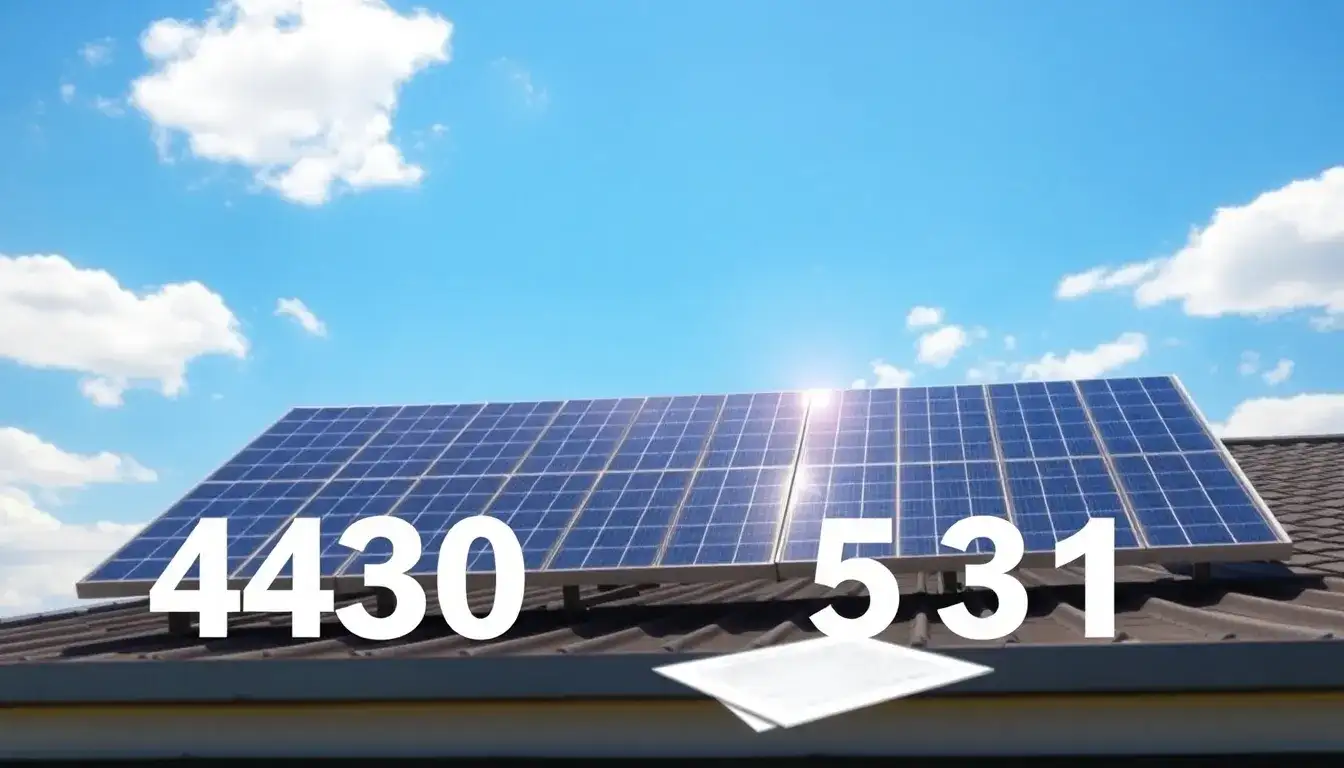
As China continues to refine its new energy industry policies, the terms “430” and “531” have recently gained significant attention online. So, what do these numbers represent? Here’s a summary of the key points:
Policy Updates and New Developments in the New Energy Sector
By the end of 2024, the cumulative installed capacity of distributed photovoltaic (PV) systems in China reached 370 million kilowatts, accounting for 42% of the total installed PV capacity nationwide. As the installed capacity expands, challenges related to energy consumption have become increasingly prominent, indicating that existing management regulations are inadequate for the current development environment of distributed PV.
In response, the National Energy Administration issued the “Management Measures for the Development and Construction of Distributed Photovoltaic Power Generation” (Document No. 7 [2025]), which emphasizes local consumption and safe operational management. The drawbacks of the fixed pricing mechanism for grid-connected renewable energy have also become more apparent with the large-scale development of new energy. The current fixed price does not adequately reflect market supply and demand and fails to fairly distribute the responsibilities of the electricity system, hindering the industry’s further development. Thus, there is an urgent need to promote market-oriented reforms for renewable energy pricing.
The National Development and Reform Commission and the National Energy Administration jointly released the “Notice on Deepening the Market-Oriented Reform of Renewable Energy Pricing to Promote High-Quality Development” (Document No. 136 [2025]), which states that the electricity generated by renewable energy projects (wind and solar) should enter the electricity market and form prices through market transactions. The deadline for the implementation of the old policy in the Document No. 7 is April 30, 2025, hence referred to as “430.” The cut-off date for grid connection for existing and new users mentioned in Document No. 136 is May 31, 2025, known as “531.”
Key Differences Between the New and Old Distributed PV Management Guidelines
- More Detailed Classification and Precise Rules: The previous policy categorized PV projects as household and commercial. The new policy distinguishes between natural person households, non-natural person households, general commercial, and large commercial categories. This allows for more tailored management rules for different scales and types of distributed PV projects, facilitating orderly and healthy industry development.
- Stricter Grid Connection Models to Promote Local Consumption: For large commercial users, the principle is self-consumption (with excess power allowed to be fed into the grid in spot market areas). The prior full grid connection method for general commercial users has been removed. This adjustment encourages commercial electricity users to better utilize self-generated electricity and promotes local energy consumption, building a more efficient energy utilization system.
- More Regulated Filing Management to Protect Individual Rights: The new rules prohibit non-natural persons from filing under the names of households and clarify that “who invests, who files.” This helps prevent corporate misuse of household information, ensures a transparent filing process, and safeguards the rights of individuals participating in PV projects.
Impact of the “531” Policy on New and Existing Renewable Energy Projects
The core of this reform is the comprehensive marketization of renewable energy pricing. The electricity generated by renewable energy projects will generally enter the electricity market, with prices determined through market transactions. To ensure a smooth transition, a sustainable pricing settlement mechanism has been established:
- For existing projects (those commissioned before June 1, 2025), the revenue from electricity sales will be calculated as follows: Revenue = Market Price × Transaction Volume + (Government Price – Market Price) × Guaranteed Volume.
- For new projects (commissioned after June 1, 2025), the revenue will be calculated as: Revenue = Market Price × Transaction Volume + (Bidding Price – Market Price) × Regulated Volume.
In simple terms, earnings will first be calculated at market prices, then adjusted based on government or bidding prices, ensuring a flexible yet scientifically grounded revenue model for PV projects.
Key Dates Related to the New Policies
Under the “430” policy, the new management guidelines state that distributed PV projects filed before the release of these measures and commissioned by May 1, 2025, will continue to follow the original policies. Projects affected by the new guidelines include:
- Third-party investment PV systems applied under residents’ names that cannot connect to the grid by April 30 must reapply as “non-natural person households.”
- General commercial projects with an installed capacity of no more than 6 megawatts that cannot connect to the grid by April 30 will no longer be eligible for full grid connection.
- Large commercial projects with excess power that do not connect by April 30 may only connect under the “self-consumption” model (unless in spot market areas) and must reapply under the new regulations.
It is important to note that existing projects must also complete their filing by January 23; otherwise, they will follow the new management guidelines.
The “531” policy will have a broader impact on renewable energy projects. Any project that does not connect to the grid by May 31 will be subject to market pricing for electricity. Although the revenue calculation formulas for existing and new projects are similar, actual earnings will differ. The government price for existing users will adhere to current pricing policies, not exceeding the local coal-fired power benchmark price; while the bidding price for new users will be determined by provincial pricing authorities, considering reasonable costs, green value, market supply and demand, and user affordability.
After the implementation of the “531” policy, while the revenue stability for new projects may not match that of existing projects, there remains profit potential. For example, new projects can actively participate in market bidding during peak periods to secure higher transaction prices, explore PV + storage models to enhance energy value, focus on long-term power purchase agreements to secure steady income, and participate in green electricity trading for additional benefits.
Original article by NenPower, If reposted, please credit the source: https://nenpower.com/blog/understanding-the-new-distributed-photovoltaic-policies-430-and-531-explained/

