

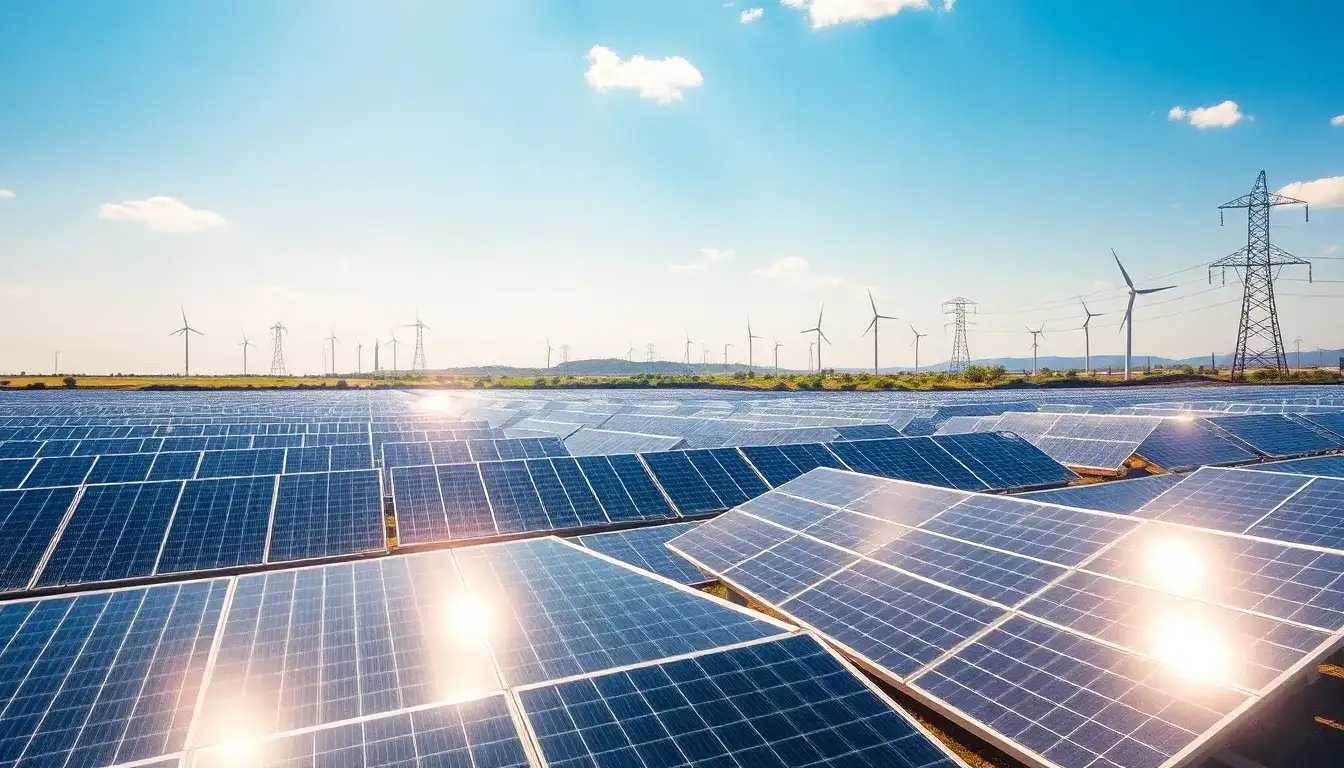
The Low Mechanism Electricity Price of the Largest Solar Province: Understanding the Reasons
Recently, the cancellation of export tax rebates for photovoltaic (PV) products has triggered a surge in demand for PV modules and a slight increase in prices. If this can be seen as a fleeting moment of revival, it may be one of the last sparks of light for the industry. Everyone knows that once demand is overextended, the future will be much more challenging. We have witnessed the consequences of the high inventory levels resulting from the European energy crisis over the past two years and the surge in installations earlier this year. As of December this year, the rush for installations has ceased.
Moving forward, our focus will be more on the demand for PV. Although the price of silicon material has stabilized, the rising cost of silver has started to weigh heavily on the minds of those in the PV industry—module prices must go up! However, if demand does not support this increase, it will just be an empty discussion. The key to determining how much demand exists and whether PV power stations can cover costs lies in electricity prices. In this context, it is essential to analyze the situation in Shandong, the leading province for PV installations.
On February 29, 2024, a bustling solar exhibition took place in Jinan, Shandong.
Struggles Behind the 0.225 Yuan/kWh Price
In September 2025, Shandong completed the country’s first competitive bidding for mechanism electricity prices in the renewable energy sector. The winning bid for wind power was set at 0.319 yuan/kWh, while the bid for solar power was a mere 0.225 yuan/kWh. This price discrepancy sent shockwaves throughout the renewable energy industry.
Shandong, which has held the title of the largest solar installation capacity province for eight consecutive years, has a PV installation scale of 91.3 million kW, dominating the province’s renewable energy capacity. However, the results of this bidding clearly signal that the large-scale expansion of the PV industry in Shandong has become unsustainable.
The stir caused by Shandong’s mechanism electricity price is significant because the province is not only a pioneer in the transition to renewable energy but also serves as a cornerstone for manufacturing in China, setting a reference point for other provinces.
Data indicates that Shandong is the only province in China with all 41 industrial categories, earning it the title of “Museum of Major National Industries.” This implies that its heavy industrial system is very comprehensive, covering a wide range from upstream energy and raw materials to midstream equipment manufacturing.
The industrial structure of Shandong is often described by the phrase “two 70%,” indicating that traditional industries account for about 70% of the total industrial output, and approximately 70% of these traditional industries are heavy and chemical industries. This clearly reflects a bias toward heavier industries. Leading sectors include the manufacture of chemical raw materials and products, as well as the processing of petroleum and coal, both of which are crucial for the transition from old to new energy and require strict stability in the power grid.
Since the start of the 14th Five-Year Plan, Shandong has shown remarkable performance in renewable energy: the installed capacity of renewables has grown at an annual rate of 25%, doubling both the installation scale and power generation over three years, signifying a fundamental shift in the energy structure. Over the past four years, the energy consumption per unit of GDP in Shandong has decreased by 18.5%, with a 3.9% growth in energy consumption supporting a 6.1% economic growth rate. Due to Shandong’s large and relatively robust power grid, its electricity consumption is high, leading to a good match between generation and consumption, and the issues of grid connection and consumption have not been prominent. However, by 2023, the situation has reached a critical point, with the renewable energy consumption rate dropping from 98.5% in 2023 to 97.6% in 2024. If the rapid development of renewable energy continues without corresponding growth in electricity demand, the contradictions within Shandong’s power grid will become increasingly pronounced.
According to data from the Shandong Provincial Bureau of Statistics, by the end of 2024, the installed capacity of non-fossil energy power generation in Shandong reached 115.597 million kW, accounting for 48.3% of total installed capacity. However, the proportion of power generation from renewables is only 27.5%, while fossil fuels, which account for 51.7% of installed capacity, contribute 72.5% of power generation. Improving the utilization rate of renewable energy while reducing excessive dependence on coal power is a trend that cannot be ignored.
I recall an experience at a distributed solar forum in 2023. A leader responsible for renewable energy at the Shandong power grid remarked, “Years ago, solar power was like a little colt—low risk and easy to manage. But now it has grown into a large horse, requiring more resources, and its output is unstable, demanding multiple measures for control.” Using wind power, which can “generate electricity at night,” to balance solar power is one such measure. On May 15, the Shandong Provincial Government held a press conference where officials stated the need to optimize the ratio of solar and wind power total installed capacity. By the end of 2025, the ratio of solar to wind power capacity will be optimized from 3.2:1 to 2.6:1, allowing for better complementary use of wind and solar energy, effectively alleviating the issues of solar output peaking at noon and dropping at night.
Thus, the wind power bid at 0.319 yuan/kWh and the solar power bid at only 0.225 yuan/kWh is not a temporary decision but a deep consideration of the balance between supply and demand in the power grid, as well as a guiding factor for investments in renewable energy projects.
Principles of Shandong’s Mechanism Electricity Price Design
There is also a view that Shandong’s mechanism electricity price is a unique case among all provinces. According to media reports, in the public notice for electricity purchases in January 2026, over 90% of regions added a new item titled “Difference in New Energy Mechanism Electricity Price,” with Shandong’s rate reaching 5.76 cents/kWh, second only to Henan and among the highest nationwide.
This cost associated with new energy subsidies will ultimately fall on end-users. However, Shandong lacks large-scale PV manufacturing enterprises, unlike provinces such as Jiangsu, Anhui, and Zhejiang, which benefit from fixed asset investments, tax revenues, and job creation.
Regardless, Shandong’s mechanism electricity price policy adopted a marginal clearing method: all similar bid projects are ranked from low to high based on their declared prices, and the last selected project’s bid becomes the mechanism price for all selected projects. This design introduces competition in both “quantity” and “price.” The annual new electricity volume included in the mechanism is determined based on the completion of annual non-hydropower renewable energy consumption responsibilities, user affordability, and other factors.
The policy also establishes differentiated execution periods. Offshore wind power projects will be executed over 15 years, while other projects will have a 10-year term, reflecting the policy’s support for different types of renewable energy technologies. The setting of bid limits is also a key innovation. The upper limit is determined based on reasonable costs and returns for renewable energy projects, green value, market supply and demand, and user affordability; the current lower limit is reasonably set based on the construction cost of advanced power stations, with plans to phase it out later.
Objectively speaking, the low investment threshold for PV and a very limited absorption capacity lead to an imbalance in supply and demand. In the 2025 mechanism electricity price bidding, out of over 3,000 new energy projects, only 1,175 seats were produced, far exceeding the government-set 125% bidding sufficiency rate limit.
On December 22, 2025, the Shandong Development and Reform Commission officially released the “2026 Shandong Province New Energy Mechanism Electricity Price Bidding Organization Announcement.” Building on the 2025 policy framework, key elements such as applicable subjects, electricity volume, and execution periods were systematically optimized.
Notably, the bidding subjects for 2026 were expanded to include wind and solar projects that commenced operations between June 1, 2025, and December 31, 2026, which had not received mechanism electricity prices, resulting in a time span of 19 months! This adjustment means that not only newly constructed projects in 2026 will participate in the bidding, but also projects that were completed in the second half of 2025 but did not succeed in previous rounds.
This significantly expands the pool of qualified projects. The direct consequence is an increase in competitive intensity. “Losers” from the 2025 bidding will inevitably submit more competitive prices in the 2026 bidding to secure mechanism electricity price guarantees. Additionally, all newly constructed projects in 2026 will join the competition, resulting in a scenario where “existing projects” and “purely new projects” compete together. This setup aims to maximize market vitality and further reduce clearing prices through the “catfish effect.”
Another hot topic is that household PV systems for non-natural persons will be excluded from the mechanism electricity price starting in 2027, guiding these projects towards market-oriented transactions or self-consumption models. This marks the end of the era where various household PV systems were racing to secure ground. I believe this is a significant benefit, as encouraging major household platforms to “stand on their own” is the best way to test their capabilities. Which platform has better panels? Which inverter is smarter? Which has better operation and maintenance? All these aspects will be reflected in their revenue models. Sometimes, achieving absolute perfection is unnecessary; being slightly better than competitors will naturally help them stand out.
In terms of trading methods, due to chaos in retail pricing, some electricity sales companies have offered excessively low prices to pressure generators, leading to significant discrepancies in price expectations for annual transactions in 2026 between the generating and consuming sides. Additionally, the late announcement of the market rule scheme for this year severely compressed the traditional annual trading preparation period. Consequently, the Shandong Power Trading Center decided to temporarily refrain from organizing annual bilateral transactions and to prioritize monthly trading to implement mid- to long-term contract electricity volumes, while quarterly organizing retail contract signing to allow the market ample time to adapt and adjust.
Mechanism electricity prices are merely a means, not an end. As the economic cycle recovers, electricity supply will not always be loose, and ultra-low prices will not persist. However, what truly needs to change is the PV industry itself.
Direct Impacts on the PV Industry
Electricity price signals have begun to guide capital reallocation. Industry insiders who participated in this mechanism electricity bidding stated, “This set of price signals provides market guidance for our subsequent efforts in wind power development.” With the revenue model shifting from “guaranteed purchase + state subsidies” to “market-based returns + mechanism bidding,” project profitability has significantly declined. In January 2026, PV projects participating in the Shandong mechanism electricity price bidding have gradually achieved full-capacity grid connection, with the Muping agricultural-solar complementary project being a typical case.
According to data, the total planned investment for the first phase of the Muping project is approximately 470.6513 million yuan, translating to a per-watt cost of 3.92 yuan/kWh. The project was initially estimated to have a price of 0.35 yuan/kWh, yielding a total investment return rate of 6.01% and a capital return rate of 11.86%. If calculated at an electricity price of 0.315 yuan/kWh, the total investment return rate would drop to 4.63%. The bidding result for this project was 0.225 yuan/kWh, over 35% lower than the expected price of 0.35 yuan/kWh, bringing the project’s return rate close to negative. When considering tax impacts and power limitations, the project’s returns may become unsatisfactory.
However, there are both pros and cons. The decline in project return rates will also compress the “non-technical costs” of PV projects. Both centralized and distributed systems have various intermediaries involved. These gray areas have long been the biggest bottleneck in industry development. The actual cost of electricity over the full lifecycle of PV systems is around eight to nine cents, but projects with electricity prices of two to three dimes are still losing money, mainly due to “middlemen profiting.” This issue also plagues frontline distributed sales.
Previously, it was learned that a Shandong power grid official’s hometown wanted to install distributed PV, but local departments delayed the approval for various reasons. Only after revealing their identity was the approval granted, highlighting the scale of the problem.
Currently, over one-third of Shandong’s counties and cities are classified as “red zones” for distributed PV consumption. While the challenges of consumption are understood, it is also crucial to enhance supervision and prevent power rent-seeking.
At the same time, the development path of distributed PV is also adjusting. Shandong’s distributed structure is gradually shifting from primarily residential systems to a focus on industrial and commercial projects. In 2024, the total installed capacity of industrial and commercial PV in Shandong reached 7.16 million kW, while residential PV was only 2.06 million kW.
However, industrial and commercial PV projects face more direct impacts. According to new policy requirements, for new industrial and commercial distributed PV projects that commence operations after June 1, 2025, their grid-connected electricity will be completely excluded from the mechanism electricity price, requiring them to participate fully in the electricity market. This means they will no longer have the “protection” of a fixed price, with revenues entirely determined by market supply and demand. Furthermore, the policy mandates that the self-consumption ratio for new industrial and commercial distributed PV projects must be no less than 50%, effectively guiding projects to prioritize meeting their own electricity needs and returning to the essence of “on-site absorption” in distributed energy.
The existing electricity market rules are mainly designed for centralized power plants and lack adaptability for “small, scattered, and chaotic” distributed PV systems. For example, an industrial and commercial distributed project with a total installed capacity of 50 MW may be spread across thousands of rooftops. Currently, each rooftop project is required to prepare complete documentation individually to participate in the market, imposing a heavy burden on developers.
However, the sky will not fall for PV; only the seasons will change. Those companies that adapt fastest to the environment will continue to lead over time.
How Should PV Respond?
In the face of the new electricity pricing environment, PV enterprises are actively exploring a new development logic focused on load management. Zhang Xiaobin, Executive Vice President and Secretary-General of the Shandong Solar Industry Association, noted that with the implementation of Document 136 resulting in lower PV grid prices, the economic viability of traditional full-grid distributed PV models will significantly decline. Therefore, PV development will place greater emphasis on matching with electricity loads. The development and construction of distributed PV should fully align with the load characteristics of users and the time-of-use electricity pricing policy while enhancing market participation capability and decision-making levels. With this approach, Shandong PV practitioners are beginning to explore three paths:
- Precise Targeting of Quality Loads: Future high-quality PV projects will be highly concentrated in industrial parks and high-energy-consuming enterprises with stable electricity usage and higher rates. Shandong has established green electricity consumption ratios for key industries such as electrolytic aluminum and steel (for example, the assessment ratio for the electrolytic aluminum sector is set at 26.2% by 2025), providing a clear market direction for PV development. Developers should actively engage with these enterprises to sign long-term Power Purchase Agreements (PPAs) to secure basic returns.
- Strengthening the Integration of Solar and Storage: Configuring energy storage is critical for smoothing PV output curves, achieving peak-valley arbitrage, and enhancing local absorption capabilities. The low or negative prices of electricity during peak PV generation hours significantly impact project returns. By integrating “solar + storage,” surplus power generated during the day can be stored and released during high-demand evening hours (when electricity prices are higher), thus generating considerable profit margins. Shandong is promoting integrated source-grid-load-storage pilot projects to provide policy pathways for such initiatives.
- Innovating Market Participation Models: For decentralized distributed PV projects, traditional individual market participation models are costly and challenging. A more feasible route is to use aggregation models such as virtual power plants (VPPs) to consolidate numerous small projects into a scalable whole, enabling unified participation in power market transactions and ancillary services, thereby enhancing bargaining power and risk resilience. Additionally, exploring green electricity trading to meet corporate users’ green consumption needs can yield environmental premiums, creating additional revenue sources.
Challenges are always objectively present, but proactive measures are the path to survival. Identifying quality loads or enhancing trading capabilities are both correct directions. It is noteworthy that Shandong is a major agricultural province, particularly renowned for its vegetables and fruits, with numerous cases of off-season planting that require stable heating or refrigeration. If these projects could be deeply integrated with solar storage, there would be vast development space.
Policy Coordination and System Optimization
Returning to the policies themselves, Shandong’s electricity price reform is not a “single-point effort,” but rather a combination of “adjusting supply at the generation end + promoting consumption at the user end.” Mechanism electricity prices guide energy structure adjustments at the generation end, while the “five-segment” time-of-use pricing matches renewable energy output at the consumption end.
Shandong’s power system faces the dilemma of “lacking electricity but not lacking capacity.” During low-load periods in spring and autumn, the concentrated output of PV generation far exceeds demand. To ensure grid safety, market clearing prices have been forced down, and even negative prices have emerged. Meanwhile, many coal-fired units in the province lack deep peak-shaving capabilities, and their minimum technical output limits the extent to which space can be freed up for renewables, exacerbating midday absorption issues.
The “five-segment” time-of-use pricing divides the 24-hour day into peak, flat, valley, and deep valley periods, implementing differential pricing. During peak periods, prices increase by 70% over the base flat price, while during peak hours, they rise by 100%, and deep valley periods see a decrease of 90%. This design specifically addresses the challenges of PV absorption. By setting low valley prices during peak PV production hours, it encourages users to adjust their electricity consumption behavior. In 2024, guided by time-of-use pricing, Shandong’s midday renewable energy absorption capacity increased by 5.8387 million kW.
Shandong is also actively promoting integrated development of source-grid-load-storage, specifying pilot models for on-site utilization, green electricity trading, virtual power plants, and distributed renewable self-consumption. As of the end of September 2025, 42 integrated source-grid-load-storage pilot projects have been confirmed, with 7 already completed.
Additionally, as Shandong relaxes market price limits and improves capacity compensation mechanisms, fields such as grid-type energy storage, renewable energy-integrated storage, and green electricity direct connection projects will encounter development opportunities. We have ample reason to believe that mechanism electricity prices will not “destroy” the PV industry but rather ensure its healthier future.
In Conclusion
Whenever I think of Shandong, I feel a sense of admiration. Recently, Shandong became the third province in the nation and the first in the north to surpass a GDP of 10 trillion yuan. Achieving such success amid the transition of old and new energy and external uncertainties is truly remarkable.
For a long time, industrial strength in China has been viewed as “strong in the south, weak in the north.” The south progresses quickly because it moves lightly, while the north moves slowly due to its responsibilities of supplying the national grain and generating coal-based electricity. As the “eldest son” of a great nation, Shandong always bears a heavier burden, often unspeaking but providing a sense of security.
I suddenly recall an experience from many years ago in Shandong. Back then, due to work, I found myself on a difficult country road, and coincidentally, an older gentleman on a tricycle passed by and offered to give me a ride. We traveled together and had many conversations along the way. It was April then, and the wheat fields were lush and vibrant. Unlike the fast-paced life of city dwellers, farmers have a unique understanding and sense of time. Years later, I can no longer recall the details of our conversation, but I remember him saying, “When the children return, the wheat will be ripe.” Shandong’s solar power is about to ripen.
Original article by NenPower, If reposted, please credit the source: https://nenpower.com/blog/understanding-the-low-mechanism-electricity-price-in-chinas-leading-solar-province/

