

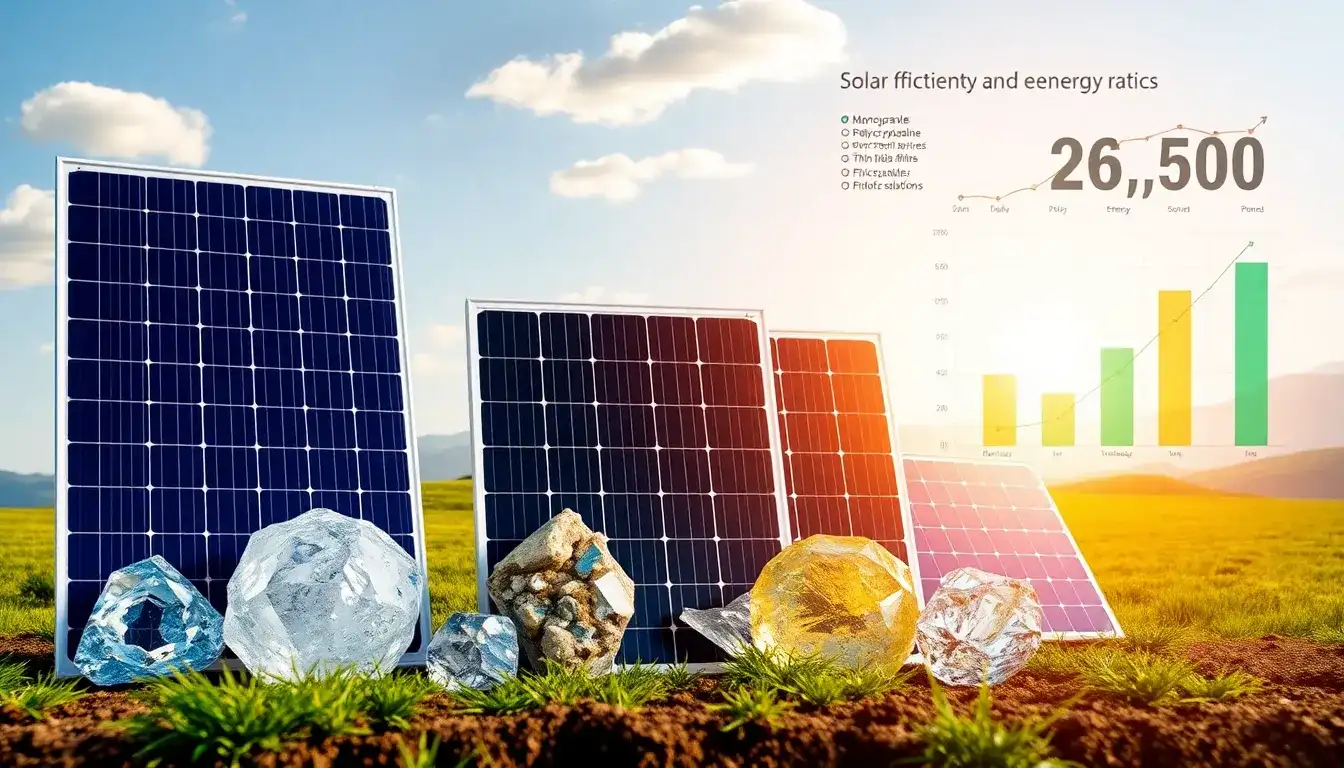
Types of Solar Panels and Their Efficiency
==========================================
Harnessing solar energy is one of the most sustainable and cost-effective ways to power your home or business. However, selecting the right type of solar panel can be overwhelming. With options ranging from monocrystalline to thin-film, each type varies in efficiency, cost, and suitability for different environments. This guide explores the various types of solar panels and their efficiency to help you determine the best solar panel for your needs.
### What is Solar Panel Efficiency?
Solar panel efficiency refers to how effectively a panel converts sunlight into usable electricity. Higher efficiency means more electricity can be generated from a smaller area, which is crucial if roof space is limited or if you aim for maximum output per square foot.
### 1. Monocrystalline Solar Panels
#### Overview
Monocrystalline panels are crafted from a single crystal structure, giving them a distinctive black appearance. They are often regarded as the best option for home installations due to their high efficiency and durability.
#### Efficiency Rate
These panels boast an efficiency range of 17% to 22%, making them the most efficient among standard options.
#### Pros and Cons
**Pros:**
– High solar panel efficiency
– Long lifespan (25–30 years)
– Excellent performance in low-light conditions
**Cons:**
– Higher cost
– More silicon waste during production
### 2. Polycrystalline Solar Panels
#### Overview
Polycrystalline panels are formed by melting multiple silicon crystals. They typically have a blue color and are more affordable than monocrystalline panels.
#### Efficiency Rate
Their efficiency generally ranges from 15% to 17%.
#### Pros and Cons
**Pros:**
– Lower cost
– Reduced silicon waste
**Cons:**
– Lower efficiency
– Require more space
### 3. Thin-Film Solar Panels
#### Overview
Thin-film panels are made from materials such as cadmium telluride or amorphous silicon. They are lightweight, flexible, and suitable for unconventional surfaces.
#### Efficiency Rate
Efficiency usually ranges from 10% to 13%, although newer models are showing improvements.
#### Pros and Cons
**Pros:**
– Lightweight and flexible
– Sleek design
**Cons:**
– Lower efficiency
– Shorter lifespan
### 4. Passivated Emitter and Rear Cell (PERC) Panels
#### Overview
PERC panels are an advanced version of monocrystalline or polycrystalline panels, incorporating a passivation layer that enhances efficiency.
#### Efficiency Rate
With optimal conditions, these panels can reach up to 23% efficiency.
#### Pros and Cons
**Pros:**
– Enhanced solar panel efficiency
– Better performance in low light
**Cons:**
– Slightly higher cost
### Which is the Best Solar Panel for Home Use?
Choosing the best solar panel for your home depends on your specific goals. If efficiency and space-saving are priorities, monocrystalline or PERC panels are ideal. However, if you have budget constraints, polycrystalline panels provide decent performance at a lower cost.
### Factors That Influence Solar Panel Efficiency
– Angle and orientation of panels
– Shading and sunlight exposure
– Temperature and climate
– Panel material and technology
### How to Choose the Right Solar Power System
When selecting a solar power system, consider the following:
– Energy needs (kWh usage)
– Roof space availability
– Local weather conditions
– Budget and financing options
Visit solarclue.com to explore a wide range of solar products tailored to your needs.
### Cost vs. Efficiency: What Matters Most?
While high-efficiency panels may come with a higher initial cost, they can lead to greater savings over time due to improved energy production. Assess your long-term savings to determine the best value.
### Installation Considerations
Choose certified installers, ensure proper roof assessment, and seek warranties. Proper installation enhances both lifespan and efficiency.
### Warranty and Lifespan Comparison
| Type | Efficiency | Lifespan | Warranty |
|—————|—————-|—————|——————|
| Monocrystalline | 17–22% | 25–30 years | 25+ years |
| Polycrystalline | 15–17% | 20–25 years | 20–25 years |
| Thin-Film | 10–13% | 10–20 years | 10–20 years |
| PERC | 19–23% | 25+ years | 25+ years |
### Emerging Solar Technologies
– **Bifacial panels:** Capture sunlight from both sides.
– **Perovskite cells:** Show potential for high efficiency at low cost.
– **Building-integrated photovoltaics (BIPV).**
### Environmental Impact
Solar energy significantly reduces carbon footprints, supports energy independence, and promotes sustainability.
### Maintenance Tips to Maximize Efficiency
– Regularly clean panels
– Monitor output levels
– Schedule annual inspections
### Government Incentives and Rebates
Many governments offer tax credits and rebates to encourage solar adoption. Check local and national programs for potential savings.
### Conclusion
Understanding the various types of solar panels and their efficiency is essential for making an informed energy investment. Whether you opt for high-efficiency monocrystalline panels or budget-friendly polycrystalline options, your choice will impact your home’s sustainability and savings. For the best solar panels or a customized solar power system, visit blog.solarclue.com to make an informed decision. Energize your future with a smarter solar solution today!
### FAQs
**Q1. Which solar panel has the highest efficiency?**
**A1.** Monocrystalline and PERC panels currently offer the highest efficiency, reaching up to 23%.
**Q2. What is the lifespan of a solar panel?**
**A2.** Most solar panels last between 20 to 30 years, depending on the type and maintenance.
**Q3. Is thin-film a good option for residential use?**
**A3.** Thin-film panels are less efficient and better suited for large-scale or flexible applications, making them less ideal for small rooftops.
**Q4. Are expensive panels always better?**
**A4.** Not necessarily; it depends on your energy needs, budget, and available space.
**Q5. How do I maintain my solar panels?**
**A5.** Keep them clean, monitor performance, and schedule annual maintenance to ensure long-term effectiveness.
Original article by NenPower, If reposted, please credit the source: https://nenpower.com/blog/understanding-solar-panel-types-and-their-efficiency-for-optimal-energy-solutions/

