

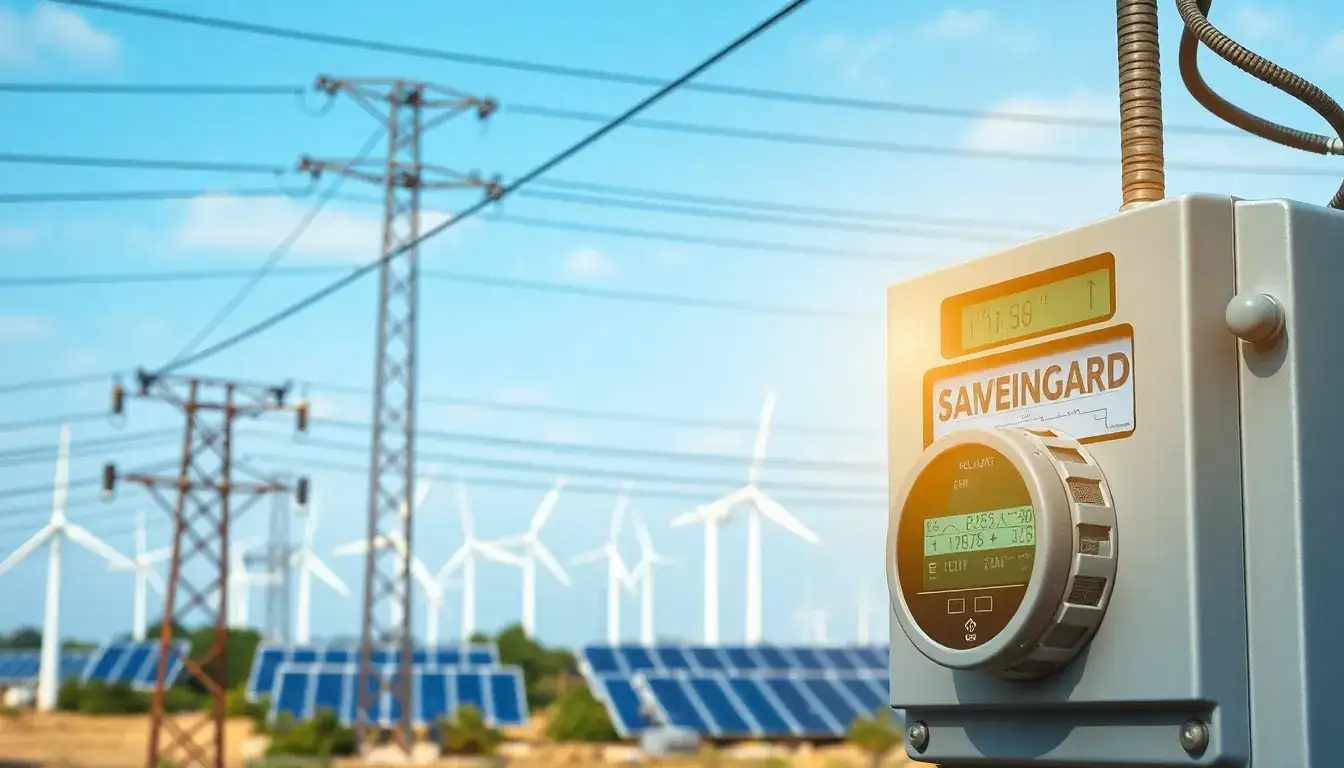
Electric Power Quality – The Polar Star Power News Network provides you with information related to electric power quality, helping you quickly understand the latest developments in this field. For more information on electric power quality, please follow the Polar Star Power News Network.
Polar Star has identified over 11,000 results related to electric power quality, including specific requirements such as black start and inertia support. Recently, the Ningxia market supervision administration has solicited opinions on network-type energy storage standards. The testing items and methods include active power control, reactive power control, voltage control tests, power factor adjustment capabilities, electric power quality, overload capacity, and primary frequency modulation capability.
The black start time for network-type energy storage converters should not exceed 3 minutes and must be equipped with a one-button zero-lift boost function. The power of the energy storage components should be no less than 1.2 times the restored load power, and the rated discharge capacity of the energy storage components should last at least 15 minutes for continuous power supply. The device’s short-term overload capacity must meet the starting current requirements of the restored load.
The virtual power plant energy storage market on the grid side in the Ningxia Hui Autonomous Region is progressing. Recently, the Guoneng (Quanzhou) Thermal Power: Xiamen Yuangxiang Cold Storage Photovoltaic Project successfully connected to the grid for power generation. During the construction, the team faced challenges such as the difficulty of constructing arched colored steel tiles and the complexity of the State Grid’s electric power quality special acceptance process. However, through technological innovation and efficient collaboration, the project was completed on schedule.
Once fully operational, the project is expected to provide approximately 3,602,300 kilowatt-hours of green electricity annually, saving 1,662.92 tons of standard coal and reducing carbon dioxide emissions by 3,230.11 tons, contributing positively to environmental protection and the green development of enterprises.
The Tianjin Electricity Demand Side Management Implementation Rules have been established to promote virtual power plant operators’ participation in demand response. Grid enterprises are encouraged to adopt advanced energy-saving technologies to optimize reactive voltage regulation, transformer economic operation, efficient transformer application, line reconstruction, electric power quality management, and reactive compensation in substations.
Electricity users are urged to actively utilize high-efficiency energy-saving products and adopt technologies from the National Key Promotion Directory of Low-Carbon Technologies, promoting green production and lifestyle while improving electric power utilization efficiency.
The recently launched 100 MW/200 MWh energy storage station in Xiangxiang City has successfully connected to the grid. The project integrates battery cells and system-level collaboration to ensure the safety and reliability of the energy storage system. After commissioning, it effectively alleviates the challenges of integrating renewable energy and reduces local power supply pressure in Xiangxiang and Xiangtan cities. It stabilizes the randomness and intermittency of renewable energy generation, enhancing the grid’s peak-shaving and frequency support capabilities, while improving electric power quality and the operational stability of the grid.
The State Grid has emphasized the innovation of power supply services to boost regional development. “Medical devices have very high requirements for electric power quality. Insufficient power supply and declining electric power quality can directly result in equipment failure,” noted Yuan Yuan, the electricity head of an enterprise.
In recent developments, new energy storage systems are becoming more efficient, supporting simultaneous hardware-in-the-loop testing for PCS/BMS. The PCS serves as the interface between the battery and the grid, controlling the converter to charge or discharge the battery according to power commands. It not only determines the electric power quality and dynamic characteristics of the storage system but also significantly impacts battery life. The interaction performance and quality between the BMS and PCS directly affect the safety and reliability of the entire energy storage system, necessitating enhanced performance control through hardware-in-the-loop testing.
State Grid Hebei Electric Power is accelerating the establishment of a voltage adaptive demonstration project, continuously improving the management level of electric power quality. Currently, the Xiong’an new-type power grid dispatch control system has integrated four megawatt-level microgrids, merging over 80,000 kVA of flexible adjustable resources. This utilizes the rapid reactive response characteristics of microgrid converters to support flexible voltage adjustments within ±10 volts on the low-voltage side, significantly enhancing the electric power quality of the distribution network.
Innovative solutions are being proposed for comprehensive electric power quality governance, precisely matching the demands of supply networks to create efficient reactive compensation strategies. The static reactive generator (SVG), as a flexible link for grid stability, is a customized solution by TBEA to ensure stable operation across all scenarios of the power grid.
In recent shifts in the market, listed companies in the energy storage sector are facing delays and terminations in their business activities. Through the configuration of photovoltaic-storage systems and the implementation of demand response, power users can effectively adjust peak and valley loads, improve power quality in industrial parks, relieve peak load pressures, and optimize energy allocation, yielding positive economic benefits.
ABB has unveiled its electrical consulting service, ABB Navigate, which provides comprehensive analysis of distribution systems. By sending experienced electrical service consultants to customer sites, they will utilize professional analysis software to conduct safety assessments of distribution systems, including arc flash energy analysis, short circuit current calculations, protection coordination verification, and electric power quality analysis.
Experts from the China Electric Power Research Institute have interpreted the Basic Rules for the Electricity Auxiliary Services Market. These services are necessary for maintaining the safe and stable operation of the electric power system and ensuring electric power quality, aside from normal energy production, transmission, and utilization.
In summary, the development of the electric power quality sector is crucial for ensuring the stability and reliability of electric power systems. The integration of advanced technologies and innovative practices will play a significant role in enhancing electric power quality across various applications.
Original article by NenPower, If reposted, please credit the source: https://nenpower.com/blog/understanding-power-quality-key-developments-and-standards-in-the-energy-sector/

