

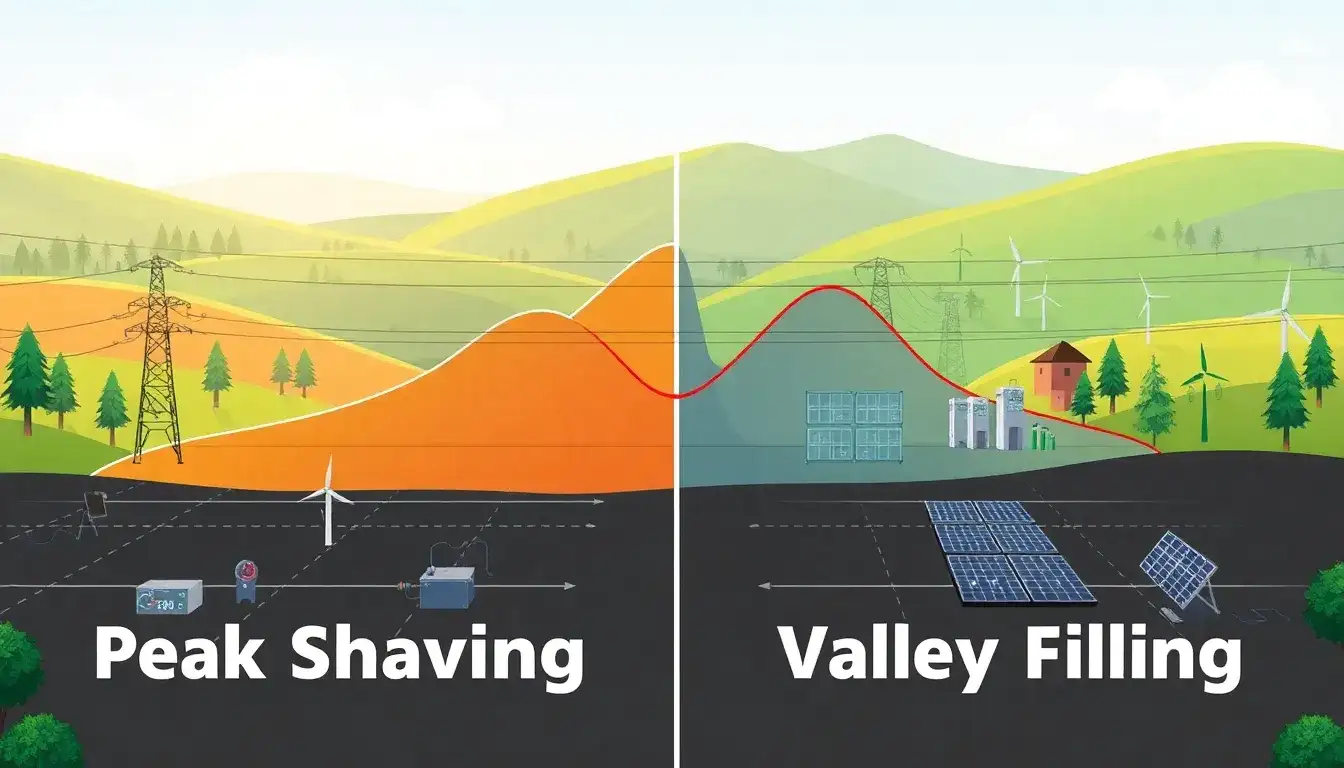
Peak Shaving and Valley Filling – The Polar Star Power News Network provides you with comprehensive information on peak shaving and valley filling, helping you quickly grasp the latest developments in this area. For more information on peak shaving and valley filling, please follow the Polar Star Power News Network.
The Polar Star has identified over 11,000 results related to “peak shaving and valley filling.” In Zhejiang, the retail pricing for users over a 25-year period is notably unique. As mentioned in previous articles, once the flat-rate pricing is established, it does not fluctuate based on the administrative time-based regulations. Instead, it is adjusted by adding the time-based price differences from similar types of grid agency power purchase users.
In commercial and industrial energy storage, during a two-hour night valley period, 1,000 kWh is charged every half hour, with the same amount discharged during two hours of peak hours in the morning. Similarly, during the midday valley period, 1,000 kWh is charged every half hour for two hours, followed by discharging the same amount in the afternoon peak hours. This energy storage approach modifies the user’s electricity distribution curve.
In a recent development, Tianbangda announced a significant multi-core complementary smart control energy storage solution at the ESIE 2025 event. This solution supports the mixed use of lead-acid and lithium batteries, featuring peak shaving, valley filling, and remote monitoring capabilities, which can significantly reduce users’ electricity costs.
During the ESIE 2025 event, Huayuxin unveiled a high-safety, high-return energy storage solution focused on several revenue models, including self-consumption, peak shaving, valley filling, and arbitrage. This solution supports both grid-connected and off-grid operation modes, making it suitable for regions with frequent grid fluctuations.
The first integrated solar storage and hydrogen refueling demonstration project in Xi’an, Shaanxi, has been completed and put into operation. It can quickly recharge 24 vehicles simultaneously, achieving a charging efficiency of 1 second per kilometer. The 460 kWh energy storage equipment operates like a large “power bank,” releasing stored energy during peak demand or adverse weather conditions, thus achieving a dynamic balance of energy.
Vehicle-to-grid interaction is gaining traction, where electric vehicles engage in energy and information exchange with the grid. This includes smart orderly charging and bi-directional charging and discharging, contributing to peak shaving, virtual power plants, and aggregated trading scenarios.
In Hefei, Anhui Province, a document has been released to solicit opinions on promoting high-quality development of new energy storage, encouraging large electricity consumers, industrial parks, and data centers to build user-side new energy storage systems to manage peak shaving and demand.
With the introduction of intelligent technologies, Guoneng Rixin is enhancing energy value by dynamically adjusting charging and discharging strategies. This ensures stability in the power supply and improves the efficiency and security of grid operations. Their approach aims to smooth out fluctuations in renewable energy generation and assist grid frequency modulation.
In another initiative, Siyuan Electric is set to showcase its full-time multi-medium large cell energy storage system at ESIE 2025. This system employs various storage media (lithium batteries, supercapacitors, hybrid supercapacitors) to stabilize renewable energy output, frequency modulation, and support capacity leasing.
The Jiangsu power station has significantly improved the peak regulation performance and reliability of the power system, leveraging the peak shaving and valley filling policies to lower electricity costs and support the company’s green transformation.
The national energy group in Qinghai reported that its energy storage facilities have discharged over 100 million kWh in a year. This underscores the advantages of their energy storage stations in ensuring stable and reliable power supply amid fluctuating demand.
In Hainan, a new policy has been implemented to adjust the peak and valley electricity prices, aiming to guide users in managing their consumption during peak periods to ensure stable grid operations and support electric vehicle development.
The Hebei provincial government is exploring the implementation of deep valley electricity pricing during major holidays to encourage small and medium enterprises to optimize their electricity usage, further enhancing peak shaving efforts.
Lastly, Chint Electric has partnered with clients in Turkey to create a model project for commercial energy storage, featuring an outdoor integrated energy storage cabinet designed to meet diverse needs and support peak shaving and valley filling in grid-connected scenarios.
Original article by NenPower, If reposted, please credit the source: https://nenpower.com/blog/understanding-peak-shaving-and-valley-filling-in-energy-management/

