

Greetings everyone! I’ve discovered a treasure trove of information on robotics. The developers of national standards for robotic networks are here! Take a look at this exciting news!
Interview with Li Ping, Chairman of Eastcom Technology: The international standards for industrial communication networks and industrial networks are the core driving force behind the development of industrial artificial intelligence. The Daily Economic News reported on April 1, 2025, that the annual forum of the Zhongguancun Forum will be held from March 27 to 31 in Beijing. This year, the theme of the forum is “New Productive Forces and Global Technological Cooperation,” featuring a forum on standardization and technological innovation.
Currently, disruptive technologies such as artificial intelligence and quantum information are making significant breakthroughs, leading to an unprecedented period of intense technological innovation. Standards serve as a “catalyst” for promoting global technological innovation, playing a vital guiding role in the high-quality development of emerging and future industries.
Li Ping, a leading figure in China’s industrial internet sector, stated that the globally advanced AUTBUS (a fully Internet Protocol (IP)-based industrial control protocol automation bus) broadband industrial communication network integrates technologies such as TSN (Time-Sensitive Networking) and IPv6. The promotion of international standards and chip technology for this technology will accelerate the development of China’s new industrialization and industrial AI.
This year’s government work report emphasizes expanding the large-scale application of 5G, accelerating innovation in the industrial internet, optimizing the national computing resource layout, and creating internationally competitive digital industry clusters. How can the industrial internet enable the upgrade of traditional industries through technology? Li Ping explained that language has evolved significantly, from simple forms in the Paleolithic era to contemporary machine learning and natural languages. Similarly, artificial intelligence has undergone decades of exploration and is now based on large semantic models.
According to Li Ping, the language of machines is industrial communication, which addresses the communication issues between different nodes and machines. The international standards for industrial communication networks have achieved semantic standardization of machine language, thereby propelling the development of industrial AI. Therefore, the international standards for industrial communication networks and industrial networks are fundamental to the advancement of industrial AI.
He further emphasized the importance of unifying industrial network protocols and establishing standards for industrial networks, as these standards represent the language of the machine world. Integrating industrial networks into IP networks, along with the incorporation of IPv6 and the AUTBUS international standards, is essential for accelerating China’s new industrialization and the global development of AI.
Li Ping suggested that, in the development of industrial AI, it is crucial to place a high priority on industrial communication networks and industrial network standards. The globally leading AUTBUS broadband industrial communication network, which combines TSN and IPv6 technologies, will facilitate the advancement of industrial AI and new industrialization in China.
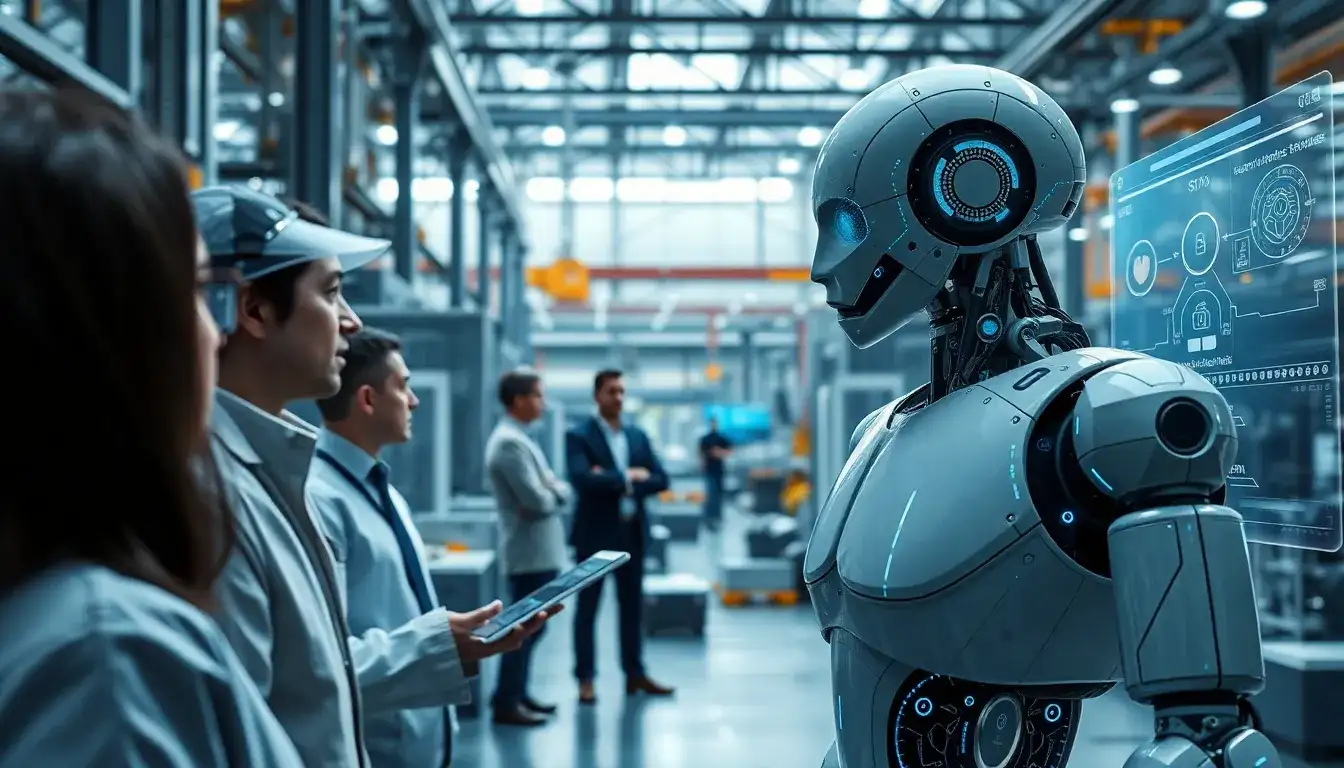
In the past, a professional engineer would require about three days of work to complete tasks, but now, this can be accomplished in just 5 to 10 minutes. Discussions surrounding artificial intelligence technologies are currently thriving, and the emergence of DeepSeek has led to significant changes in the landscape of large models. How impactful are large models in promoting embodied intelligence development? Li Ping revealed that Eastcom Technology has developed an AI-driven embodied robotics solution centered around its self-controlled Hongdao AI robot operating system and broadband industrial neural network system. In the future, they plan to closely collaborate with upstream and downstream robotics companies to address key technological bottlenecks in domestic robot control.
He noted that in traditional industrial processes, engaging robots required considerable time for complex coding, motion control, workflow design, and path planning. However, with the introduction of artificial intelligence and other technologies, this previously time-consuming development can now be completed in just minutes, significantly reducing complexity and difficulty. Engineers on the front lines are now liberated from cumbersome programming and design tasks, allowing them to focus on effective interactions with robots and enhance production efficiency.
Original article by NenPower, If reposted, please credit the source: https://nenpower.com/blog/uncovering-the-robot-goldmine-insights-from-industry-leaders-on-ai-and-communication-standards/

