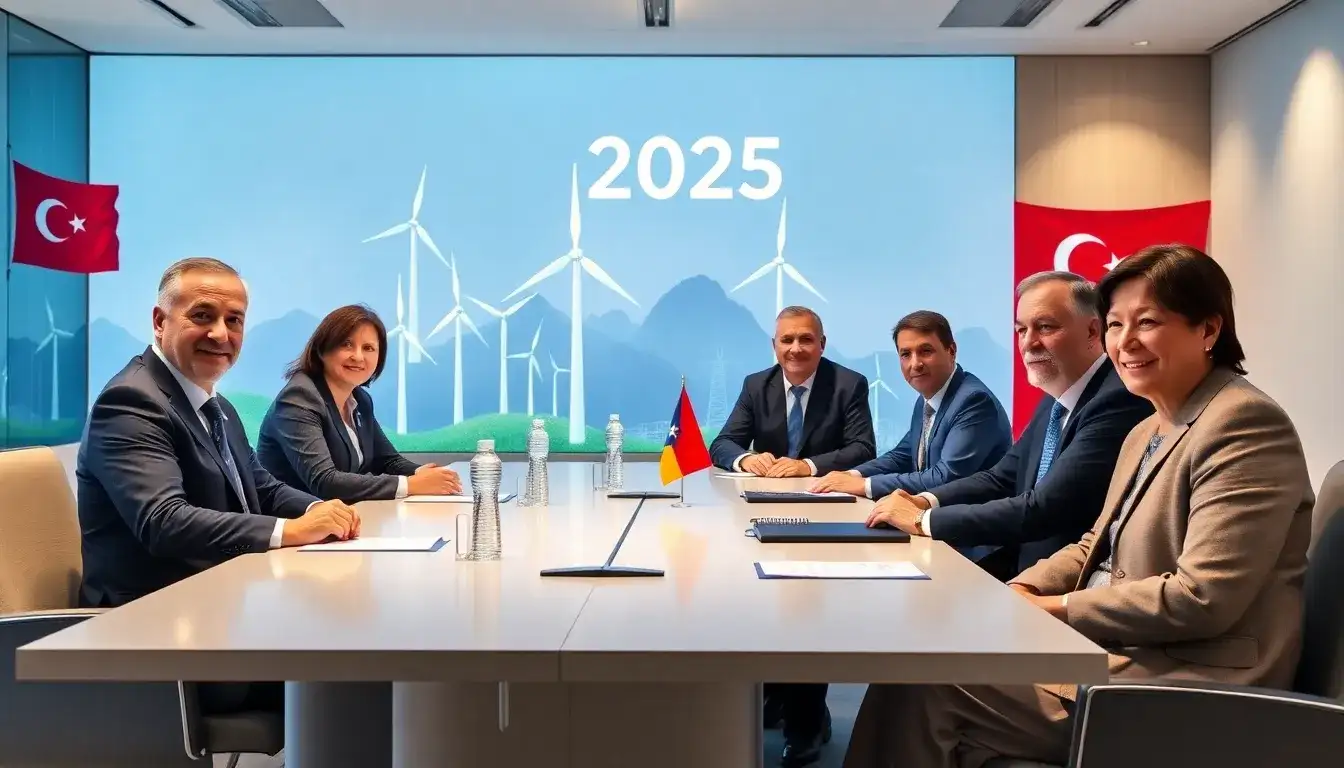
Turkey is actively advancing its energy strategy in the Balkans. On May 2, 2025, during the 2025 International Natural Resources Summit (INRES 2025) held in Istanbul, Turkey signed memorandums of energy cooperation with Bulgaria and Romania. These agreements focus on key projects in the fields of natural gas and green electricity, aiming to strengthen Turkey’s position as a crucial player in European energy security through deeper cooperation with its Balkan neighbors.
The European energy landscape is undergoing rapid transformation due to geopolitical turmoil. The Russia-Ukraine conflict has prompted Europe to seek alternatives to its reliance on Russian energy, leading Balkan countries to explore new energy supply routes. In this context, Turkey is leveraging its unique geographical position and infrastructure to become an energy “crossroads” connecting Asia and Europe.
The memorandum signed between Bulgaria and Turkey lays the groundwork for closer cooperation, particularly in the electricity sector. It emphasizes collaboration in areas such as renewable energy, energy storage, and carbon capture and storage (CCS). Both countries have also expressed a mutual interest in hydrogen technology and new fuels, with plans to develop new cross-border electricity interconnection projects to enhance electricity transmission capabilities. These initiatives aim not only to alleviate regional electricity supply bottlenecks but also to attract private sector investments in energy infrastructure, thereby strengthening bilateral energy ties.
According to a report by Bloomberg in April 2025, Bulgaria’s Energy Minister, Zetso Stankov, stated that Turkey is a strategic partner in achieving Bulgaria’s energy diversification and security priorities.
In addition to its cooperation with Bulgaria, Turkey has also signed its first energy cooperation agreement with Romania. This memorandum covers bilateral collaboration in areas such as gas supply security, renewable energy, and investments in regional energy infrastructure. Notably, Turkey has further solidified its energy partnership with Romania by signing a contract with the Romanian national oil pipeline company, BOTAS, to supply up to 4 million cubic meters of gas per day. This agreement, signed in October 2023, is expected to be renewed this year. The two countries are also engaged in exploration work for gas reserves in the Black Sea. The Sakarya gas field, in particular, is estimated to hold significant potential with gas reserves of 710 billion cubic meters. Additionally, the recently commenced drilling at the Neptun Deep gas field is projected to begin production in 2027, positioning Romania as a major gas producer in Europe.
Romania’s Energy Minister, Sebastian Burduja, expressed on his social media account that this agreement provides stability amid a complex regional situation. He noted that Romania faces a fundamental test regarding its national positioning and must be clear about its future direction. He emphasized that the current geopolitical context signals a struggle not only on the international stage but also within the consciousness of Romanian citizens. He stated, “We are at a moment where we need not just presence but also courage and clarity.”
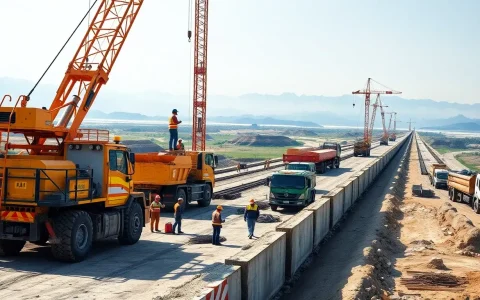
Furthermore, Turkey has shown significant interest in Romania’s gas infrastructure projects. For instance, Turkish company Kalyon is constructing the Tuzla-Podișor pipeline, which aims to transport gas from the Neptun Deep gas field to major gas pipelines across the Balkans. In addition to gas development, Turkish investors are also eyeing large renewable energy projects in Romania, where Greek companies have already established a significant presence. This trend reflects the growing commercial potential in the competitive Balkan green energy market.
Turkey’s Minister of Energy and Natural Resources, Alparslan Bayraktar, described INRES 2025 as an international initiative highlighting Turkey’s expanding influence in global energy diplomacy. He stated, “Approximately 14 countries will participate at ministerial and deputy ministerial levels, showcasing Turkey’s important role in energy diplomacy.” The summit discussed themes such as energy and resource security, critical minerals and hydrocarbons in the energy transition, and financing models and investment strategies for the energy sector amidst a rapidly changing geopolitical landscape.
Original article by NenPower, If reposted, please credit the source: https://nenpower.com/blog/turkey-strengthens-energy-cooperation-with-balkan-neighbors-at-inres-2025-summit/