

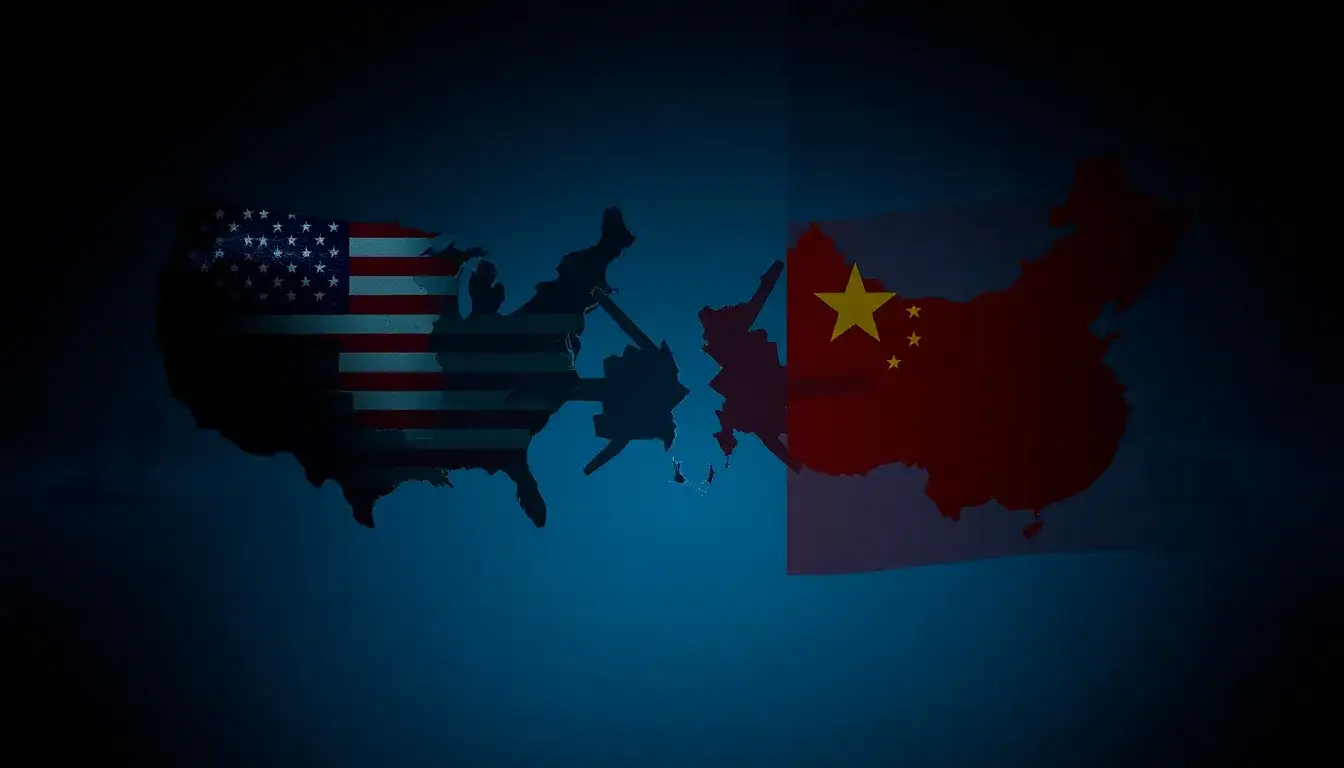
Under the impact of the tariff war, the Sino-US relationship, as one of the most important, complex, and sensitive bilateral relations in the world, has become the focus of global attention. This has led to a perception that international events related to China and the US are likely to result in confrontation and friction. For instance, at the upcoming energy summit in the UK, China and the US have demonstrated completely different positions.
Former President Donald Trump has taken a notably high-profile stance regarding the UK energy summit, even suggesting that he would send an official who denies climate change to attend, aiming to obstruct the global energy transition. In contrast, China has declined to participate in the summit, citing a “scheduling conflict.” An industry organization founder remarked that “China’s absence is a significant setback for the entire industry.” Some have even bluntly stated that China’s refusal to attend is a reaction to the US’s presence—essentially, they believe that China is avoiding participation because the US is involved.
Interestingly, Russia, a major player in the global energy sector, will also not attend the UK energy summit. But what is the reason behind Russia’s absence? Unlike China, whose absence is a voluntary choice, Russia’s is due to being excluded from the guest list by the UK government. Unpublished invitation lists reveal that Russia was not included. Since the outbreak of the Russia-Ukraine conflict in 2022, the West has imposed comprehensive sanctions on Russia, including export restrictions in the energy sector and financial blockades. The UK, as a leading proponent of sanctions against Russia, viewed it as an “unwelcome participant” during the summit’s preparations.
While Russia holds a significant position in traditional energy markets, the summit primarily invites oil-producing countries like Saudi Arabia and Qatar, as well as major fossil fuel companies. This exclusion of Russia aims to weaken its influence in global energy governance and reinforce Western control over traditional energy supply chains.
China’s official reason for declining to attend—the “scheduling conflict”—actually reflects multiple strategic considerations. Late April coincides with a peak in Chinese diplomatic activities, including a domestic summit centered on the “Energy Law” on April 19, which attracted top experts from around the world. The timing of these events overlaps with the UK energy summit, complicating the ability for senior Chinese officials to attend.
Moreover, although the UK summit’s theme is “climate transition,” the invited parties are mainly fossil fuel-producing nations and energy companies, neglecting the developing countries most severely affected by the climate crisis. As the world’s largest producer of clean energy technology, China evidently lacks interest in this agenda, especially given the exclusion of key energy nations like Russia, which further diminishes the summit’s representativeness.
Trump’s administration’s decision to send climate change-denying officials to the summit seeks to use “power tactics” to obstruct energy transition and strengthen global reliance on US oil and gas resources. This approach starkly contrasts with China’s promotion of clean energy transitions, exacerbating the confrontational atmosphere between the two countries amid the ongoing tariff war.
China’s absence as a leader in clean energy technology means that the summit’s discussions on renewable energy and electric vehicles will lack critical participants. Robbie Macpherson, the former head of the UK Parliament’s cross-party climate change group, emphasized that “the transition away from fossil fuels requires the participation of all emitting countries,” and China’s absence undoubtedly “weakens the summit’s representativeness.”
It is noteworthy that the absence of both China and Russia has created an implicit understanding within the “non-Western camp.” Despite differing reasons for their absence—China’s being a voluntary decision and Russia’s being forced exclusion—they both express dissatisfaction with the Western-dominated energy governance mechanisms. This situation may foster further cooperation between China and Russia in the energy sector, such as enhancing natural gas pipeline construction and renewable energy technology exchanges.
The absences of China and Russia are not coincidental; they reflect a microcosm of the restructuring of international energy dynamics and great power competition. If Western countries continue to politicize energy issues, the global energy transition process may face further obstacles, while China’s contributions to clean energy may gain greater international attention. In the future, international energy cooperation must transcend ideological divides and build a more inclusive governance mechanism to effectively address the dual challenges of climate change and energy security.
Original article by NenPower, If reposted, please credit the source: https://nenpower.com/blog/trumps-energy-summit-announcement-sparks-chinas-boycott-amid-u-s-china-tensions/

