

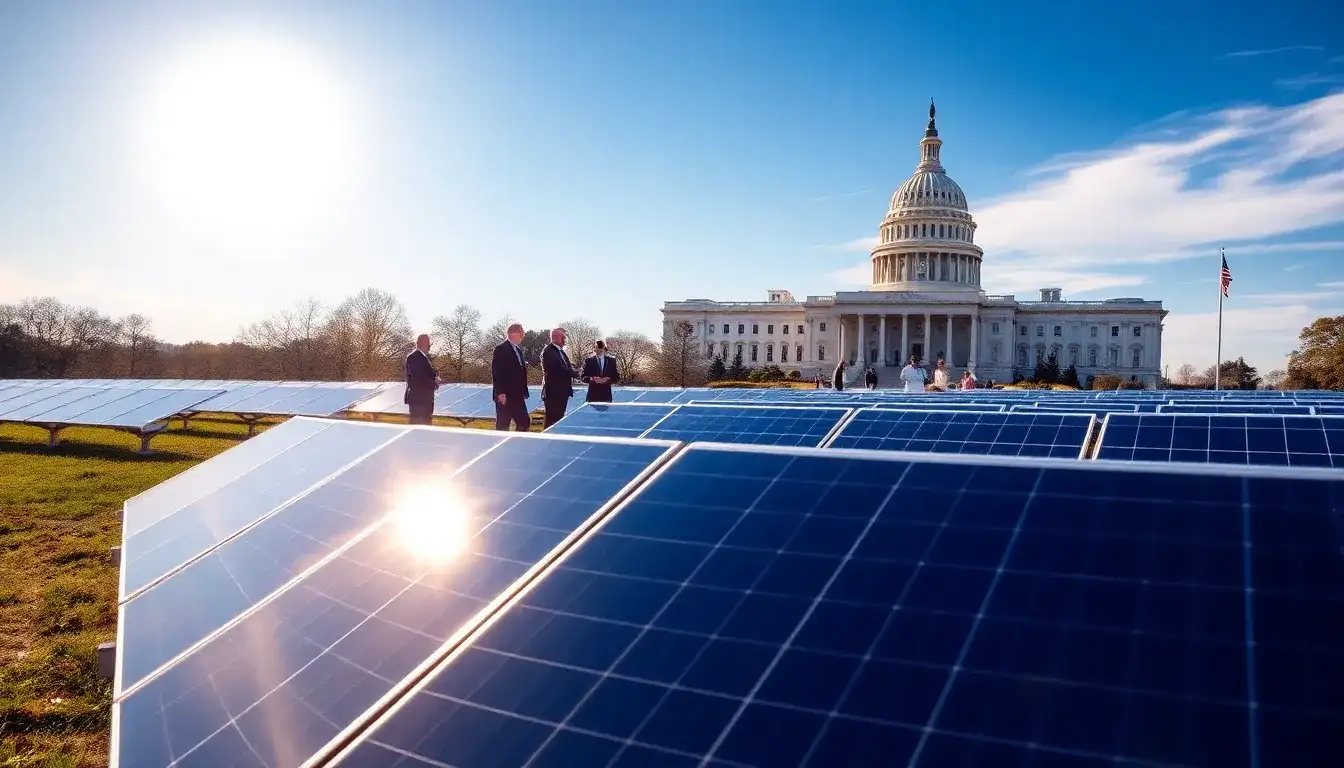
Trump and the Fate of the 30% Solar Tax Credit in 2025
By Brian Lynch | June 30, 2025
With Trump in office and Republican majorities in both the House and Senate, many clean energy credits established by the Inflation Reduction Act are at risk of being weakened or eliminated through the budget reconciliation process, often referred to as the “One Big Beautiful Bill.” This includes the 30% solar tax credit claimed by homeowners, formally known as the 25D Residential Clean Energy Credit. In this article, we will explore the proposed changes to the 25D solar tax credit and their implications for homeowners considering solar energy.
### Latest Updates
**Is the solar tax credit going away?**
**Is the entire Inflation Reduction Act at risk?**
**Is 2025 a good time to go solar?**
**June 30 update:** The Senate updated its bill text over the weekend, incorporating several key changes to residential solar tax credits. Below are the highlights of how these changes affect residential solar:
– **30% Consumer Solar Tax Credit (25D):** The latest Senate draft reinstates the deadline for installing residential systems eligible for the 30% tax credit back to December 31, 2025. After this date, the 25D tax credit will no longer be available for homeowners to claim.
– **30% Solar Tax Credit for Residential Leases and PPAs (48E):** The new Senate draft allows residential installation companies to claim a 30% tax credit for residential solar leases and power purchase agreements (PPAs). This credit had been excluded in previous drafts but is now back in consideration for additional years. It’s important to note that the 48E credit is claimed by the installation company, with the savings passed on to homeowners through lower lease payments.
– **Foreign Entity of Concern (FEOC) Restrictions:** The Senate has tightened restrictions on using components from companies controlled or influenced by foreign entities of concern, implementing a new excise tax for projects that utilize these components starting in 2028. This introduces new risks for residential solar projects using materials from certain companies.
These may be the final updates to energy policy in the “One Big Beautiful Bill” before it is signed into law, likely before July 4. We strongly encourage homeowners interested in solar to obtain quotes as soon as possible, secure an installation date, and maximize their savings potential.
**June 26 update:** The Senate has been expected to release updated bill text this week, but it has been delayed. As of now, it seems likely we will see a new version of the “One Big Beautiful Bill” before the July 4 recess. While renewable energy provisions are crucial for many, they are not the focal point of the bill’s debate. The industry has used this time to advocate for a gradual phase-down of tax credits, allowing for a smoother transition to a post-subsidy environment. Discussions are ongoing about the future of tax credits for residential solar.
### What We’re Watching:
– Will the consumer tax credit (25D) receive a gradual phase-out similar to corporate tax credits, or will it end 180 days after the bill passes, as current language suggests?
– If the 25D is preserved, will it include “FEOC” provisions, similar to the 48E tax credits?
– Will residential leases qualify for the tax credit as part of the phase-down?
– Will the proposed phase-out continue with reductions of 16% in 2026 and 6% in 2027?
– Will the domestic content bonus remain at 10% for systems that qualify (commercially owned only)?
### What Seems Likely
2025 remains an excellent time to go solar, as systems installed this year will still be eligible for the tax credit. Neither the House nor the Senate has proposed retroactively repealing the tax credit. However, FEOC restrictions are stringent, disallowing companies under foreign control from benefiting from U.S. taxpayer assistance. Projects using components that receive “material assistance” from certain foreign companies may risk losing eligibility for tax credits.
**June 16 update:** The Senate Finance Committee released its text for the “One Big Beautiful Bill,” proposing changes to the phase-out of the 30% residential solar tax credit. Instead of ending on December 31, 2025, the proposed end date is 180 days after the bill is signed into law. If the bill is signed in July, this would likely mean the tax credit ends in January 2026.
**May 22 update:** The House of Representatives passed a budget reconciliation bill that includes the termination of the 30% residential solar tax credit at the end of 2025. The bill is expected to head to the Senate, with a final vote anticipated before the August recess, possibly before July 4. If passed as it currently stands, residential solar and battery systems installed by December 31, 2025, will qualify for the Residential Clean Energy Credit.
**May 13 update:** The House Ways and Means Committee proposed eliminating the residential solar tax credit during the reconciliation process. If approved, systems installed by December 31, 2025, will still qualify for a 30% tax credit.
### Why Are People Concerned About the Residential Solar Tax Credit Going Away in 2025?
As part of the Budget Reconciliation process, Congress has proposed terminating the 30% tax credit for residential solar and battery storage, known as 25D. This bill has passed the House and is currently with the Senate, with a vote expected in July. The Senate Finance Committee has proposed ending the 25D residential solar tax credit after December 31, 2025. If enacted, residential solar systems installed by this deadline would still qualify for the 30% federal tax credit, but there would be no tax credit available for homeowners from 2026 onward.
Previous versions of this bill proposed closing off the 48E tax credit for leased solar systems. However, the Senate has since amended this language, allowing leased systems to qualify for the tax credit for several additional years.
### What Can You Do About the Residential Solar Tax Credit Going Away?
If you believe that solar is the right choice for your home, act quickly to obtain proposals and align your project for installation and inspection by the end of the year. Visit solar.com to receive multiple quotes from vetted local installers. We have also created a resource page offering additional ways to support solar tax credits before the Senate votes on their removal.
### Why is Congress Proposing to Remove the Residential Solar Tax Credits?
During the campaign, President Trump and Republican officials called for the repeal of what they termed the “Green New Deal,” referring to the Inflation Reduction Act (IRA). The IRA was a significant policy initiative of the Biden administration that included various favorable provisions for the solar industry, including an extension of the solar tax credit through 2034.
In his first week in office, Trump issued an Executive Order directing the federal government to suspend funding associated with the “Green New Deal.” Although this order was broadly worded and ultimately unenforceable, it raised concerns about the future of the IRA and the solar tax credit.
### What is the 30% Tax Credit for Solar?
Officially called the “Residential Clean Energy Credit,” this tax credit allows solar system owners to deduct up to 30% of the eligible costs of a solar installation from their federal taxes. For example, a project with an eligible cost basis of $30,000 would provide the owner with a $9,000 tax credit in the year the project is completed. This incentive originated during the oil crisis in 1978 and has persisted through various political administrations and economic conditions.
The Inflation Reduction Act of 2022 extended the tax credit at the 30% rate until 2032, after which it will decrease by 4% each year until 2034. The solar tax credit has been a resilient piece of policy, surviving both Republican and Democratic administrations, and has been credited with supporting hundreds of thousands of jobs.
### Is the Inflation Reduction Act (IRA) at Risk?
Yes, the IRA is at risk. Republicans are proposing significant cuts to the IRA through the budget reconciliation process to fund the Tax Cuts and Jobs Act extension. In May 2025, the House Ways and Means Committee introduced measures to weaken or remove several components of the IRA, including the complete removal of the 30% solar tax credit for homeowner-owned solar and battery systems by the end of 2025.
The Senate has kept the termination of the 25D solar tax credit set for midnight on December 31, 2025. Homeowners will need to install their systems by then to qualify for the 30% tax credit before it disappears.
### Will Projects Built in 2025 Qualify for the Residential Solar Tax Credit?
Yes, projects installed and inspected in 2025 will indeed qualify for the 30% solar tax credit based on the current proposals from both the House and Senate. It would be politically challenging and economically disruptive for the administration to retroactively rescind a tax credit that is part of established law.
### Risks of Waiting for Policy Certainty
Homeowners may feel inclined to adopt a “wait and see” approach to gauge how the House and Senate will adjust the reconciliation bill. However, this is a risky strategy. The Senate is expected to vote on the bill before its August recess, possibly before July 4. After a Senate vote, the bill will return to the House for reconciliation before heading to the President for final approval. Delaying action until after a Senate vote could jeopardize your project, as installation typically takes several weeks after a contract is signed.
### Is 2025 a Good Time to Go Solar?
If you have been contemplating solar energy but have not yet signed a contract, now is the prime time to act. The materials needed for projects are currently available at pre-tariff rates, and there is a high likelihood that your project will qualify for the full 30% solar tax credit. Although interest rates remain elevated, they are unlikely to drop significantly in 2025. If they do decrease in the future, solar loans can be refinanced easily. Additionally, utility rates are expected to continue their upward trend.
Engage with a Solar.com Energy Advisor to develop a proposal tailored to your needs and collaborate with local contractors to competitively price your project. Get started today, with no obligation, so you can be ready to claim your tax credit.
Original article by NenPower, If reposted, please credit the source: https://nenpower.com/blog/trumps-administration-and-the-future-of-the-30-solar-tax-credit-by-2025/

